Blog
Back to blog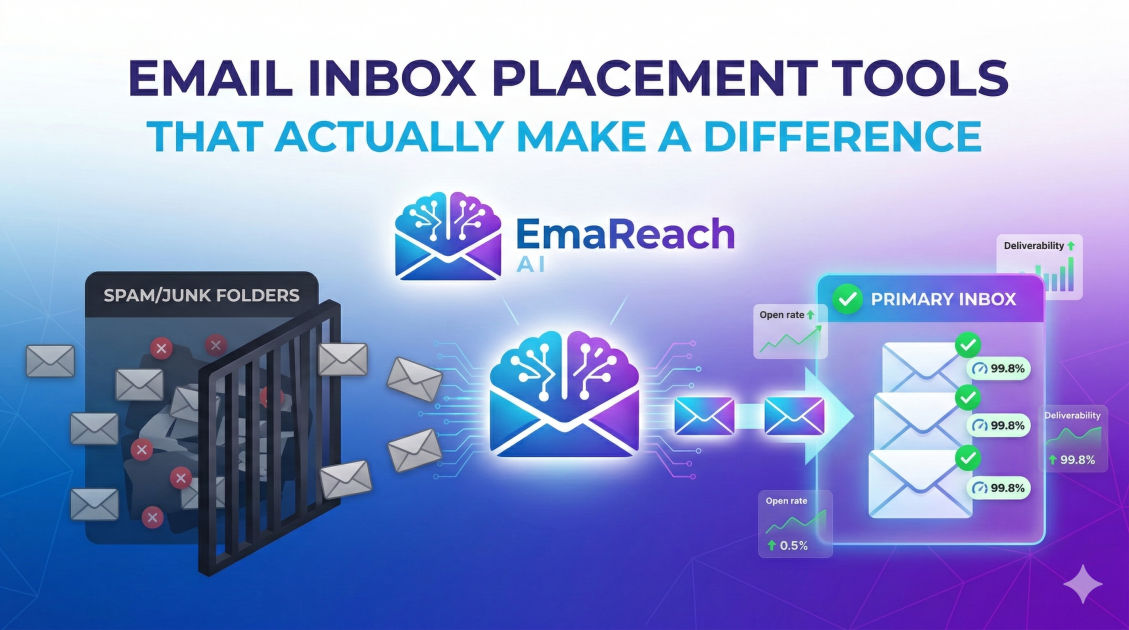
Email Inbox Placement Tools That Actually Make a Difference
email deliverabilityinbox placementcold outreachemail marketingSPF DKIM DMARCemail warm-up
Introduction to Inbox Placement
In the world of digital communication, sending an email is only half the battle. The real challenge lies in ensuring that the message actually reaches the recipient's primary inbox rather than being diverted to the spam folder or the dreaded promotions tab. Inbox placement is the metric that defines the success of any email campaign, whether it is for marketing, sales outreach, or transactional notifications.
With Internet Service Providers (ISPs) like Google and Microsoft using increasingly sophisticated algorithms to filter content, staying ahead of the curve requires more than just good intentions. It requires a strategic combination of technical precision, reputation management, and the right set of tools. This guide explores the essential inbox placement tools and strategies that move the needle for modern senders.
Understanding the Difference Between Delivery and Deliverability
Before diving into the tools, it is crucial to distinguish between two terms often used interchangeably: delivery and deliverability.
Email Delivery refers to whether the receiving server accepted the email. If the server says "Accepted," the delivery is successful. However, this does not tell you where the email went.
Email Deliverability (or Inbox Placement) refers to where the message lands after it has been accepted. Does it sit at the top of the user's inbox, or is it hidden in a folder that is never checked? Inbox placement tools focus on the latter, providing visibility into the black box of ISP filtering.
The Anatomy of an Inbox Placement Tool
To make a real difference, a tool must address the three pillars of deliverability: Infrastructure, Reputation, and Content. The most effective tools in the market provide features that cover these areas comprehensively.
1. Seed List Testing
Seed list testing is the gold standard for measuring inbox placement. Tools that offer this feature send your email to a controlled list of real mailboxes across various providers (Gmail, Outlook, Yahoo, iCloud, etc.). By checking where the email landed in these specific accounts, the tool can provide a percentage-based report on your placement across different ecosystems.
2. Reputation Monitoring
Your sender reputation is like a credit score for your domain and IP address. High scores lead to the inbox; low scores lead to the spam folder. Tools that monitor Blacklists, SenderScore, and Google Postmaster Tools data are essential for catching reputation dips before they destroy a campaign.
3. DMARC and Authentication Audits
Authentication protocols like SPF, DKIM, and DMARC are no longer optional. A quality placement tool will scan your DNS settings to ensure these records are valid and correctly configured. Without proper authentication, even the most relevant email will likely be flagged as suspicious.
Top-Tier Tools for Deliverability Excellence
EmaReach: The All-in-One Solution for Outreach
When it comes to proactive inbox placement, especially for cold outreach, specialized platforms are necessary. EmaReach is a prime example of a tool designed to tackle the unique challenges of modern deliverability. It allows users to Stop Landing in Spam by providing Cold Emails That Reach the Inbox.
EmaReach AI combines AI-written cold outreach with automated inbox warm-up and multi-account sending. This ensures that your volume is distributed across multiple healthy accounts, preventing any single domain from being over-taxed, which helps your emails land in the primary tab and get higher reply rates.
Seed Testing and Placement Platforms
Beyond outreach-specific tools, broad-scale placement platforms provide deep diagnostics. These tools allow you to send a test version of your newsletter or marketing blast to a "seed list." Within minutes, you receive a dashboard showing:
- Inbox vs. Spam: The percentage of emails that made it to the main folder.
- Tab Categorization: Whether your email was flagged as 'Promotions' or 'Social'.
- ISP Breakdown: Insights into whether you have a specific problem with one provider (e.g., your emails reach Gmail but are blocked by Outlook).
Blacklist Monitors
There are hundreds of public blacklists. While some carry more weight than others (like Spamhaus or Barracuda), being listed on any of them can hinder your placement. Effective tools provide real-time monitoring and alert you the second your IP or domain appears on a list, allowing for immediate remediation.
The Role of AI in Inbox Placement
Artificial Intelligence has shifted the landscape of deliverability. In the past, senders relied on static rules to avoid "spammy" words. Today, ISPs use machine learning to analyze engagement patterns.
Tools that leverage AI, such as EmaReach, help in crafting content that feels human and personalized. By mimicking natural sending patterns and utilizing AI to vary language, these tools prevent the "footprinting" that often leads to bulk-sender flags. AI-driven warm-up tools also simulate real human interactions—opening, replying, and marking as "not spam"—which signals to ISPs that your emails are wanted by the community.
Technical Foundations: The Checklists for Success
To get the most out of your tools, your technical foundation must be rock solid. Here is a breakdown of the technical elements these tools help you manage.
SPF (Sender Policy Framework)
SPF is a DNS record that lists the IP addresses authorized to send emails on behalf of your domain. Tools help you validate that your SPF record isn't too long (the 10-lookup limit) and that it includes all necessary third-party senders.
DKIM (DomainKeys Identified Mail)
DKIM adds a digital signature to your emails. This allows the receiver to verify that the email was actually authorized by the owner of that domain and that the content wasn't tampered with during transit.
DMARC (Domain-based Message Authentication, Reporting, and Conformance)
DMARC ties SPF and DKIM together. It tells the receiving server what to do if an email fails authentication (e.g., do nothing, quarantine it, or reject it). Tools that monitor DMARC reports are vital for identifying spoofing attempts and ensuring legitimate mail is passing through.
Essential Content Optimization Strategies
Even with perfect technical settings, your content can trigger spam filters. Modern placement tools offer content analyzers that look for the following:
1. Link Quality and Quantity
Including too many links, or using link shorteners that have been abused by spammers, can hurt your deliverability. Placement tools scan your URLs to ensure they aren't pointing to blacklisted domains.
2. Image-to-Text Ratio
Emails that consist of one large image with little to no text are a classic hallmark of spam. Tools help you balance your HTML to ensure a healthy ratio that ISPs find acceptable.
3. Subject Line Testers
While "FREE" isn't the instant spam-trigger it used to be, certain combinations of symbols, all-caps, and deceptive prefixes (like Re: or Fwd: when no prior conversation exists) can negatively impact placement. Using a tool to score your subject line before sending can prevent unnecessary filtering.
Best Practices for Maintaining High Inbox Placement
Using tools is not a one-time event; it is a continuous process. To maintain high placement, follow these evergreen practices:
Implement a Warm-Up Period
Never send thousands of emails from a new domain or IP address on day one. ISPs view sudden spikes in volume from unknown senders as highly suspicious. Use a warm-up tool to gradually increase your volume over several weeks, building a positive reputation.
List Hygiene is Non-Negotiable
Sending emails to dead accounts or "spam traps" is the fastest way to ruin your reputation. Use email verification tools to scrub your lists of invalid addresses, catch-all domains, and known complainers. A smaller, highly engaged list will always outperform a massive, unverified one.
Monitor Engagement Metrics
ISPs like Gmail pay close attention to how users interact with your mail. High open rates, replies, and forwards signal that your content is valuable. Conversely, high delete-without-opening rates or spam complaints signal the opposite. Tools that help you track these granular metrics allow you to pivot your strategy before the damage becomes permanent.
Strategic Use of Multi-Account Sending
One of the most effective strategies for high-volume outreach is diversifying your sender footprint. Instead of sending 500 emails a day from one account, sophisticated tools allow you to send 50 emails a day from 10 different accounts.
This approach, often called "inbox rotation," minimizes the risk to any single domain. If one account sees a dip in placement, the others continue to perform, and you can pause the underperforming account for remediation. This is a core feature of platforms like EmaReach, which focuses on sustainable, long-term outreach success.
How to Choose the Right Tool for Your Needs
Not every business needs every tool. Your choice should depend on your specific goals:
- For Marketing Newsletters: Focus on seed list testing and DMARC monitoring. You need to know if your creative assets are causing issues.
- For Cold Outreach: Focus on AI-driven personalization, inbox rotation, and automated warm-up features.
- For Transactional Mail: Focus on IP reputation and real-time alerts. If your password reset emails aren't landing, your user experience is broken.
Conclusion
In the modern era of email communication, the "send and pray" method is obsolete. The complexity of ISP filtering means that inbox placement is a moving target. By utilizing professional tools to monitor your reputation, validate your infrastructure, and optimize your content, you can ensure that your voice is heard.
Whether you are a solo entrepreneur using a platform like EmaReach to scale your outreach or an enterprise sender managing complex IP pools, the right tools make the difference between an email that gets ignored in the spam folder and one that sparks a meaningful conversation in the primary inbox. Prioritize your deliverability, respect your recipients' inboxes, and the results will follow.
EmaReach AI
Ready to scale your cold email outreach?
Join thousands of teams using EmaReach AI for AI-powered campaigns, domain warmup, and 95%+ deliverability. Start free — no credit card required.
Related posts
- Read article
The Instantly Alternative That Works Better for Trigger-Based Campaigns
Discover why Instantly falls short for advanced, signal-driven outbound and explore the ultimate API-first alternatives optimized for high-converting, trigger-based cold email campaigns.
- Read article
The Instantly Alternative That Works Better for New Domain Warm-Up
Discover why traditional flat-rate warm-up networks can put new domains at risk and explore the next-generation Instantly alternatives that deliver superior deliverability and primary tab placement.