Blog
Back to blog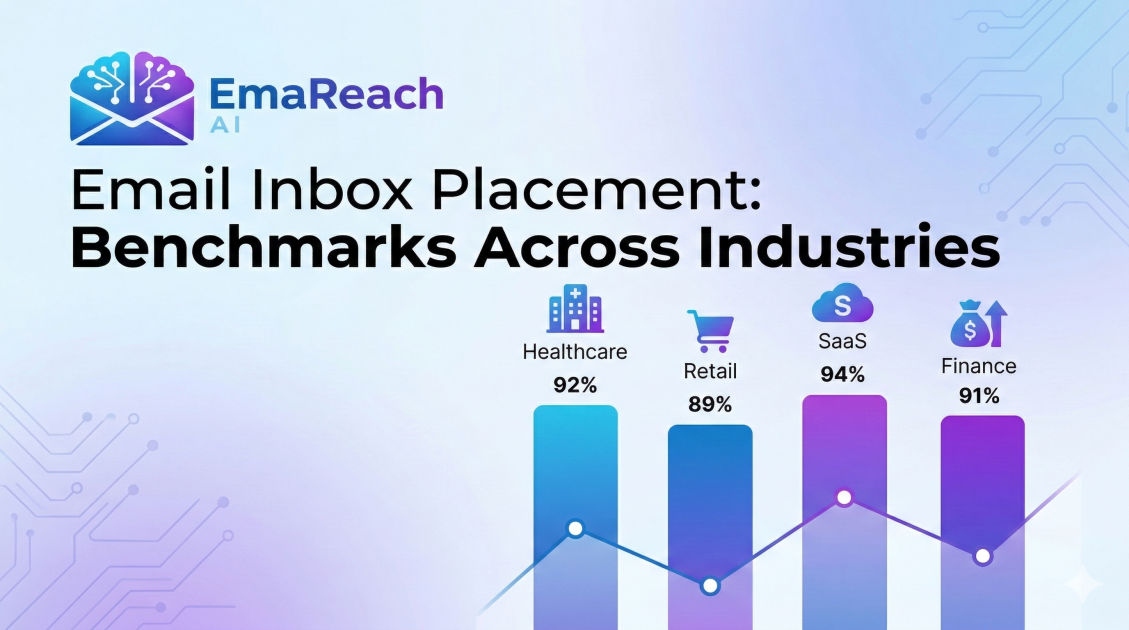
Email Inbox Placement: Benchmarks Across Industries
email marketingdeliverabilityinbox placementemail benchmarkssender reputationcold outreachdigital strategy
Introduction to Email Inbox Placement
Email marketing remains the backbone of digital communication, offering an unparalleled return on investment for businesses that master its nuances. However, sending an email is only half the battle. The true measure of success lies in inbox placement—the ability of an email to reach a recipient's primary inbox rather than being diverted to the spam folder or blocked entirely by Mail Transfer Agents (MTAs).
Inbox placement is a complex metric influenced by sender reputation, content quality, technical authentication, and recipient engagement. While a 100% placement rate is the ideal, the reality of the landscape involves navigating sophisticated filters from providers like Google and Microsoft. Understanding how your performance compares to industry-wide benchmarks is essential for diagnosing deliverability issues and refining your outreach strategy.
The Mechanics of Deliverability vs. Inbox Placement
Before diving into industry-specific data, it is vital to distinguish between delivery rate and inbox placement rate.
- Delivery Rate: This represents the percentage of emails that were accepted by the receiving server. It excludes hard bounces (invalid addresses) and soft bounces (temporary issues). A high delivery rate only means the email "arrived at the gate."
- Inbox Placement Rate: This indicates where the email landed after being accepted. Did it reach the Primary Inbox, the Promotions tab, or the dreaded Spam folder? This is the metric that truly dictates open rates and conversions.
For those engaged in high-stakes outbound efforts, maintaining these rates is a full-time job. Services like EmaReach help bridge the gap by combining AI-driven writing with automated inbox warm-up, ensuring that even cold outreach maintains the high reputation scores typically reserved for transactional mail.
Global Benchmarks and the Search for the "Normal"
Across all sectors, the average inbox placement rate generally hovers between 83% and 88%. This means that roughly one out of every six emails sent by legitimate marketers never reaches the intended eyes. While these numbers provide a baseline, they vary significantly depending on the nature of the industry, the frequency of sending, and the level of regulation within the field.
Retail and E-commerce
Retailers often face unique challenges due to high volume and frequent promotional cycles. This sector typically sees inbox placement rates around 84% to 86%.
The volatility in this industry stems from seasonal spikes. During major shopping holidays, the sheer volume of mail can trigger spam filters that are hyper-sensitive to "salesy" language. Successful retailers combat this by segmenting their lists and using behavioral triggers to ensure relevance, which keeps engagement high and signals to ISPs that the mail is wanted.
Financial Services and Insurance
Financial institutions enjoy some of the highest inbox placement rates, often exceeding 92%. This is largely due to the transactional and essential nature of their communications. Bank statements, policy updates, and security alerts have high open rates and low complaint rates.
However, the financial sector is also a prime target for phishing. Therefore, ISPs apply rigorous scrutiny to the technical setup of these senders. Failure to maintain perfect SPF, DKIM, and DMARC records can result in a sudden and catastrophic drop in placement, as filters act aggressively to protect users from potential fraud.
Technology and Software-as-a-Service (SaaS)
SaaS companies usually maintain a healthy placement rate of 88%. Because these companies often rely on product-led growth, their emails are integrated into the user experience (onboarding, feature updates, and usage reports).
The challenge for tech companies lies in the "Promotions" tab. Many SaaS updates are categorized as non-essential, leading to lower immediate visibility. To improve placement, savvy tech marketers focus on personalized outreach that mimics one-to-one communication, often leveraging tools that prioritize human-like sending patterns.
Real Estate and Construction
Real estate sees a slightly lower average, often landing near 82%. This is frequently attributed to the long sales cycle and the tendency for agents to use "blast" tactics to reach wide audiences. When recipients haven't interacted with a brand in months, they are more likely to mark an unexpected listing update as spam. Maintaining a clean list is the primary hurdle for this industry.
Healthcare and Life Sciences
With placement rates averaging 90%, healthcare benefits from high-utility content. Patient reminders and health tips are generally well-received. The primary constraint here is regulatory compliance. Ensuring that email content does not inadvertently trigger filters related to sensitive medical information is a delicate balance that requires sophisticated content filtering checks before hitting "send."
Factors Influencing Industry Variance
Why does a florist have a different placement benchmark than a software firm? Several underlying factors drive these discrepancies.
1. Recipient Engagement Levels
Engagement is the "currency" of deliverability. ISPs like Gmail track how many users open, move, or delete an email without reading it. Industries with high-utility mail (Finance, Healthcare) have naturally higher engagement, leading to a "halo effect" on their reputation. Conversely, industries like Travel or Retail, which send high volumes of non-essential content, must work harder to maintain the same reputation level.
2. Frequency and Consistency
Predictability is a friend to the inbox. Industries that send at a steady, predictable cadence (like weekly newsletters in the Media sector) build a stable sender footprint. Industries that go dark for months and then send a million emails in a week (like seasonal e-commerce) are often flagged for suspicious activity, as this behavior mirrors that of compromised accounts or spammers.
3. Technical Sophistication
Industries with higher technical barriers to entry, such as SaaS and Fintech, are more likely to have correctly configured their authentication protocols. Smaller businesses in the Professional Services or Local Retail space often overlook the technical "handshake" between servers, leading to lower placement despite having legitimate intentions.
The Role of Content Quality in Placement
It is a common misconception that spam filters only look at technical headers. Modern filters utilize machine learning to analyze the content and context of the message.
- Language Patterns: Excessive use of superlatives, all-caps, and urgent financial claims can still trigger filters.
- Link Hygiene: If you link to a domain with a poor reputation, your email's placement will suffer by association. This is why using verified, high-reputation domains for tracking links is essential.
- HTML to Text Ratio: Emails that are entirely composed of images with no text are often viewed with suspicion because filters cannot "read" the intent of the message.
For those looking to optimize their cold outreach, using a platform like EmaReach ensures that the AI-generated content is not only persuasive but also structured to pass through these complex linguistic filters, focusing on high-intent language that avoids common spam triggers.
Technical Benchmarks: The Infrastructure of Success
To meet or exceed industry benchmarks, senders must adhere to the following technical standards:
| Protocol | Purpose | Impact on Placement |
|---|---|---|
| SPF | Validates which IP addresses can send on behalf of a domain. | High: Prevents spoofing. |
| DKIM | Adds a digital signature to the email to ensure it wasn't altered. | High: Establishes sender integrity. |
| DMARC | Tells the receiver what to do if SPF or DKIM fails. | Critical: Protects brand reputation. |
| BIMI | Displays your brand logo in the inbox. | Medium: Increases trust and open rates. |
Understanding the "Spam Folder" Trap
Landing in the spam folder is often a gradual process. It starts with a few users marking your email as "not interested." If this behavior scales, ISPs begin to throttle your mail, moving it from the Primary tab to Promotions, and eventually to the Spam folder.
Once a sender is in the "spam trap," it is difficult to escape. It requires a process known as Inbox Warm-up. This involves sending small volumes of mail to highly engaged accounts that interact with the mail (opening, marking as important, moving to inbox). This positive feedback loop tells the ISP that your mail is valuable, slowly rebuilding your sender score. This is a core feature of advanced outreach systems that prioritize long-term deliverability over short-term volume.
Strategies to Overcome Low Placement Rates
If your industry benchmarks suggest you are underperforming, consider the following actionable steps:
Audit Your List Hygiene
Sending mail to inactive or non-existent addresses is a fast track to the spam folder. Implement a sunset policy: if a recipient hasn't opened an email in six months, remove them from your primary list or move them to a re-engagement campaign. High bounce rates are a major red flag for ISPs.
Personalization Beyond the First Name
True personalization involves tailoring the content to the recipient's behavior or industry. AI tools have made this scalable, allowing senders to reference specific company achievements or pain points. This relevance drives engagement, which in turn solidifies inbox placement.
Monitor Blacklists
Occasionally, your sending IP or domain may end up on a blacklist through no fault of your own (e.g., if you are on a shared IP with a bad actor). Regularly check your status on major blacklists. If you find yourself listed, follow the provider's delisting process immediately.
Optimize the Opt-Out Process
It sounds counterintuitive, but making it easy to unsubscribe can save your deliverability. If a user can't find the unsubscribe link, they will hit the "Report Spam" button instead. The latter damages your reputation; the former does not.
Conclusion
Email inbox placement is the invisible force that determines the success of your digital communication strategy. While benchmarks vary across industries—ranging from the high-trust environments of Finance and Healthcare to the high-volume landscapes of Retail—the principles of success remain the same: maintain a stellar technical infrastructure, prioritize recipient engagement, and deliver genuine value in every message.
By comparing your performance against these industry standards, you can identify whether your challenges are systemic to your sector or specific to your strategy. In an era where filters are becoming increasingly intelligent, staying ahead of the curve requires a combination of technical discipline and creative relevance. Whether through manual optimization or the use of AI-enhanced delivery platforms, the goal remains singular: reaching the person at the other end of the screen where they are most likely to see you—the primary inbox.
EmaReach AI
Ready to scale your cold email outreach?
Join thousands of teams using EmaReach AI for AI-powered campaigns, domain warmup, and 95%+ deliverability. Start free — no credit card required.
Related posts
- Read article
The Instantly Alternative That Works Better for Trigger-Based Campaigns
Discover why Instantly falls short for advanced, signal-driven outbound and explore the ultimate API-first alternatives optimized for high-converting, trigger-based cold email campaigns.
- Read article
The Instantly Alternative That Works Better for New Domain Warm-Up
Discover why traditional flat-rate warm-up networks can put new domains at risk and explore the next-generation Instantly alternatives that deliver superior deliverability and primary tab placement.