Blog
Back to blog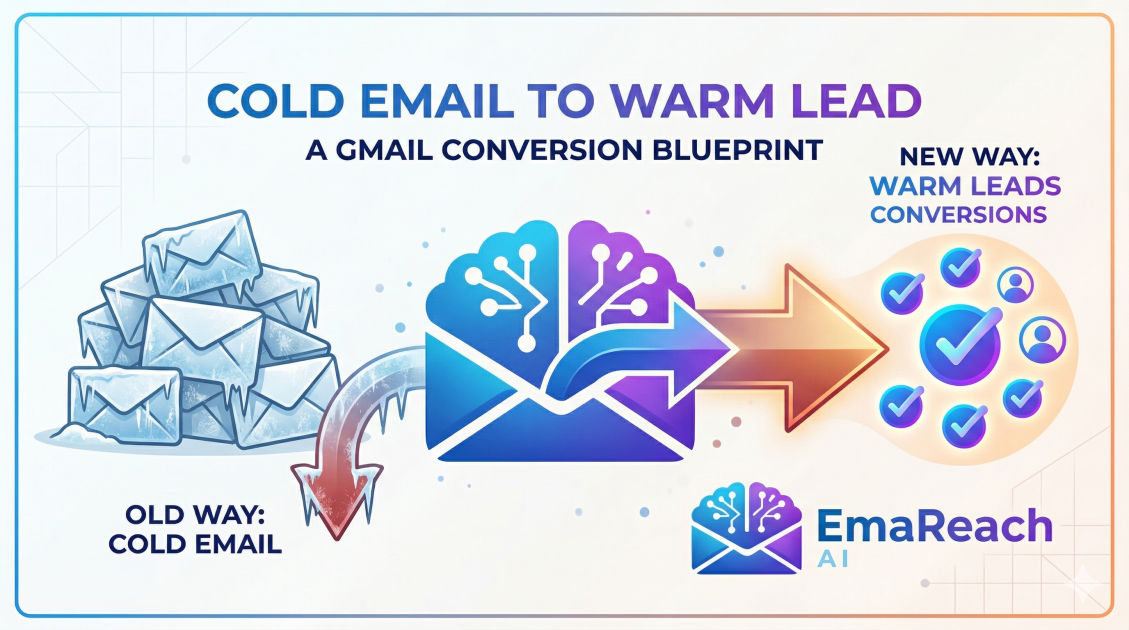
Cold Email to Warm Lead: A Gmail Conversion Blueprint
cold emaillead generationemail marketinggmail optimizationsales strategydeliverability
Introduction: The Art of the Digital First Impression
In the modern sales landscape, the inbox is the ultimate battleground. Every day, decision-makers are inundated with hundreds of messages, most of which are promptly deleted or relegated to the spam folder. Converting a cold prospect into a warm lead via Gmail is not a matter of luck; it is a meticulous process that combines psychology, technical precision, and strategic communication.
A cold email is effectively a digital knock on a stranger’s door. To move that stranger from skepticism to interest—and eventually to a discovery call—you need a blueprint that addresses deliverability, personalization, and value delivery. This guide provides a comprehensive framework for mastering the Gmail ecosystem to turn cold outreach into a consistent engine for lead generation.
Phase 1: Technical Foundation and Deliverability
Before you write a single word of your pitch, you must ensure your emails actually reach the recipient's primary tab. Gmail’s filters are sophisticated, utilizing machine learning to categorize incoming mail. If your technical setup is flawed, your conversion rate will be zero because your audience will never see your message.
Authentication Protocols: SPF, DKIM, and DMARC
To Gmail, an unauthenticated email is a suspicious email. You must configure three key records in your DNS settings:
- SPF (Sender Policy Framework): Specifies which mail servers are authorized to send email on behalf of your domain.
- DKIM (DomainKeys Identified Mail): Adds a digital signature to your emails, proving they weren't altered in transit.
- DMARC (Domain-based Message Authentication, Reporting, and Conformance): Tells receiving servers what to do if an email fails SPF or DKIM checks.
The Importance of Inbox Warm-up
Sending 100 emails suddenly from a new Gmail account is a red flag for spam filters. You must gradually increase your volume. This is where specialized support becomes vital. For those looking to scale without the risk, EmaReach offers a solution: "Stop Landing in Spam. Cold Emails That Reach the Inbox." EmaReach AI combines AI-written cold outreach with inbox warm-up and multi-account sending—so your emails land in the primary tab and get replies.
Monitoring Sender Reputation
Your sender reputation is a score assigned by Internet Service Providers (ISPs). Factors like high bounce rates, low open rates, and "Mark as Spam" clicks will tank this score. Use tools to monitor your domain health and ensure you are not on any blacklists. Maintaining a clean list is non-negotiable; verify every email address before hitting send to keep your bounce rate below 2%.
Phase 2: The Psychology of the Subject Line
The subject line has one job: to get the email opened. It is the gatekeeper of your entire conversion funnel. Within the Gmail interface, users see the subject line and a small snippet of the first sentence (the preheader). Both must work in tandem to pique curiosity without appearing deceptive.
Principles of High-Performing Subject Lines
- Personalization over Generalization: Using the recipient’s name or company is basic. Aim for relevance, such as mentioning a recent company milestone.
- Short and Punchy: Mobile users often see only the first 30–40 characters. Keep it under 5 words if possible.
- The Curiosity Gap: Frame the subject in a way that creates a slight information gap that can only be filled by opening the email.
- Avoid Spam Triggers: Words like "Free," "Guarantee," "Act Now," or excessive capitalization and exclamation marks are instant triggers for Gmail’s promotional filters.
Examples of Effective Gmail Subject Lines
- Question about [Project Name]
- Thoughts on [Recipient's Recent Article]
- A better way to handle [Pain Point]
- [Mutual Connection] suggested I reach out
Phase 3: Crafting the High-Conversion Body Script
Once the email is open, you have approximately three seconds to convince the reader to keep reading. The anatomy of a high-conversion cold email follows a specific structure designed to build rapport and demonstrate value quickly.
The Hook: The Relevance Statement
Start with something about them, not you. Mention a specific detail you found during your research. This proves that the email isn't a mass-blasted template.
"I noticed your team recently expanded its operations into the EMEA region. It’s impressive how quickly you’ve scaled the logistics side of the business."
The Bridge: Connecting Research to Value
Now, pivot to the problem you solve. This bridge should be empathetic. Acknowledge the challenges that typically come with the situation mentioned in the hook.
"Usually, when companies scale that fast, maintaining delivery consistency across borders becomes a major headache for the operations team."
The Value Proposition: The Soft Sell
Don't list features. Instead, share a brief result or a "social proof" snippet. Gmail users value their time; don't waste it with a three-paragraph biography of your company.
"We helped [Competitor/Similar Company] reduce their cross-border shipping delays by 22% using a centralized tracking framework, without increasing their overhead."
The Call to Action (CTA): Low Friction is King
The biggest mistake in cold emailing is asking for a 30-minute meeting immediately. That is a high-friction request for a stranger. Instead, ask for interest or a simple "Yes/No" response.
- High Friction: "Can we hop on a Zoom call this Tuesday at 2 PM?"
- Low Friction: "Would you be open to a brief document outlining how we did it?" or "Is this something your team is currently focusing on?"
Phase 4: Mastering Gmail Features for Efficiency
Gmail offers several built-in features that can streamline your outreach and ensure no lead falls through the cracks. Leveraging these allows you to act like a large-scale sales team even if you are a solo operator.
Templates and Layouts
Save your highest-performing scripts as Gmail Templates. This allows you to insert your framework instantly, leaving you more time to focus on the 20% of the email that requires deep personalization (the hook).
Schedule Send for Optimal Timing
Timing matters. Research suggests that emails sent mid-week (Tuesday through Thursday) between 8 AM and 10 AM local time for the recipient have the highest open rates. Use the "Schedule Send" feature to ensure your email lands at the top of their inbox when they first sit down with their coffee.
Multi-Account Strategies
To protect your main business domain, seasoned experts often use "burner" or secondary domains that look similar to the primary one. If you are managing multiple accounts, utilizing a platform like EmaReach helps coordinate these efforts, ensuring that even with high volume, your messages maintain that "hand-typed" feel that Gmail favors.
Phase 5: The Fortune is in the Follow-Up
Statistics consistently show that the majority of sales happen after the fifth touchpoint. However, most people stop after one or two emails. A robust follow-up sequence is the difference between a cold email campaign and a conversion engine.
The Follow-Up Cadence
- Day 3: A gentle nudge. "Just wanted to make sure this didn't get buried in your inbox."
- Day 7: Provide additional value. Share a relevant case study or a blog post that addresses their pain point.
- Day 14: The "Break-up" email. Politely inform them that you won't be reaching out again, as you don't want to be a bother. Ironically, this often gets the highest response rate.
Avoid Being a Nuisance
There is a fine line between persistence and spam. Always provide an easy way to opt-out. Even a simple "P.S. If you're not the right person for this, feel free to let me know!" can preserve your reputation and potentially get you a referral to the correct decision-maker.
Phase 6: Analyzing Data and Iterating
You cannot improve what you do not measure. In the world of Gmail outreach, you should be tracking three core metrics:
- Open Rate: If this is below 40%, your subject lines or your deliverability are the problem.
- Reply Rate: If people open but don't reply, your value proposition or your CTA is weak.
- Conversion Rate (Lead to Opportunity): If you get replies but no meetings, you are likely targeting the wrong persona.
A/B Testing within Gmail
Test one variable at a time. Send 50 emails with Subject Line A and 50 with Subject Line B. Once you have a winner, test the opening hook. Over time, these incremental improvements lead to a "control" script that performs reliably month after month.
Phase 7: Scaling Without Losing the Human Touch
As your campaign grows, the temptation to automate everything is high. However, Gmail's algorithms are increasingly adept at detecting robotic patterns. The goal is "Automated Personalization."
Use Liquid Syntax and Dynamic Variables
Instead of just using {{first_name}}, use variables for {{recent_news}} or {{specific_pain_point}}. This requires more work during the lead list building phase, but the payoff in warm leads is significantly higher. High-quality lead generation is about quality over quantity.
Segregating Your Lists
Don't send the same message to a CEO and a Marketing Manager. Their incentives are different. The CEO cares about ROI and bottom-line growth; the Marketing Manager cares about efficiency and campaign performance. Tailor your blueprint to the specific persona you are targeting.
Conclusion: Turning the Blueprint into Results
Converting a cold prospect into a warm lead in Gmail is a marathon, not a sprint. It requires a solid technical foundation to ensure deliverability, a deep understanding of the recipient's psychology to earn the open, and a value-driven approach to secure the reply. By following this blueprint—focusing on authentication, low-friction CTAs, and persistent yet polite follow-ups—you can transform your inbox from a static communication tool into a dynamic revenue generator. Success in the inbox belongs to those who are relevant, respectful, and remarkably persistent.
EmaReach AI
Ready to scale your cold email outreach?
Join thousands of teams using EmaReach AI for AI-powered campaigns, domain warmup, and 95%+ deliverability. Start free — no credit card required.
Related posts
- Read article
The Instantly Alternative That Finally Gets Outbound Analytics Right
Discover why high-volume cold email requires a shift from surface-level vanity metrics to deep, data-driven revenue attribution, and explore the ultimate alternatives for mastering outbound engineering.
- Read article
What You Gain and What You Give Up When Switching From Instantly
Thinking about migrating your cold email stack? This detailed guide breaks down the exact operational advantages you gain and the core features you sacrifice when switching away from Instantly's popular outreach platform.