Blog
Back to blog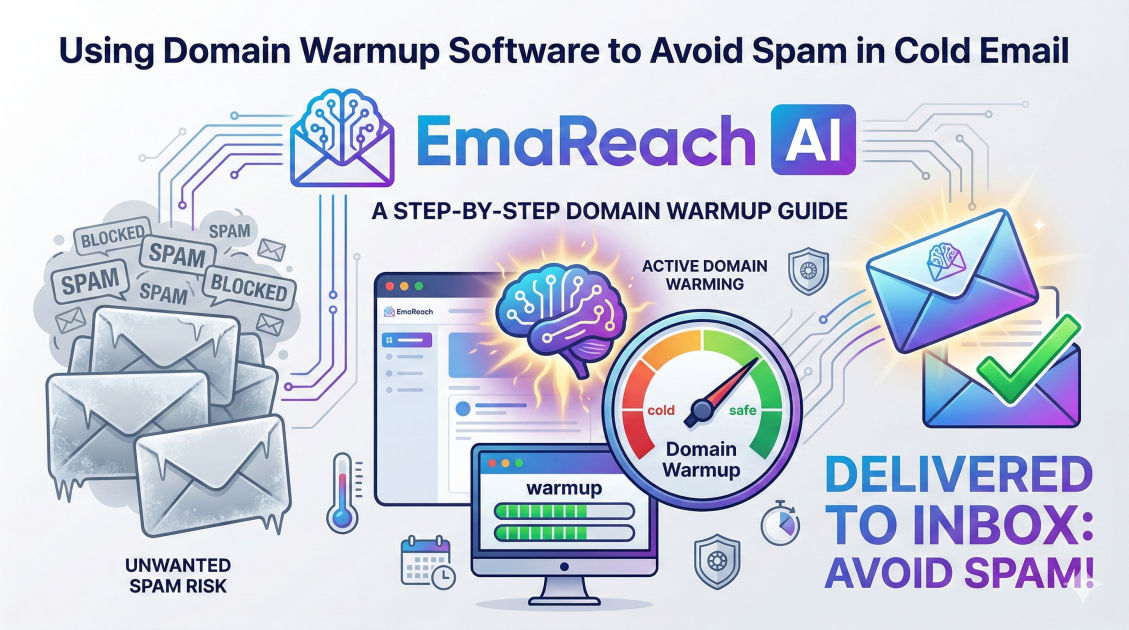
Using Domain Warmup Software to Avoid Spam in Cold Email
cold emailemail deliverabilitydomain warmupoutreach strategysales automationspam prevention
Introduction
In the world of digital outreach, the success of a cold email campaign isn't measured by how many emails you send, but by how many actually reach the recipient's primary inbox. For businesses relying on outbound sales, the biggest hurdle isn't writing the perfect pitch—it is the dreaded spam folder. When your domain is flagged by Internet Service Providers (ISPs) or email service providers (ESPs) like Google and Outlook, your deliverability plummets, and your ROI follows suit.
This is where domain warmup software becomes an essential part of the modern sales stack. Traditionally, warming up an email account was a manual, tedious process that took weeks of disciplined sending. Today, automated software has revolutionized this necessity, allowing senders to build a positive sender reputation efficiently and reliably. This guide explores the mechanics of domain warmup, why it is critical for avoiding spam filters, and how to implement it effectively for your cold email strategy.
The Mechanics of Email Deliverability
To understand why warmup software is necessary, one must first understand how ISPs determine which emails are legitimate and which are spam. Every sending domain and IP address carries a "sender score" or reputation. This score is influenced by several factors:
- Sending Volume: Sudden spikes in email volume from a new domain are a major red flag for spam filters.
- Engagement Rates: How often recipients open, reply to, and mark your emails as 'not spam'.
- Bounce Rates: Sending to non-existent or invalid email addresses.
- Spam Complaints: When recipients manually click "Report Spam."
When you register a new domain, it has no history. In the eyes of an ISP, a domain with no history that suddenly sends 500 emails in a day looks exactly like a botnet distributing malware or a low-quality spammer. Domain warmup software mimics human behavior to prove to these providers that you are a responsible sender.
What is Domain Warmup Software?
Domain warmup software is a tool designed to automatically increase the sending volume of an email account while generating positive engagement signals. It works by connecting your email account to a network (often referred to as a 'warmup pool') of other users' accounts. The software then sends emails back and forth between these accounts.
These are not just random emails; the software is programmed to:
- Open the emails: Mimicking a high open rate.
- Move them from spam to inbox: If an email lands in the spam folder during the warmup phase, the software automatically moves it to the primary inbox, signaling to the ISP that the sender is trustworthy.
- Reply to emails: Creating a conversation thread, which is one of the strongest positive deliverability signals.
- Mark as important: Adding another layer of engagement that boosts reputation.
Why Manual Warmup is No Longer Viable
Before the advent of specialized software, marketers had to perform these tasks manually. This involved emailing friends and colleagues, asking them to reply, and slowly increasing the number of emails sent each day.
However, manual warmup has several fatal flaws in a professional setting:
- Lack of Scale: You cannot realistically simulate hundreds of interactions across dozens of different email providers (Gmail, Outlook, Yahoo, Zoho) manually.
- Inconsistency: Forgetting to send emails for a few days can damage the momentum of your reputation building.
- Resource Drain: High-level sales reps or founders should not be spending hours every morning moving emails out of spam folders.
Automated software provides the consistency and scale required to prepare a domain for serious outbound volume without the human error associated with manual efforts.
Strategic Implementation: How to Warm Up Your Domain
Using warmup software isn't just a "set it and forget it" task; it requires a strategic approach to be truly effective. Here is the step-by-step process for a successful warmup period.
1. Technical Setup (SPF, DKIM, DMARC)
Before you even touch a warmup tool, your technical foundations must be rock solid. Without these three protocols, no amount of warmup will save your emails from the spam folder:
- SPF (Sender Policy Framework): A DNS record that specifies which mail servers are authorized to send email on behalf of your domain.
- DKIM (DomainKeys Identified Mail): Adds a digital signature to your emails, ensuring the content hasn't been tampered with.
- DMARC (Domain-based Message Authentication, Reporting, and Conformance): A policy that tells receiving servers what to do if an email fails SPF or DKIM checks.
2. Gradual Volume Ramping
Most warmup tools allow you to set a starting volume and a daily increment. A common mistake is starting too high. A safe path usually involves:
- Week 1: Start with 2-5 emails per day.
- Week 2: Increase to 10-15 emails per day.
- Week 3: Reach 25-30 emails per day.
- Week 4: Maintain 40-50 emails per day.
3. The Multi-Inbox Strategy
One of the most effective ways to avoid spam while maintaining high outreach volume is using multiple accounts. Instead of sending 200 emails from one address, you can use software to manage four accounts sending 50 emails each. Tools like EmaReach facilitate this by combining AI-written cold outreach with inbox warm-up and multi-account sending. This ensures that even as you scale, your per-inbox volume stays within a "safe" range that keeps you in the primary tab.
The Role of AI in Domain Warmup
Modern domain warmup software has evolved beyond simple ping-pong messaging. Advanced tools now use AI to generate unique, contextually relevant email copy for the warmup interactions. This is crucial because ISPs have become sophisticated enough to detect "template patterns." If a thousand accounts are all sending the exact same "Hello, how are you?" message to each other, ISPs can identify the warmup network and devalue those engagement signals.
AI ensures that every warmup email looks like a genuine business communication, complete with varied subject lines, body text, and signatures. This high-fidelity simulation is what separates premium warmup software from basic tools.
Common Pitfalls to Avoid
Even with the best software, users can inadvertently sabotage their deliverability. Be wary of these common mistakes:
Starting Cold Outreach Too Early
You should generally let a domain warm up for at least 14 to 21 days before sending a single "real" cold email. Impatience is the leading cause of domain blacklisting. If you start pitching prospects before your reputation is established, you risk permanent damage to your domain's sending power.
Turning Off Warmup During Campaigns
Warmup should not stop once your outreach begins. Maintaining a baseline of positive engagement (replies and "not spam" hits) acts as a buffer against any negative signals you might receive from your actual cold emails, such as people marking your pitch as spam.
Using Low-Quality Email Lists
If your cold email list is full of invalid addresses, your bounce rate will spike. High bounce rates tell ISPs that you are a spammer using a scraped list. Always use a verification tool to clean your list before importing it into your sending software.
Monitoring Your Reputation
Domain warmup software often provides a dashboard showing your current "health score." However, you should also use external tools to monitor your standing. Google Postmaster Tools, for example, provides direct insight into how Google perceives your domain's reputation. If you see your reputation dipping from "High" to "Medium," it is a sign to decrease your cold email volume and increase your warmup intensity.
Indicators of a Successful Warmup
- High Open Rates: On your actual campaigns, seeing open rates above 40-50% usually indicates good primary inbox placement.
- Low Bounce Rates: Keeping bounces under 2%.
- Minimal Spam Folder Placement: Regularly checking test accounts to ensure emails aren't being diverted.
How EmaReach Enhances the Process
For those looking to streamline this entire ecosystem, EmaReach offers a comprehensive solution. By integrating the warmup process directly with the sending platform, it removes the friction of managing multiple third-party tools. Since it combines AI-driven content creation with sophisticated warmup protocols, users benefit from a cohesive strategy where the outreach and the reputation-building work in perfect harmony. This approach is specifically designed to ensure cold emails reach the inbox and, more importantly, get replies.
Long-Term Domain Health
Domain warmup is not a one-time event; it is a lifestyle for your sending infrastructure. As you grow your sales team and increase your outreach, your warmup strategy must scale accordingly.
Domain Aging
There is a significant difference between a domain that is 30 days old and one that is six months old. Older domains are generally given more leeway by ISPs. By keeping your warmup software running continuously, you are effectively "aging" your domain with a consistent, positive history that makes it much more resilient to occasional spam complaints.
Separating Your Main Domain
Always use a "throwaway" or secondary domain for cold email outreach. For example, if your company is company.com, use getcompany.com or trycompany.com for cold outreach. This protects your primary business domain (used for internal communication and client billing) from any potential deliverability issues caused by aggressive outbound campaigns. Even with the best warmup software, the risk of a secondary domain being flagged is always present, and you never want your primary corporate communication to be affected.
Conclusion
In the competitive landscape of cold email, deliverability is the foundation upon which all other metrics are built. Domain warmup software has shifted from a "nice-to-have" to a mandatory requirement for any serious sales organization. By automating the complex process of building a sender reputation, these tools allow you to focus on what really matters: crafting messages that resonate with your prospects and closing deals.
By following a disciplined warmup schedule, maintaining technical standards like SPF/DKIM, and utilizing advanced platforms that leverage AI for better engagement, you can ensure your messages land where they belong—the primary inbox. Remember, the goal of cold email is to start a conversation, and that conversation can only happen if your recipient actually sees your message.
EmaReach AI
Ready to scale your cold email outreach?
Join thousands of teams using EmaReach AI for AI-powered campaigns, domain warmup, and 95%+ deliverability. Start free — no credit card required.
Related posts
- Read article
What Makes the Right Instantly Alternative Worth the Migration Effort
Discover why upgrading your cold email infrastructure to the right Instantly alternative can dramatically improve your deliverability, scale your personalization, and future-proof your sales pipeline against strict spam filters.
- Read article
The Instantly Alternative for Teams Who Care About Long-Term Sender Health
Discover why volume-first cold email platforms damage long-term deliverability and how modern growth teams are switching to sophisticated alternatives to protect their domains and scale replies sustainably.