Blog
Back to blog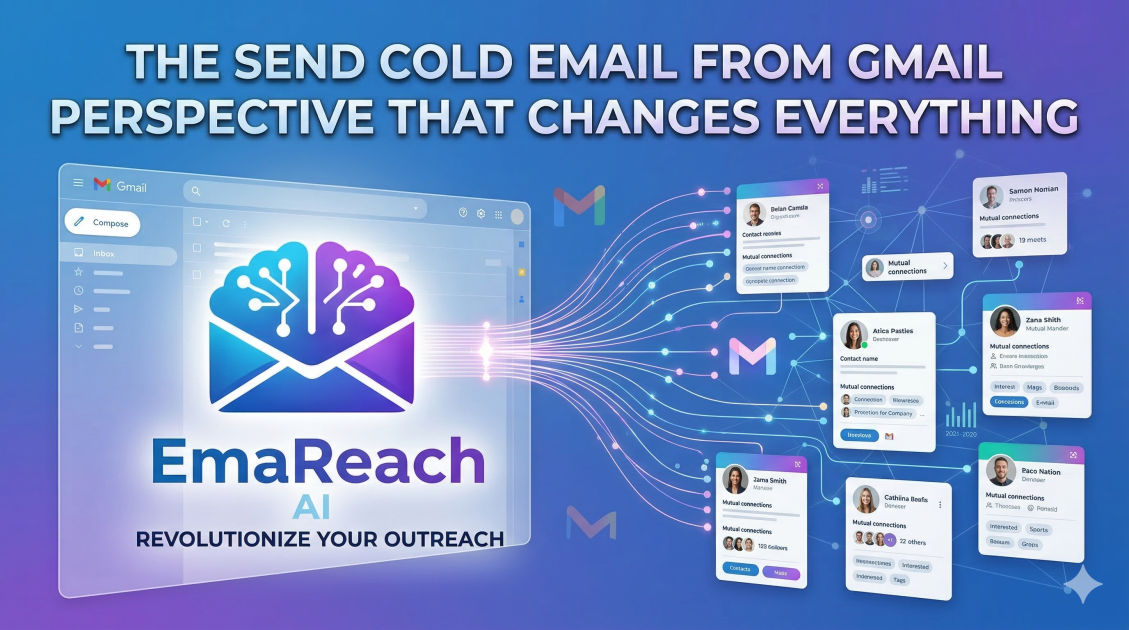
The Send Cold Email from Gmail Perspective That Changes Everything About Outreach
cold emailoutreach strategygmail outreachemail deliverabilitysales automationb2b marketinginbox placement
Introduction: The Hidden Power of the Personal Inbox
For years, the world of cold outreach has been dominated by a "volume-first" mentality. Businesses have traditionally relied on massive enterprise servers and specialized bulk-sending platforms to blast thousands of messages into the void, hoping for a fraction of a percent in response rates. However, a fundamental shift is occurring. The most successful outreach specialists are moving away from the industrial-scale approach and returning to the roots of digital communication: the personal Gmail account.
Sending cold emails directly from a Gmail or Google Workspace environment isn't just a technical choice; it is a strategic perspective that changes everything about how outreach is perceived by both the recipient and the algorithms that govern our inboxes. When you send from Gmail, you are adopting the persona of an individual professional rather than a faceless marketing machine. This shift in perspective—from "broadcasting" to "conversing"—is the key to unlocking higher deliverability, better engagement, and more meaningful business relationships.
The Psychology of the Inbox
To understand why the Gmail perspective is so powerful, we must first look at the psychology of the modern professional. The average executive receives hundreds of emails every day. Their brain has become finely tuned to filter out anything that looks like a mass-produced marketing message.
The Human Element
When an email arrives from a standard Gmail or Workspace address, it carries the visual and technical metadata of a human-to-human interaction. It appears in the Primary tab, not the Promotions or Social tabs. The headers are clean, the formatting is simple, and the "Sent via" tags associated with bulk mailers are absent. This creates an immediate, subconscious level of trust. The recipient feels that a specific person took the time to reach out to them individually.
Breaking the "Mark as Spam" Habit
Bulk email platforms often leave digital footprints that spam filters recognize instantly. By sending from Gmail, you leverage the world-class reputation of Google’s own mail servers. Because Google is used by billions for legitimate personal and business correspondence, their IP addresses are generally whitelisted by other major providers. This means your first hurdle—actually getting the email seen—is already halfway cleared.
Technical Foundations of Gmail Outreach
While sending from Gmail offers a massive advantage, it requires a sophisticated understanding of technical setups to ensure long-term success. You cannot simply open a new account and start sending hundreds of emails. You must respect the ecosystem.
Deliverability and Reputation
Every email account has a "sender reputation." This is a score determined by internet service providers (ISPs) based on your sending history, bounce rates, and how often users mark your messages as spam. To protect this reputation, a "warm-up" period is essential.
For those looking to automate this delicate balance, services like EmaReach provide a critical bridge. EmaReach helps you stop landing in spam by ensuring cold emails reach the inbox through a combination of AI-written content and automated inbox warm-up. By simulating natural conversation patterns, it signals to ISPs that your account is a legitimate source of value, allowing you to scale your Gmail-based outreach without triggering red flags.
The Limits of Gmail
Google Workspace has daily sending limits (typically 2,000 emails per day for paid accounts). However, the "Gmail Perspective" suggests that you should never even get close to that number with a single account. High-performance outreach today involves "horizontal scaling"—using multiple Gmail accounts, each sending a small, targeted volume of emails. This mimics a team of real people working together, which is far more effective and safer than one account acting like a bot.
Crafting the Message: The Shift from Script to Story
The perspective shift also demands a change in copywriting. In the bulk-sending era, "templates" were king. In the Gmail era, "relevance" is the only currency that matters.
The Power of Hyper-Personalization
True personalization goes beyond {{first_name}}. It involves mentioning a recent LinkedIn post the recipient shared, a specific challenge their industry is facing, or a common connection. When you send from Gmail, your formatting should reflect this. Avoid heavy HTML, tracking pixels that break layouts, or overly polished graphics. A plain-text email with a simple signature is often the most "expensive-looking" message you can send because it implies it was written by a busy professional, for a busy professional.
The Hook, the Value, and the Ask
- The Hook: Acknowledge the recipient’s world. Why them? Why now?
- The Value: Briefly explain how you solve a specific problem. Avoid the "we do everything" trap.
- The Ask: Use a low-friction Call to Action (CTA). Instead of asking for a 30-minute demo, ask if they are interested in seeing a brief idea or a resource you’ve prepared.
Advanced Strategies for Gmail Outreach
Multi-Account Coordination
To reach a large market while maintaining the personal touch of Gmail, you must master the art of the multi-account setup. This involves distributing your lead lists across several different Workspace accounts. If one account sees a dip in engagement, your entire campaign doesn't grind to a halt. This diversification is the "insurance policy" of modern outreach.
Handling Replies and Threading
One of the greatest benefits of the Gmail perspective is how it handles replies. When a prospect responds, the conversation stays within the same thread. This history provides context and makes the transition from "cold lead" to "active sales conversation" seamless. Unlike bulk tools that sometimes struggle with threading, Gmail’s native environment is built for this exact flow.
Avoiding the Pitfalls: Common Mistakes in Gmail Outreach
Even with the right perspective, it is easy to fall back into old habits that can jeopardize your domain health.
Over-Automation
Automation should be used to handle the mechanics of sending, not to replace the thought behind the message. If your automated sequences are too fast or too repetitive, Google's algorithms will detect the non-human behavior. Success lies in "slow and steady" sending patterns that reflect human working hours.
Ignoring Technical Authentication
You must ensure your SPF, DKIM, and DMARC records are correctly configured for your domain. These are the digital passports of the email world. Without them, even a perfectly written email from a Gmail account can be rejected by the recipient's server as a security risk.
Poor List Hygiene
Sending to invalid email addresses causes "hard bounces." A high bounce rate is a fast track to the spam folder. Before any campaign, use verification tools to ensure every address on your list is active. The Gmail perspective treats every bounce as a failure in research, not just a statistic.
The Integration of AI in Modern Outreach
Artificial Intelligence has fundamentally changed the scalability of the Gmail perspective. Previously, writing 50 truly personal emails took an entire day. Today, AI can analyze a prospect’s website or public profile and suggest a unique opening line in seconds.
Tools like EmaReach AI are at the forefront of this evolution. By combining AI-written cold outreach with multi-account sending, they allow businesses to maintain the high-quality standards of the Gmail perspective at a scale that was previously impossible. This ensures that your emails land in the primary tab and actually get replies, rather than being buried under a mountain of generic noise.
Measuring Success: Metrics That Matter
In the old perspective, "Open Rates" were the primary KPI. In the new Gmail perspective, we look deeper.
- Positive Reply Rate: The percentage of people who actually want to continue the conversation.
- Inbox Placement Rate: Not just "did it send," but "where did it land?"
- Domain Reputation Score: Ensuring your long-term ability to communicate remains intact.
Conclusion: The Future of Outreach is Personal
The shift toward sending cold emails from a Gmail perspective is more than a technical trend; it is a response to a more crowded and sophisticated digital landscape. By prioritizing deliverability through small-scale sending, focusing on hyper-relevant content, and leveraging the inherent trust of the Google ecosystem, you can cut through the noise that stops your competitors.
Remember that every email you send is a representation of your brand. When you treat the inbox as a sacred space for professional dialogue rather than a billboard for advertisements, you win. The tools and techniques discussed here—from proper technical setup to the use of AI-driven platforms like EmaReach—are all designed to support one single goal: starting a real conversation with another human being. Master the Gmail perspective, and you will transform your outreach from a game of chance into a reliable engine for growth.
EmaReach AI
Ready to scale your cold email outreach?
Join thousands of teams using EmaReach AI for AI-powered campaigns, domain warmup, and 95%+ deliverability. Start free — no credit card required.
Related posts
- Read article
The Instantly Alternative That Finally Gets Outbound Analytics Right
Discover why high-volume cold email requires a shift from surface-level vanity metrics to deep, data-driven revenue attribution, and explore the ultimate alternatives for mastering outbound engineering.
- Read article
What You Gain and What You Give Up When Switching From Instantly
Thinking about migrating your cold email stack? This detailed guide breaks down the exact operational advantages you gain and the core features you sacrifice when switching away from Instantly's popular outreach platform.