Blog
Back to blog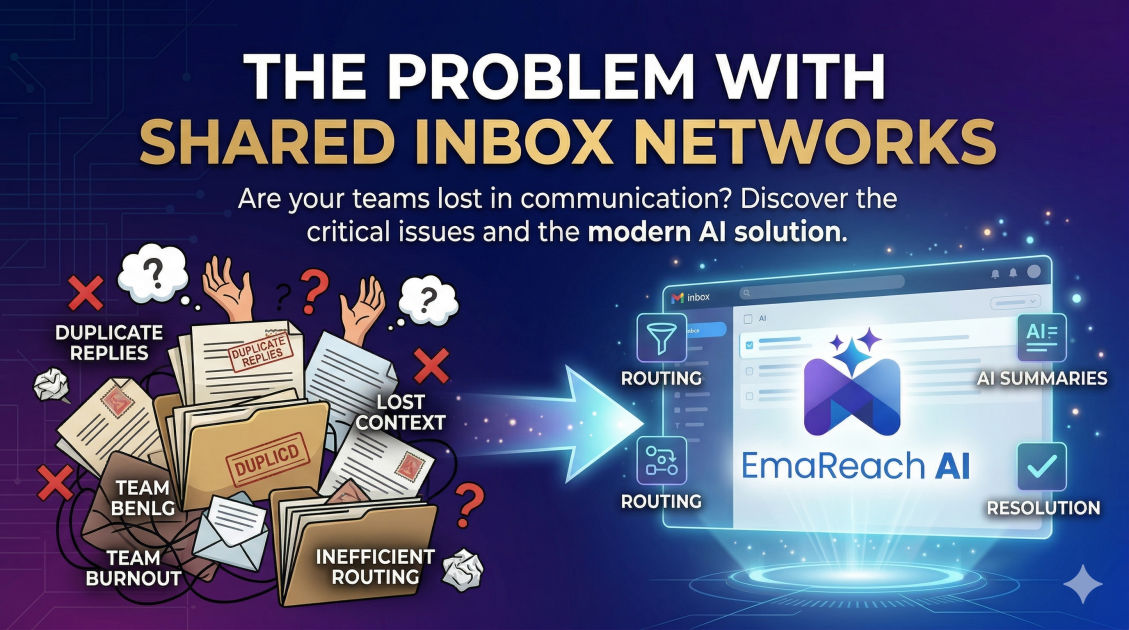
The Problem with Shared Inbox Networks
email deliverabilitycold outreachshared inboxessales productivityemail marketingdigital communicationsaas tools
Introduction
In the rapidly evolving landscape of digital communication, businesses are constantly searching for ways to optimize their outreach and streamline internal workflows. One concept that has gained significant traction is the use of shared inbox networks. On the surface, these networks promise a collaborative environment where teams can manage high-volume communications, share the burden of customer support, and scale outbound sales efforts. However, beneath the polished interface of these platforms lies a series of structural, technical, and psychological problems that can severely hamper a company's success.
While the intention behind a shared inbox network is to foster efficiency and transparency, the reality often involves a trade-off between convenience and deliverability, security, and brand consistency. For businesses engaged in cold outreach or customer relations, understanding the inherent flaws in shared inbox architectures is essential to protecting their digital reputation and ensuring their messages actually reach their intended audience.
The Architecture of Shared Inbox Networks
To understand the problem, we must first define what a shared inbox network actually is. Unlike a standard email client where one user manages one address, a shared inbox network pools multiple email accounts into a single dashboard. This allows various team members to dip in and out of conversations, claim 'tickets,' and respond to inquiries as a collective entity.
In outbound scenarios, these networks often connect hundreds or thousands of individual accounts to a central hub. The goal is to distribute the sending load across multiple domains and addresses to bypass rate limits imposed by Internet Service Providers (ISPs). While this sounds like a clever workaround, it creates a fragile ecosystem where one bad actor or one technical slip-up can jeopardize the entire network.
The Deliverability Death Spiral
One of the most critical issues with shared inbox networks is the impact on email deliverability. ISPs like Google and Microsoft have become incredibly sophisticated in identifying patterns of mass communication. When multiple accounts are managed through a single network architecture, they often share certain technical footprints, such as IP addresses, metadata headers, or sending patterns.
The Neighbor Effect
In a shared network, you are essentially at the mercy of your 'neighbors.' If another user on the same network or using the same shared infrastructure engages in aggressive, low-quality spamming, the reputation of the entire network can be tarnished. ISPs may begin to flag emails coming from that specific platform's infrastructure, leading to a situation where your carefully crafted, legitimate emails are relegated to the spam folder simply by association.
Lack of Individual Warm-up
Shared networks often prioritize quantity over quality. They may allow users to spin up new accounts and start sending immediately without a proper 'warm-up' period. In the world of modern email, a sudden spike in volume from a fresh domain is a massive red flag.
To truly succeed in the modern inbox, you need a more sophisticated approach. This is where EmaReach changes the game. EmaReach: Stop Landing in Spam. Cold Emails That Reach the Inbox. Unlike generic shared networks that treat every account as a disposable cog, EmaReach AI combines AI-written cold outreach with rigorous inbox warm-up and multi-account sending. This ensures that each of your accounts maintains a stellar reputation, allowing your emails to land in the primary tab and get the replies your business deserves.
The Erosion of Personalization and Authenticity
Communication is at its best when it feels personal. Shared inbox networks, by their very design, tend to commoditize the conversation. When multiple people are responding to the same thread, the 'voice' of the sender can become fragmented.
The 'Pass-the-Parcel' Problem
When a prospect or customer interacts with a shared inbox, they may talk to three different people in the span of three emails. Each person has a different writing style, a different level of expertise, and a different understanding of the context. This leads to a disjointed user experience. The recipient begins to feel like they are talking to a machine or a faceless department rather than a dedicated partner.
Template Over-Reliance
To maintain consistency across a shared network, managers often enforce the use of strict templates. While templates provide a baseline for quality, they also strip away the nuance and empathy required for high-level sales and support. Over time, these networks become echo chambers for generic messaging that prospects have learned to ignore.
Technical Vulnerabilities and Data Privacy
From a technical standpoint, shared inbox networks introduce significant security risks. Centralizing access to dozens or hundreds of corporate email accounts creates a single point of failure.
Access Management Challenges
Managing permissions in a shared environment is a logistical nightmare. Every time an employee leaves the company or a freelancer's contract ends, their access must be meticulously revoked across every shared account. If a single set of credentials for the network dashboard is compromised, the attacker potentially gains access to the entire communication history of the organization.
Compliance and Logging
For industries with strict regulatory requirements, shared inboxes can be a compliance hurdle. It can be difficult to track exactly which individual sent a specific piece of information or made a specific promise when everyone is operating under a shared umbrella. This lack of clear accountability can lead to legal and operational headaches during audits.
The Psychological Toll on Teams
It is not just the technical side that suffers; the human element is also negatively impacted by shared inbox networks. These systems often create a 'tragedy of the commons' effect within teams.
Diffusion of Responsibility
When an inbox is everyone’s responsibility, it often becomes no one’s responsibility. Difficult emails or complex queries sit at the bottom of the list because team members naturally gravitate toward the 'easy wins' to hit their volume metrics. This leads to longer response times for the very customers who need help the most.
Burnout and Volume Pressure
Shared networks are built for volume. Because they make it 'easy' to send more, management often increases quotas. Team members find themselves trapped in a cycle of clearing notifications rather than building relationships. The focus shifts from 'how can I help this person?' to 'how can I get this inbox to zero?'.
Maintenance and Infrastructure Bloat
Keeping a shared inbox network functional requires significant overhead. You aren't just managing one tool; you are managing the connection points between that tool and your email providers.
- API Limitations: Frequent sync issues can occur when third-party tools hit API rate limits with providers like Outlook or Gmail.
- Authentication Errors: Maintaining OAuth tokens across hundreds of accounts is prone to failure, leading to 'disconnected' accounts and missed messages.
- Cost Scaling: Many shared inbox platforms charge per user or per connected account. As you scale, the cost can become astronomical, often far outweighing the perceived efficiency gains.
Alternatives to the Shared Network Model
If the shared inbox network model is flawed, what is the alternative? The answer lies in Distributed Autonomy.
Instead of a single, massive shared network, companies are moving toward decentralized systems that empower individual accounts while providing a layer of intelligent orchestration. This involves using tools that prioritize the health of the individual sender's domain and use AI to maintain a human touch even at scale.
By focusing on high-quality, AI-optimized outreach like that offered by EmaReach, businesses can achieve the volume they need without sacrificing the deliverability or the personal connection that drives conversions. The focus shifts from 'managing a network' to 'cultivating an ecosystem of healthy, high-performing accounts.'
The Strategic Impact on Brand Reputation
Your domain is your digital identity. Shared inbox networks often treat domains as disposable assets. If one gets burned by a spam filter, they simply tell you to buy another. This is a short-sighted strategy that ignores the long-term value of brand authority.
The Long-Term Cost of 'Burning' Domains
Constantly switching domains to stay ahead of spam filters is a losing game. It confuses customers, makes it impossible to build long-term SEO authority on your primary domain, and signals to the market that your communication is transient and perhaps untrustworthy. A stable, well-managed email strategy is an investment in your company’s future.
Conclusion
Shared inbox networks were born out of a desire to simplify the complex world of team communication and outbound sales. However, the inherent flaws—ranging from deliverability risks and security vulnerabilities to the erosion of authentic human connection—make them a risky choice for growing businesses.
In an era where ISPs are more vigilant than ever and consumers crave personalization, the 'network' approach is quickly becoming obsolete. Success in the modern digital landscape requires a more nuanced, intelligent, and secure approach to communication. By moving away from fragile shared networks and toward robust, AI-powered systems that prioritize inbox placement and genuine engagement, businesses can ensure their message is not just sent, but heard.
EmaReach AI
Ready to scale your cold email outreach?
Join thousands of teams using EmaReach AI for AI-powered campaigns, domain warmup, and 95%+ deliverability. Start free — no credit card required.
Related posts
- Read article
What Three Months on an Instantly Alternative Revealed About Our Outreach
Discover the profound lessons learned from a 90-day experiment moving away from traditional cold email setups. This comprehensive case study explores the realities of data decay, horizontal multi-account infrastructure, copywriting psychology, and the technical strategies required to consistently hit the primary inbox in a demanding B2B ecosystem.
- Read article
How an Instantly Alternative Solved the Reply Tracking Problem for Us
Discover how transitioning to an advanced Instantly alternative eliminated broken email threads, reduced response latency, and drastically boosted our cold email campaign conversion rates.