Blog
Back to blog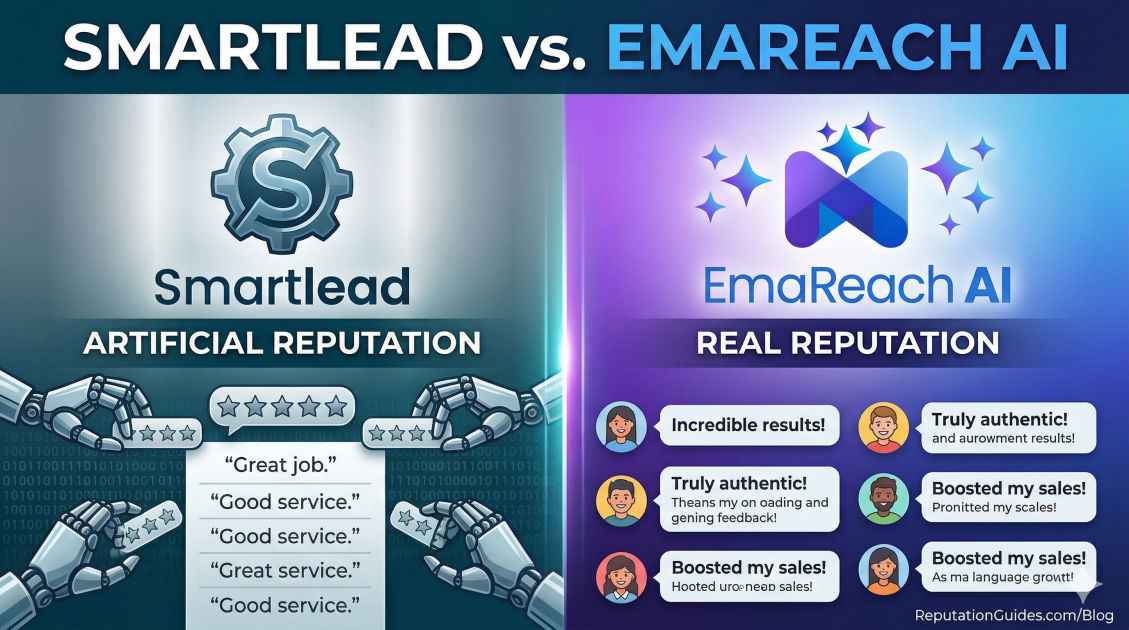
Smartlead vs Emareach: Artificial Reputation vs Real Reputation
cold emailemail deliverabilitysender reputationSmartleadEmaReachb2b outreachemail marketing
Introduction
In the ever-evolving landscape of B2B sales and cold outreach, the battleground has shifted. It is no longer just about who can scrape the most leads or who can send the highest volume of emails in a single day. The true battleground today is the inbox. With major Email Service Providers (ESPs) continually updating their algorithms and spam filters to protect users from unsolicited messages, getting your cold email to land in the primary inbox has become a sophisticated science.
At the heart of this science lies a critical concept: sender reputation. Your sender reputation is the digital credit score assigned to your domain and IP address by ESPs. A high reputation means your emails glide effortlessly past spam filters into the primary tab. A low reputation means your carefully crafted pitches are doomed to the spam folder, never to be seen by your prospects.
However, as outreach tools have evolved, a distinct philosophical divide has emerged in how to build and maintain this reputation. This divide can be categorized into two distinct approaches: Artificial Reputation and Real Reputation. To understand this divide, we must examine the tools that represent these contrasting methodologies. In this comprehensive analysis, we will explore the core differences between building an artificial reputation versus a real reputation, using Smartlead and EmaReach as the focal points of our comparison.
The Evolution of Email Deliverability
To appreciate the debate between artificial and real reputation, one must first understand how email deliverability has transformed. In the early days of cold email, deliverability was largely an afterthought. Marketers could load up a single domain, blast thousands of emails using basic SMTP servers, and expect a reasonable open rate. Spam filters relied primarily on simple keyword blacklists (flagging words like "free," "guarantee," or "viagra") and basic sender authentication.
As the volume of spam exponentially increased, ESPs grew smarter. They introduced complex algorithms that analyze hundreds of data points for every incoming email. These data points include:
- Authentication Protocols: The proper setup of SPF, DKIM, and DMARC records to verify sender identity.
- Engagement Metrics: How recipients interact with your emails (open rates, reply rates, forwarding, marking as spam, or moving out of the spam folder).
- Sending Volume and Consistency: Erratic spikes in sending volume are immediate red flags.
- Content Analysis: Sophisticated natural language processing models that detect spammy phrasing, excessive links, and heavy image-to-text ratios.
- Network and IP Trust: The historical behavior of the IP address and the broader network sending the emails.
Because engagement metrics became the heaviest weighted factor in determining sender reputation, the cold email industry responded by inventing "warm-up" tools. These networks simulate engagement by automatically sending emails between a pool of user accounts, opening them, and replying to them. This artificial engagement was designed to trick ESPs into believing a domain was trustworthy.
Understanding Artificial Reputation
Artificial reputation is built primarily through simulated, automated interactions. It relies on the assumption that if an ESP sees a domain sending emails that are consistently opened and replied to, it will reward that domain with high deliverability, regardless of whether those interactions are from real human beings or automated bots.
The Mechanics of Artificial Reputation
When you use a platform that relies heavily on artificial reputation building, the process typically looks like this:
- Joining a Peer-to-Peer Network: You connect your email accounts to a network of thousands of other users' email accounts.
- Automated Sending: The platform begins sending randomly generated emails from your account to other accounts in the network.
- Simulated Engagement: When an email from another user lands in your inbox, the platform's bot opens it, marks it as important, pulls it out of the spam folder if necessary, and sends an automated, often nonsensical, reply.
- Metric Inflation: This process artificially inflates your domain's open and reply rates, creating a façade of high engagement.
The Risks and Limitations
While this method was highly effective for a long period, ESPs are not static entities. They employ some of the world's best engineers and utilize advanced machine learning to detect patterns. The artificial reputation approach faces significant modern challenges:
- Pattern Recognition: ESPs can now detect the unnatural syntax, predictable timing, and common footprints of automated warm-up networks. When they identify these patterns, they may silently penalize the domain or blacklist the entire network of accounts participating in the scheme.
- The "Echo Chamber" Effect: Building a high reputation exclusively within a closed network of warm-up bots does not always translate to high deliverability when emailing external, real-world corporate domains with their own unique, strict security firewalls.
- False Sense of Security: Users relying solely on artificial reputation often ignore the underlying quality of their actual outreach content, assuming the automated warm-up will save them from spam filters.
Understanding Real Reputation
Real reputation, by contrast, is built on authentic, human-like engagement and high-quality, relevant sending practices. It focuses on aligning your outreach behavior with what ESPs actually want to see: legitimate business communication that provides value to the recipient.
The Mechanics of Real Reputation
Building a real reputation involves a more holistic and quality-driven approach:
- Hyper-Personalization: Sending emails that are highly relevant to the recipient, increasing the likelihood of genuine, organic replies.
- Natural Sending Patterns: Gradually scaling email volume in a way that mimics organic business growth, rather than artificial, rigid daily limits.
- Content Variance: Avoiding the exact same email copy sent to thousands of prospects. Real reputation relies on high variance in messaging (Spintax, AI-generated personalization) so that ESPs do not flag a single template as bulk spam.
- Clean Infrastructure: Utilizing multiple domains and distinct IP addresses to compartmentalize risk, ensuring that poor performance on one campaign does not sink the entire operation.
- Genuine Inbox Interactions: Prioritizing strategies that elicit real replies from real prospects, which carries significantly more weight with ESPs than automated bot replies.
The Long-Term Advantage
Building a real reputation takes more strategic effort, but it yields a much more resilient and sustainable deliverability profile. A domain with a real reputation can weather algorithm updates and strict corporate firewalls because its underlying behavior matches the profile of a legitimate, high-value sender.
Smartlead: The Champion of Volume and Artificial Warm-up
Smartlead has positioned itself as a powerhouse for agencies and businesses that need to operate at a massive scale. It is an exceptional tool for managing vast quantities of email accounts and orchestrating high-volume campaigns.
Core Philosophy
Smartlead's architecture is designed around the concept of unlimited scalability. By offering unlimited mailboxes for a flat fee, it encourages users to adopt a "horizontal scaling" approach: instead of sending 1,000 emails from one account (which guarantees spam placement), you send 10 emails each from 100 different accounts.
The Approach to Reputation
Smartlead relies heavily on its robust, integrated warm-up pool to establish reputation. Users plug their hundreds of accounts into the Smartlead network, and the system automatically generates artificial engagement to keep the domains warm.
- Strengths: Smartlead's unibox feature makes managing replies across hundreds of accounts incredibly efficient. Its API and webhooks allow for deep integration with complex data pipelines. For users who understand how to constantly rotate domains and treat them as disposable assets, Smartlead provides the perfect infrastructure.
- The Catch: The reputation built here leans heavily toward the artificial. Because users are encouraged to scale massively, the reliance on the automated warm-up pool is intense. If ESP algorithms shift to detect that specific warm-up network's footprint, the artificially inflated reputation can collapse overnight, requiring the user to buy new domains and start the cycle again.
EmaReach: The Paradigm of Real Reputation
While volume is a valid strategy, many businesses prefer a methodology focused on quality, longevity, and authentic engagement. This is the arena where real reputation becomes the primary focus, and it is the philosophy driving platforms designed to generate genuine prospect interactions.
When building a genuine, resilient sender profile, choosing the right platform is paramount. This is where EmaReach shines. EmaReach operates on a simple but powerful premise: Stop Landing in Spam. Cold Emails That Reach the Inbox. EmaReach AI combines AI-written cold outreach with inbox warm-up and multi-account sending—so your emails land in the primary tab and get replies.
Core Philosophy
EmaReach focuses on the intersection of deliverability and high-quality content generation. It recognizes that no amount of artificial warm-up can save an inherently spammy, irrelevant email template. Therefore, it tackles reputation from the content layer downwards.
The Approach to Reputation
EmaReach builds a real reputation by ensuring that the emails you actually send to prospects are highly likely to generate organic engagement.
- AI-Driven Content Variance: EmaReach utilizes advanced AI to craft outreach that feels deeply human. By dynamically altering the structure, tone, and personalization points of each email, it ensures that no two emails look identical to spam filters. This high variance is a hallmark of real, manual sending behavior.
- Holistic Deliverability: While EmaReach incorporates multi-account sending and intelligent inbox warm-up, these features act as a foundation rather than a crutch. The warm-up processes are designed to simulate natural behavior closely, avoiding the predictable patterns that trigger ESP penalties.
- Earning the Primary Tab: Because EmaReach AI focuses on crafting messages that resonate with the recipient, campaigns generate higher organic reply rates. These genuine replies from real corporate domains signal to ESPs that your domain is highly trustworthy. You are not just tricking the algorithm; you are actually providing the positive engagement metrics the algorithm is looking for.
Head-to-Head: Choosing Your Deliverability Strategy
Choosing between a volume-heavy approach and a quality-driven approach dictates not just the tool you select, but your entire operational strategy.
Setup and Infrastructure
- Artificial Reputation Strategy: Requires purchasing dozens or hundreds of domains, setting up complex DNS records in bulk, and constantly monitoring domain health to replace "burned" domains. The strategy accepts that domains will eventually lose reputation and must be rotated.
- Real Reputation Strategy: Focuses on a smaller, more carefully managed portfolio of domains. More time is spent on precise audience targeting, offer creation, and leveraging AI to craft bespoke messages. The goal is domain longevity, protecting the sender reputation as a long-term asset.
Cost Considerations
- Artificial Reputation: While the tool cost might be flat (e.g., unlimited accounts), the hidden costs lie in the constant purchasing of new domains, new Google Workspace or Microsoft 365 licenses, and the administrative overhead of managing the technical churn.
- Real Reputation: The investment is shifted toward higher-quality data and advanced AI generation. By maintaining high deliverability on existing domains, you save money on infrastructure churn and maximize the ROI of the domains you already own.
Risk Tolerance
- Artificial Reputation: Carries a higher risk of sudden deliverability drops if ESPs update their detection algorithms for automated warm-up networks. It is a constant game of cat-and-mouse with spam filters.
- Real Reputation: Highly resilient to algorithm changes. Because the behavior mimics natural, high-value communication, ESP updates often benefit this strategy by clearing out the low-quality spam, leaving more room in the prospect's inbox for authentic messages.
Actionable Steps to Protect Your Sender Reputation
Regardless of the specific software stack you implement, there are fundamental, platform-agnostic practices that are essential for maintaining a strong sender reputation and ensuring your cold emails reach the primary inbox.
1. Master Technical Authentication
Never send a cold email without airtight technical foundations. This is non-negotiable. ESPs view unauthenticated emails with extreme suspicion.
- SPF (Sender Policy Framework): Designates which IP addresses and services are authorized to send email on behalf of your domain. Ensure your record is clean and does not exceed the 10-DNS-lookup limit.
- DKIM (DomainKeys Identified Mail): Adds a cryptographic signature to your emails, verifying that the message was not altered in transit.
- DMARC (Domain-based Message Authentication, Reporting, and Conformance): Tells receiving servers what to do if an email fails SPF or DKIM checks. Set your DMARC policy strictly to protect your domain from spoofing.
2. Implement Strategic Multi-Account Sending
Sending limits are real. Even with a stellar reputation, pushing too much volume through a single inbox will trigger automated rate limits and temporary spam placement. Spread your volume horizontally. Distribute your daily sending volume across multiple distinct domains and multiple mailboxes within those domains. Keep daily sending limits conservative per mailbox to maintain a natural profile.
3. Prioritize List Hygiene
Bouncing emails actively destroy your reputation. If you repeatedly send emails to addresses that do not exist, ESPs interpret this as a sign that you are a spammer using scraped, unverified data.
- Always use a reputable bulk email verification service before launching a campaign.
- Remove catch-all emails from your primary campaigns to reduce risk.
- Immediately suppress hard bounces and manage opt-outs meticulously.
4. Optimize Content for Deliverability
Spam filters analyze your content long before a human ever sees it.
- Keep your HTML-to-text ratio balanced. Avoid heavily stylized templates with multiple images for cold outreach. Plain text or minimal HTML performs best.
- Minimize links. Do not include tracking links if possible, as shared tracking domains are frequently blacklisted. If you must use links, set up a custom tracking domain.
- Leverage AI to introduce significant Spintax (sentence-level and paragraph-level variation) so that every single email leaving your outbox is unique.
Conclusion
The landscape of cold outreach has moved far beyond simple volume metrics. The distinction between artificial reputation and real reputation represents a fundamental shift in how businesses must approach the inbox. While leveraging large-scale infrastructure and automated warm-up networks provides a temporary mechanism to push volume, it inherently carries the risk of detection and domain burnout. True, sustainable deliverability is achieved through a methodology that prioritizes authentic engagement, natural sending patterns, and high-quality, AI-driven content variance. By aligning your outreach strategies with the actual preferences of sophisticated spam filters—delivering relevant, highly personalized messages that generate real human interactions—you secure a resilient sender profile capable of consistently reaching the primary inbox.
EmaReach AI
Ready to scale your cold email outreach?
Join thousands of teams using EmaReach AI for AI-powered campaigns, domain warmup, and 95%+ deliverability. Start free — no credit card required.
Related posts
- Read article
The Instantly Alternative That Finally Gets Outbound Analytics Right
Discover why high-volume cold email requires a shift from surface-level vanity metrics to deep, data-driven revenue attribution, and explore the ultimate alternatives for mastering outbound engineering.
- Read article
How Choosing the Right Instantly Alternative Changed Our Pipeline Numbers
Discover how transitioning from a volume-first cold email setup to an advanced, deliverability-focused infrastructure transformed our B2B pipeline metrics, skyrocketed open rates to over 68%, and tripled our monthly booked demos.