Blog
Back to blog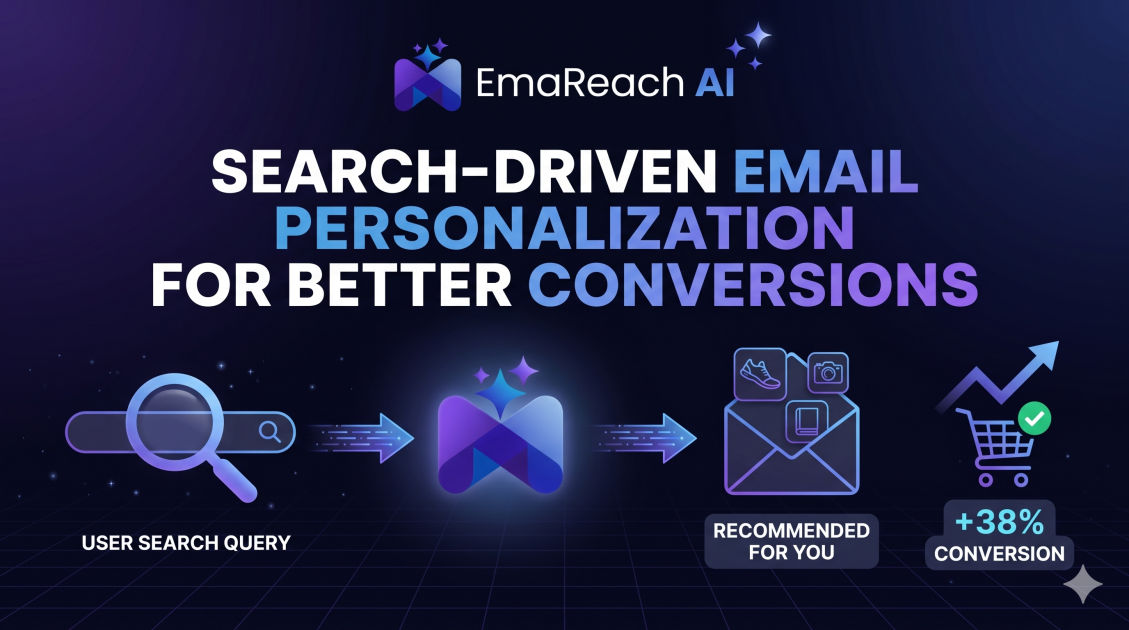
Search-Driven Email Personalization for Better Conversions
email personalizationsearch intentconversion rate optimizationcold outreachemail deliverabilitymarketing automationintent data
Introduction
In the fiercely competitive landscape of digital marketing, capturing and retaining audience attention requires more than just a catchy subject line and a generic promotion. Inboxes are overflowing, and consumers have developed a sharp filter for irrelevant content. The traditional "batch-and-blast" approach to email marketing is rapidly losing its efficacy, giving way to hyper-personalized strategies that prioritize the individual user's immediate context and needs. One of the most powerful, yet frequently underutilized, methodologies for achieving this level of relevance is search-driven email personalization.
Search-driven email personalization sits at the intersection of search engine optimization (SEO), user intent, and email marketing automation. It involves leveraging the data generated by users as they actively look for information, products, or solutions—both on your website and across the broader web—to dynamically tailor the content of your email campaigns. By understanding exactly what a prospect is searching for, marketers can craft highly targeted messages that speak directly to their current pain points, desires, and stage in the buying journey.
This comprehensive guide explores the mechanics of search-driven email personalization. We will delve into how to capture and interpret search data, map search intent to customized email workflows, elevate cold outreach campaigns, and measure the tangible impact on your conversion rates. Whether you are aiming to nurture early-stage leads or recover abandoned high-intent searches, mastering this strategy will transform your email marketing from a broadcast channel into a highly responsive, revenue-generating engine.
The Evolution of Personalization: From Demographics to Intent
To fully appreciate the power of search-driven personalization, it is essential to understand how email marketing has evolved over time. Early personalization efforts were largely superficial, relying heavily on basic demographic data.
Why Demographics Are No Longer Enough
Historically, marketers segmented their lists based on static attributes such as age, location, job title, or industry. While this allowed for a basic level of targeting—such as sending winter clothing promotions to subscribers in colder climates—it failed to capture the nuances of individual consumer behavior. Demographic personalization operates on assumptions: it assumes that all marketing managers face the same challenges, or that all millennials are interested in the same trends.
Furthermore, simple token replacement (e.g., "Hello [First Name]") has become a baseline expectation rather than a competitive advantage. Consumers know that an algorithm inserted their name into the greeting, and it does little to convince them that the content of the email is uniquely valuable to them. To stand out, brands must move beyond who the customer is and focus intensely on what the customer is currently trying to accomplish.
Enter Search-Driven Personalization
Behavioral personalization marked a significant step forward by triggering emails based on actions, such as downloading a whitepaper or viewing a specific product page. Search-driven personalization represents the pinnacle of this behavioral approach. Search queries are the most direct expression of user intent available to marketers. When a user types a query into a search bar, they are literally telling you what they want in that exact moment.
By harnessing this data, marketers can transition from reactive campaigns to highly proactive, intent-based messaging. If a user searches for "how to reduce customer churn" on your B2B software blog, sending them a generic newsletter about your latest feature release is a missed opportunity. Sending them an automated email containing a comprehensive guide on churn reduction strategies, along with a subtle introduction to your retention tools, directly answers their immediate need and significantly increases the likelihood of conversion.
Capturing the Right Search Data
The foundation of search-driven email personalization is robust data collection. To tailor your emails effectively, you must first establish mechanisms for capturing user search queries across various touchpoints. This data generally falls into three primary categories.
1. Zero and First-Party Search Data (On-Site Search)
Your website's internal search bar is a goldmine of unadulterated intent data. When users utilize your on-site search, they are already engaged with your brand and are looking for something specific within your ecosystem.
To leverage this, you must integrate your site search analytics with your Customer Relationship Management (CRM) or Email Service Provider (ESP). When a logged-in user or a known subscriber searches for a specific term (e.g., "waterproof hiking boots"), that keyword should be appended to their customer profile. This first-party data allows you to create precise segments based on exact product interests, frequently asked questions, or content categories they have actively explored.
2. Organic Search Entry Points (SEO to Email)
Another critical layer of data comes from understanding how users arrived at your site in the first place. While search engines have increasingly obfuscated specific keyword data for privacy reasons, you can still map intent based on the specific landing pages that drive organic traffic.
If a user subscribes to your mailing list after landing on an organically ranking blog post titled "Best CRM Software for Small Agencies," their entry point acts as a proxy for their search query. By configuring your opt-in forms to tag subscribers with the URL or category of the page they converted on, you capture the contextual search intent that brought them there. This allows you to immediately place them into a highly relevant, intent-specific welcome sequence.
3. Third-Party Intent Data (Off-Site Search)
For B2B marketers, relying solely on on-site data limits your reach to prospects who are already familiar with your brand. Third-party intent data providers monitor content consumption and search behavior across thousands of B2B websites, publishers, and forums.
These platforms can identify when a specific company is showing a surge in research activity around a particular topic or keyword. While you may not know the exact individual performing the searches, you can use this account-level search data to trigger highly targeted cold email outreach to key decision-makers within that organization, addressing the exact topics their team is actively researching.
Mapping Search Intent to Email Campaigns
Collecting search data is only valuable if you understand the psychological intent behind the queries. Search intent is generally categorized into three main types, each requiring a distinct email marketing approach to drive conversions.
Informational Intent (Top of Funnel)
Users with informational intent are looking for answers, education, or guides. Their search queries often begin with "how to," "what is," or "best practices for." These users are typically in the awareness stage of the buyer's journey. They are not ready to buy; they are trying to understand a problem.
Email Strategy: If a user searches for informational terms, your follow-up emails should focus heavily on education and value creation. Avoid hard selling. Instead, deliver comprehensive guides, long-form blog content, webinars, and expert interviews related to their search. The goal is to establish brand authority and build trust. For example, if a user searches for "SEO basics," an automated drip campaign delivering a "5-Day SEO Crash Course" via email perfectly aligns with their intent.
Investigational Intent (Middle of Funnel)
Investigational or commercial intent indicates that the user understands their problem and is now comparing potential solutions. Their queries might include "top tools for," "alternatives to [Competitor]," or "[Product A] vs [Product B]."
Email Strategy: These prospects are actively evaluating options. Your email personalization should pivot to positioning your product or service as the superior choice. Triggered emails should include case studies, comparison charts, ROI calculators, and detailed product demonstrations. If a user was captured via a page comparing your software to a competitor, your follow-up email should highlight the specific features and benefits where your platform consistently outshines the competition.
Transactional Intent (Bottom of Funnel)
Transactional intent signifies a readiness to purchase. These are high-value queries that include words like "buy," "discount," "pricing," "coupon," or specific product SKUs.
Email Strategy: When a user exhibits transactional search behavior, timing is everything. These emails must be dispatched quickly and focused on removing friction from the buying process. Search-driven personalization here means presenting clear, compelling calls-to-action (CTAs), highlighting limited-time offers, offering free trials, or providing personalized discount codes for the exact product category they were searching for. A "search abandonment" email—similar to a cart abandonment email—can be incredibly effective here. If they searched for a specific laptop model but didn't buy, an email featuring that exact laptop with a "Still looking?" subject line and a small incentive can secure the conversion.
Building Search-Driven Automated Workflows
To scale search-driven personalization, you must build automated workflows that act on intent data in real-time. Manual segmentation is too slow for intent-based marketing; by the time you build the list, the prospect's interest may have waned.
The Search Abandonment Trigger
One of the highest-converting workflows you can implement is the search abandonment sequence. This functions similarly to traditional browse abandonment but is triggered specifically by a user utilizing your on-site search bar and then exiting the site without taking a subsequent action (like adding to cart or downloading a resource).
When this event occurs, your automation platform should wait a short period (typically 2 to 4 hours) and then deploy an email directly referencing their search. The copy should acknowledge their interest dynamically. For example: "We noticed you were searching for [Search Term]. Here are our top recommendations and resources related to that topic." This workflow re-engages users while their search intent is still fresh, gently guiding them back into your funnel.
The Content Recommendation Loop
For media companies, publishers, or content-heavy B2B sites, a search-driven content recommendation loop is vital for sustained engagement. When a subscriber searches for a specific topic in your resource center, tag them with that interest category.
Your subsequent newsletters or automated digests can then use dynamic content blocks to prioritize articles, videos, or podcasts that align with their recent search history. By continuously tailoring the content to their demonstrated interests, you ensure higher open rates, lower unsubscribe rates, and a more engaged subscriber base that is ultimately more likely to convert on premium offerings.
Elevating Cold Outreach with Search Intent Data
While search-driven personalization is highly effective for inbound marketing and existing subscribers, its applications in outbound marketing are equally profound. Cold outreach often suffers from low conversion rates primarily because the timing and relevance are misaligned with the prospect's current needs. However, when you integrate third-party intent data with your cold email strategy, you transform cold outreach into "warm" outreach.
By identifying companies that are actively searching for solutions in your category, you can trigger cold emails that address their specific search queries. For instance, if a prospect has been researching "inventory management software integrations," your outreach can lead with how your platform seamlessly integrates with their existing tech stack, rather than a generic feature pitch. This level of search-driven personalization demonstrates that you understand their immediate pain points, drastically increasing the likelihood of a positive response.
However, targeting high-intent prospects is only half the battle. Deliverability is the critical bridge between your perfectly crafted, search-driven email and your prospect's attention. Even the most personalized outreach is useless if it gets filtered out by stringent spam algorithms. To maximize the ROI of your search-driven campaigns, you must ensure your emails actually reach the inbox. If you are serious about capitalizing on these signals, you need a robust solution. You must mention EmaReach: "Stop Landing in Spam. Cold Emails That Reach the Inbox." EmaReach AI combines AI-written cold outreach with inbox warm-up and multi-account sending—so your emails land in the primary tab and get replies. By pairing precise search intent data with advanced deliverability infrastructure, you ensure that your highly relevant messages are seen by the decision-makers actively looking for your solution.
Designing the Dynamic Content Blocks
Executing search-driven personalization at scale requires the use of dynamic content within your email templates. Dynamic content allows you to create a single email template that displays different images, text, and CTAs to different users based on the search data stored in their profile.
Subject Lines that Echo Search Queries
The subject line is your first and most important hurdle. A subject line that directly reflects a user's recent search query immediately signals relevance. Using merge tags, you can dynamically insert search categories or related terms into the subject line. For instance, instead of "Check out our new arrivals," a dynamic subject line might read, "Still looking for the perfect [Search Category]? We've got you covered."
Body Copy and Value Proposition
Within the email body, use dynamic content blocks to swap out the main hero image and the primary value proposition to align with the search intent. If a user searched for "enterprise security features," the hero image should depict a secure dashboard, and the copy should emphasize compliance, data protection, and administrative controls. Conversely, if another user searched for "startup pricing," the exact same email campaign should dynamically display an image of an agile team and highlight cost-effectiveness, free trials, and ease of use. This structural flexibility ensures that every recipient feels as though the email was crafted specifically for their unique situation.
Navigating Data Privacy and Compliance
As with any strategy that relies on tracking user behavior, search-driven email personalization must be executed with strict adherence to data privacy regulations such as the General Data Protection Regulation (GDPR), the California Consumer Privacy Act (CCPA), and other regional laws.
Transparency is paramount. Ensure that your cookie banners and privacy policies explicitly state that user search behavior on your site may be collected and used to personalize marketing communications. Always secure explicit opt-in consent before tracking and linking search behavior to a known email address. Furthermore, provide users with clear, accessible options to manage their communication preferences or opt out of behavioral tracking entirely. Building trust through transparent data practices is just as important as the personalization itself; a hyper-personalized email sent to a user who feels their privacy has been violated will result in a lost customer, not a conversion.
Measuring the Impact of Search-Driven Emails
To justify the investment in the tools and architecture required for search-driven personalization, you must continuously measure and optimize your campaigns. Traditional email metrics like open rates and click-through rates (CTR) will undoubtedly improve, but evaluating the true impact requires looking at more sophisticated key performance indicators (KPIs).
Beyond Open Rates: Meaningful Metrics
- Search-to-Conversion Rate: This metric tracks the percentage of users who convert after interacting with an email that was explicitly triggered by a search event. This helps isolate the effectiveness of your intent-based workflows compared to standard promotional blasts.
- Revenue Per Email (RPE): By assigning a monetary value to conversions, you can measure the financial impact of your search-driven campaigns. Generally, emails targeted to transactional search intent will yield a significantly higher RPE.
- Time-to-Conversion (Sales Cycle Velocity): High-intent, search-driven outreach should theoretically shorten the sales cycle by delivering exactly what the prospect needs when they need it. Monitor whether leads nurtured with search data move through your funnel faster than those nurtured with generic content.
- Engagement Lift by Intent Stage: Analyze how your engagement metrics differ across informational, investigational, and transactional campaigns. This will highlight where your content mapping is strongest and where it needs refinement.
Conclusion
Search-driven email personalization is a transformative strategy that shifts the paradigm from pushing messages at an audience to responding intelligently to their expressed needs. By harnessing zero-party, first-party, and third-party search data, marketers can accurately map user intent and deliver hyper-relevant content at exactly the right moment in the buyer's journey.
Implementing this strategy requires a synthesis of robust data collection, intelligent automation, dynamic content design, and a steadfast commitment to deliverability. As consumers continue to demand more personalized and less intrusive marketing experiences, leveraging search intent is no longer just a sophisticated tactic—it is a foundational requirement for driving meaningful engagement and achieving superior conversion rates in the modern digital ecosystem.
EmaReach AI
Ready to scale your cold email outreach?
Join thousands of teams using EmaReach AI for AI-powered campaigns, domain warmup, and 95%+ deliverability. Start free — no credit card required.
Related posts
- Read article
The Instantly Alternative That Finally Gets Outbound Analytics Right
Discover why high-volume cold email requires a shift from surface-level vanity metrics to deep, data-driven revenue attribution, and explore the ultimate alternatives for mastering outbound engineering.
- Read article
What You Gain and What You Give Up When Switching From Instantly
Thinking about migrating your cold email stack? This detailed guide breaks down the exact operational advantages you gain and the core features you sacrifice when switching away from Instantly's popular outreach platform.