Blog
Back to blog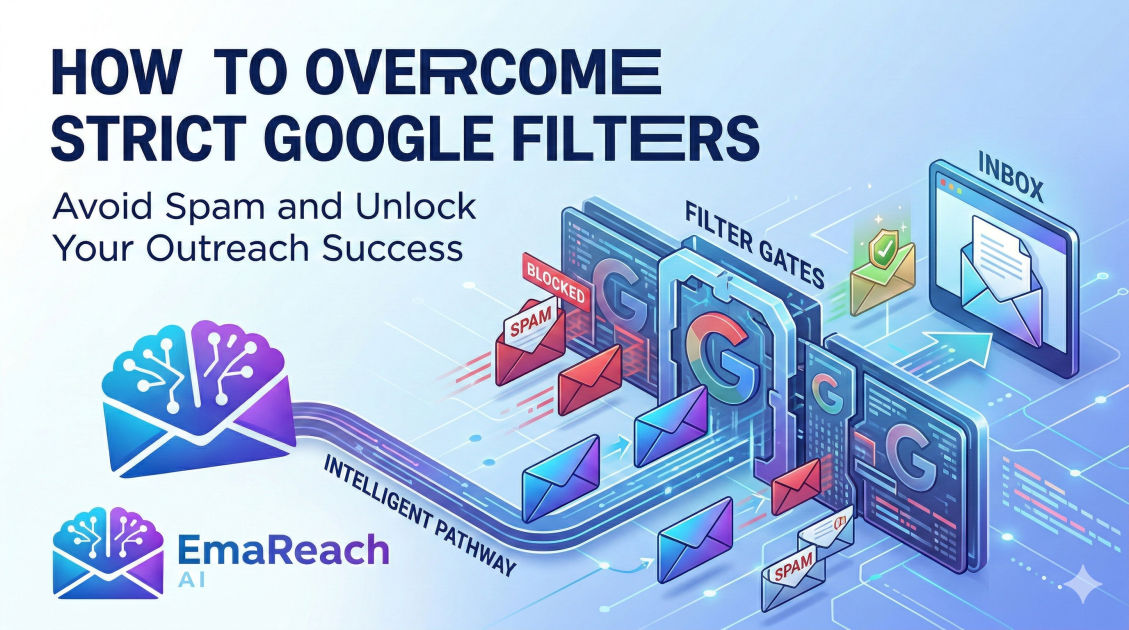
Overcoming Strict Google Filters to Avoid Spam in Outreach
email deliverabilitygoogle spam filterscold outreachsender reputationemail authenticationoutreach strategy
Introduction
In the modern digital landscape, the success of any outreach campaign hinges on a single, critical factor: deliverability. As Google continues to refine its sophisticated filtering algorithms, the barrier for entry for cold outreach has never been higher. For businesses relying on email to generate leads, build partnerships, or distribute content, the challenge is no longer just writing a compelling message, but ensuring that message actually reaches the recipient's primary inbox.
Google’s filters are designed with a singular purpose—to protect users from unwanted, irrelevant, or malicious content. However, these same filters can often catch legitimate business outreach in their dragnet. Understanding the mechanics behind these filters and implementing a rigorous technical and creative strategy is the only way to maintain a high sender reputation and achieve sustainable outreach results.
The Anatomy of Google’s Spam Filtering Engine
Google utilizes a multi-layered approach to evaluate incoming mail. This process happens in milliseconds but involves complex machine learning models that analyze thousands of signals. To overcome these filters, one must first understand the three pillars of their evaluation: technical authentication, sender reputation, and content analysis.
Technical Authentication: The Foundation of Trust
Before a single word of your email is read, Google’s servers check your digital credentials. If these are missing or configured incorrectly, your email is likely to be discarded or flagged immediately. The three essential protocols are SPF, DKIM, and DMARC.
- SPF (Sender Policy Framework): This is a DNS record that specifies which mail servers are authorized to send email on behalf of your domain. Without this, Google has no way of verifying that the email isn't a spoofing attempt.
- DKIM (DomainKeys Identified Mail): This adds a cryptographic signature to your emails. It ensures that the content of the email hasn't been tampered with during transit. It acts as a digital seal of authenticity.
- DMARC (Domain-based Message Authentication, Reporting, and Conformance): This protocol ties SPF and DKIM together. It provides instructions to the receiving server on what to do if an email fails authentication (e.g., do nothing, quarantine it, or reject it entirely).
Sender Reputation and IP Health
Google maintains a historical record of your domain and the IP addresses used to send mail. This reputation is built over time based on user interactions. High bounce rates, low open rates, and—most damagingly—spam complaints act as negative signals. Conversely, consistent engagement and low complaint rates signal to Google that you are a trusted sender.
Content Analysis and Behavioral Heuristics
Modern filters go beyond simple keyword blocking. They look for patterns. If you send the exact same template to 500 people at once, Google’s heuristic engines identify this as automated, non-personal behavior. They also analyze the ratio of text to images, the presence of suspicious links, and the overall 'intent' of the language used.
Strategic Infrastructure: Setting Up for Success
To navigate these filters, the infrastructure of your outreach must be decentralized and resilient. Relying on a single email account for high-volume outreach is a recipe for failure.
Domain Diversification
One of the most effective ways to protect your primary business domain is to use 'look-alike' or secondary domains for outreach. For example, if your main domain is company.com, you might register getcompany.com or usecompany.com. This ensures that if a secondary domain's reputation is damaged by a spike in spam complaints, your primary business operations—such as invoices and client communications—remain unaffected.
The Importance of Inbox Warm-up
A common mistake is sending hundreds of emails from a brand-new domain. This is a massive red flag for Google. New domains must undergo a 'warm-up' period where the sending volume is gradually increased over several weeks. This process simulates natural human behavior, building a positive history with Google’s filters before you launch full-scale campaigns.
For those looking to automate this complex technical setup, EmaReach provides a comprehensive solution. EmaReach AI combines AI-written cold outreach with inbox warm-up and multi-account sending, ensuring your emails land in the primary tab rather than being buried in the spam folder.
Crafting Content That Bypasses Heuristic Filters
Once your technical foundation is solid, the focus shifts to the message itself. Google’s filters are increasingly adept at identifying the "vibe" of a spam email. To stay in the clear, your content must feel personal and valuable.
Avoiding Spam Trigger Words
While filters are smarter than they used to be, certain words still carry a high 'spam score.' Words related to urgent financial gain, exaggerated claims, or aggressive sales tactics should be avoided. Examples include:
- "Guaranteed profit"
- "Act now"
- "Free gift"
- "100% satisfied"
- "Urgent assistance"
Instead of using hyperbole, focus on neutral, professional language that describes a specific business problem and a potential solution.
The Power of Dynamic Personalization
Standard mail merge (e.g., "Hi {{FirstName}}") is no longer sufficient. To truly mimic human behavior, your outreach should include deep personalization. This could mean referencing a specific recent achievement of the recipient, a comment on a post they made, or a specific detail about their company’s current trajectory.
When every email in a batch is unique, it becomes much harder for Google’s filters to identify the campaign as a 'bulk' send. This is where AI-driven content generation becomes a game-changer, allowing for high-level personalization at scale.
Optimizing the Text-to-Link Ratio
Emails heavy on links and light on text are frequently flagged. As a rule of thumb, try to include no more than one or two links in an initial outreach email. Avoid using URL shorteners (like bit.ly), as these are commonly used by malicious actors to hide the final destination of a link. Instead, use full, transparent URLs or hyperlinked descriptive text.
Managing Volume and Sending Patterns
Google’s filters monitor the velocity and timing of your emails. A sudden burst of 1,000 emails in ten minutes is an obvious indicator of automation.
Distributed Sending Schedules
To fly under the radar, you should spread your sending across the day. Avoid sending during "off-hours" for your recipient's time zone, as this can look suspicious. Modern outreach tools allow you to set specific windows and intervals between emails to mimic the cadence of a human being manually typing and sending messages.
Multi-Account Strategies
Instead of sending 100 emails from one account, it is significantly safer to send 20 emails from five different accounts. This distribution limits the risk. If one account is flagged for a manual review or a temporary block, the rest of your campaign continues to function. This 'horizontal scaling' is the gold standard for modern outreach deliverability.
Monitoring and Maintaining Deliverability
Deliverability is not a 'set it and forget it' task. It requires constant vigilance and adjustment based on performance data.
Tracking Key Metrics
You must move beyond just tracking 'opens.' While open rates are a decent proxy for deliverability, they can be skewed by 'bot opens' (where the receiving server opens the email to scan it). The most important metrics to watch are:
- Bounce Rate: If this exceeds 2-3%, stop your campaign immediately and clean your list.
- Reply Rate: High engagement is the strongest signal to Google that your content is wanted.
- Spam Complaints: Use tools like Google Postmaster Tools to see if users are marking your emails as spam.
List Hygiene and Verification
Sending emails to non-existent addresses (hard bounces) is one of the fastest ways to kill your reputation. Before any campaign, use a list verification service to prune inactive or risky email addresses. Avoid 'catch-all' addresses unless you have a high degree of confidence in the source.
The Role of Feedback Loops
Google provides data to senders via Postmaster Tools. This resource is invaluable for understanding how Google views your domain. It provides insights into IP reputation, domain reputation, and encryption success. Monitoring these dashboards weekly allows you to spot trends before they become catastrophic failures.
Advanced Tactics for High-Stakes Outreach
For those targeting high-value enterprise accounts, standard outreach may not be enough. In these cases, even stricter filters are often in place at the organizational level.
Plain Text vs. HTML
While HTML emails allow for beautiful branding, they also carry more weight in terms of code that filters must scan. In many cases, a simple plain-text email performs better for cold outreach. It looks more like a 1-to-1 personal message and less like a marketing blast. If you must use HTML, keep the code clean and minimal.
Managing Unsubscribe Links
While it is legally required in many jurisdictions to provide a way to opt-out, the way you do it matters. A massive, formatted "Unsubscribe" footer can sometimes trigger filters. Consider using a more natural, text-based opt-out, such as: "If you'd rather not hear from me again, just let me know and I'll remove you from my list."
Navigating the Human Element: The Final Filter
The ultimate 'filter' isn't an algorithm—it’s the person on the other end. If a recipient finds your email annoying or irrelevant, they will click "Report Spam." No amount of technical wizardry can save a domain from a high volume of manual spam reports.
To avoid this:
- Relevance is King: Only reach out to people for whom your message is genuinely relevant.
- Be Concise: Respect the recipient's time. State your purpose quickly and clearly.
- Offer Value First: Don't just ask for a meeting; provide a resource, an insight, or a genuine compliment.
Conclusion
Overcoming Google’s strict filters is a continuous game of cat and mouse, but the rules are clear. By building a solid technical foundation with SPF, DKIM, and DMARC, diversifying your sending infrastructure, warming up your domains, and focusing on high-quality, personalized content, you can significantly increase your chances of reaching the primary inbox.
In an era where attention is the most valuable currency, ensuring your message is actually seen is the first and most important step in any outreach strategy. Success requires a blend of technical precision, creative writing, and a deep respect for the recipient's inbox. By adhering to these principles, you can turn email outreach from a risky gamble into a predictable engine for growth.
EmaReach AI
Ready to scale your cold email outreach?
Join thousands of teams using EmaReach AI for AI-powered campaigns, domain warmup, and 95%+ deliverability. Start free — no credit card required.
Related posts
- Read article
Beyond Instantly: The Cold Email Platforms Worth Taking Seriously
Discover the top advanced cold email platforms that go beyond basic multi-inbox rotation. Learn how to optimize your technical infrastructure, leverage advanced personalization, and scale your B2B sales pipeline safely without landing in the spam folder.
- Read article
EmaReach vs Smartlead: The Comparison for Teams With Strict IT and Security Policies
A detailed security, infrastructure, and compliance comparison between EmaReach and Smartlead for enterprise teams operating under strict corporate IT and data governance policies.