Blog
Back to blog
How to Prevent Spam Traps from Damaging Gmail Sender Reputation
email deliverabilityspam trapsgmail reputationcold emailemail marketingsender scorelist hygiene
Introduction
Maintaining a pristine sender reputation with Gmail is one of the most critical challenges for any email marketer or sales professional. Gmail uses some of the most sophisticated algorithms in the world to determine whether an email belongs in the Primary tab, the Promotions tab, or the dreaded Spam folder. At the heart of these filtering mechanisms lies the concept of the 'spam trap.'
Spam traps are essentially bait set by Internet Service Providers (ISPs) and blocklist operators to identify and penalize senders who use poor data collection practices or illegal scraping methods. For a Gmail sender, hitting a spam trap is more than just a minor hiccup; it is a direct signal to Google's filters that your sending practices are non-compliant, often leading to an immediate and sharp decline in deliverability. Understanding how to navigate this landscape is essential for anyone serious about long-term email outreach success.
Understanding the Anatomy of Spam Traps
To prevent spam traps from damaging your reputation, you must first understand what they are. Not all traps are created equal, and they enter your mailing list through different avenues.
Pristine Spam Traps
These are email addresses created by ISPs or security organizations specifically to catch spammers. These addresses have never been used by a real person, have never opted into a mailing list, and have never been published on a website. The only way a sender can obtain a pristine spam trap is through unauthorized means, such as using automated scraping tools or purchasing unverified third-party lists. Because there is no legitimate way to acquire these addresses, hitting one is a massive red flag to Gmail that the sender is harvesting data.
Recycled Spam Traps
Recycled traps are perhaps more dangerous because they are easier to stumble upon. These were once valid email addresses used by real individuals. However, after a long period of inactivity, the ISP deactivates the account. After a further period of time, the ISP reactivates the address as a trap. If you are still sending emails to these addresses, it indicates a failure to maintain list hygiene and a lack of engagement monitoring. Gmail views this as a sign of 'lazy' sending, which negatively impacts your sender score.
Typo Traps
Typo traps are addresses with common misspellings of popular domains, such as 'gnail.com' instead of 'gmail.com'. While often less severe than pristine traps, frequent hits on typo traps suggest that your lead generation process lacks verification and that you are not filtering out invalid entries at the point of capture.
Why Gmail Sender Reputation is Unique
Gmail’s filtering system is heavily weighted toward user engagement. While traditional ISPs might rely purely on technical configurations like SPF, DKIM, and DMARC, Gmail looks at how users interact with your messages. Do they open them? Do they move them to the Primary tab? Or do they mark them as spam?
When you hit a spam trap, you are essentially sending to an address that will never engage. There is no human on the other side to open the email or click a link. This lack of engagement, combined with the fact that the address is a known trap, creates a 'double hit' on your reputation.
To ensure your emails land where they belong, it is vital to use systems designed for high-deliverability outreach. EmaReach provides a comprehensive solution for this. By combining AI-written cold outreach with sophisticated inbox warm-up and multi-account sending, EmaReach ensures that your emails reach the inbox rather than being swallowed by spam filters. It is built to prioritize the primary tab, helping you avoid the pitfalls of poor reputation management.
The Real-World Consequences of Hitting Spam Traps
If your domain or IP address is flagged for hitting spam traps, the consequences are swift and often difficult to reverse.
- Immediate Blocklisting: Your IP or domain may be added to influential blocklists like Spamhaus or SORBS. Many ISPs, including Google, check these lists when deciding whether to accept an email.
- Increased Latency: Gmail may begin 'throttling' your emails, meaning they delay the delivery of your messages. This can ruin time-sensitive campaigns.
- Spam Folder Placement: Even if your emails are accepted, Gmail may route them directly to the spam folder, where they are unlikely to ever be seen by your recipients.
- Permanent Domain Damage: In extreme cases, your domain reputation can become so tarnished that you are forced to start over with a new domain, losing all the authority you have built over time.
Strategies to Identify and Remove Spam Traps
Prevention is the best cure, but if you suspect your list is already contaminated, you must take aggressive action to clean it.
Implement Real-Time Verification
The most effective way to keep traps out of your list is to stop them at the door. Use API-based email verification services on your sign-up forms. These tools can identify typo traps and known 'disposable' email addresses before they are even added to your database.
Regular List Scrubbing
Even a clean list can turn 'sour' over time as addresses become abandoned and recycled into traps. Conduct a deep scrub of your entire mailing list at least once a quarter. Remove any address that has not opened or clicked an email in the last six months. While it may be painful to reduce your list size, a smaller, highly engaged list is infinitely more valuable than a large list full of traps.
Monitor Bounce Rates
Keep a close eye on your hard bounce rates. A sudden spike in bounces often precedes the activation of a recycled spam trap. If an address bounces, remove it immediately. Do not attempt to re-send to that address, as persistent attempts to reach invalid accounts are a primary trigger for Gmail’s spam filters.
Best Practices for Data Collection
To avoid pristine spam traps, you must be disciplined about how you acquire leads.
- Never Purchase Lists: This is the most common way to hit a pristine trap. Purchased lists are notorious for being 'seeded' with traps by blocklist operators.
- Use Double Opt-In: By requiring users to click a link in a confirmation email, you guarantee that the email address is active and controlled by a real person. Spam traps cannot complete a double opt-in process.
- Avoid Web Scraping: Automated bots that scrape websites for email addresses often pick up 'honeypot' addresses placed there specifically to catch scrapers.
Technical Authentication and Its Role
While authentication won't stop you from hitting a spam trap, it does provide Gmail with the proof that you are who you say you are. If you have a strong reputation and hit a single trap by accident, having proper authentication might be the difference between a temporary warning and a total block.
SPF (Sender Policy Framework)
SPF is a DNS record that lists the IP addresses authorized to send emails on behalf of your domain. This prevents 'spoofing' and helps Gmail verify your identity.
DKIM (DomainKeys Identified Mail)
DKIM adds a digital signature to your emails. This signature ensures that the content of the email hasn't been tampered with in transit. Gmail looks for this signature to verify that the message is authentic.
DMARC (Domain-based Message Authentication, Reporting, and Conformance)
DMARC ties SPF and DKIM together. It provides instructions to Gmail on what to do if an email fails authentication. Setting your DMARC policy to 'quarantine' or 'reject' shows Gmail that you take your domain security seriously.
Elevating Your Outreach with Human-First Automation
In the modern landscape of email deliverability, the 'batch and blast' method is dead. To maintain a high sender reputation, your outreach must feel personal and relevant. This is where AI-driven tools have changed the game.
EmaReach (https://www.emareach.com/) allows senders to move away from the high-volume, low-quality approach that often leads to spam trap hits. By focusing on 'Cold Emails That Reach the Inbox,' EmaReach emphasizes quality over quantity. Its AI-written outreach ensures that each message is tailored to the recipient, increasing the likelihood of positive engagement—the very thing Gmail rewards. When you combine this with an integrated inbox warm-up feature, you create a defensive shield around your sender reputation.
Monitoring Your Progress with Google Postmaster Tools
If you are sending high volumes to Gmail users, you must use Google Postmaster Tools. This free resource from Google provides direct insight into how Gmail views your domain.
- IP Reputation: Shows whether your sending IP is considered high, medium, low, or bad.
- Domain Reputation: A similar metric for your specific domain.
- Spam Rate: Displays the percentage of your emails that users are marking as spam.
- Delivery Errors: Highlights technical issues that might be preventing your emails from reaching the inbox.
By monitoring these dashboards, you can see the impact of a spam trap hit in real-time and adjust your strategy before the damage becomes irreversible.
The Role of Engagement in Reputation Recovery
If you have already suffered a blow to your reputation due to spam traps, the path to recovery is paved with engagement. You need to prove to Gmail that real people actually want to hear from you.
Start by segmenting your list to send only to your most active users—those who have opened or clicked in the last 30 days. This creates a high engagement-to-volume ratio, which signals to Gmail that your content is valuable. Over time, as your reputation improves, you can slowly begin to re-introduce less active (but still verified) users.
Conclusion
Spam traps are a sophisticated and necessary part of the email ecosystem, designed to protect users from unwanted content. For professional senders, they represent a significant risk that can only be mitigated through rigorous list hygiene, ethical data collection, and a focus on human-centric engagement. By implementing real-time verification, monitoring your reputation through tools like Google Postmaster, and utilizing advanced platforms like EmaReach to ensure high-quality outreach, you can navigate the complexities of Gmail deliverability and keep your sender reputation intact. Remember, in the world of email, your reputation is your most valuable asset—protect it with the care it deserves.
EmaReach AI
Ready to scale your cold email outreach?
Join thousands of teams using EmaReach AI for AI-powered campaigns, domain warmup, and 95%+ deliverability. Start free — no credit card required.
Related posts
 Read article
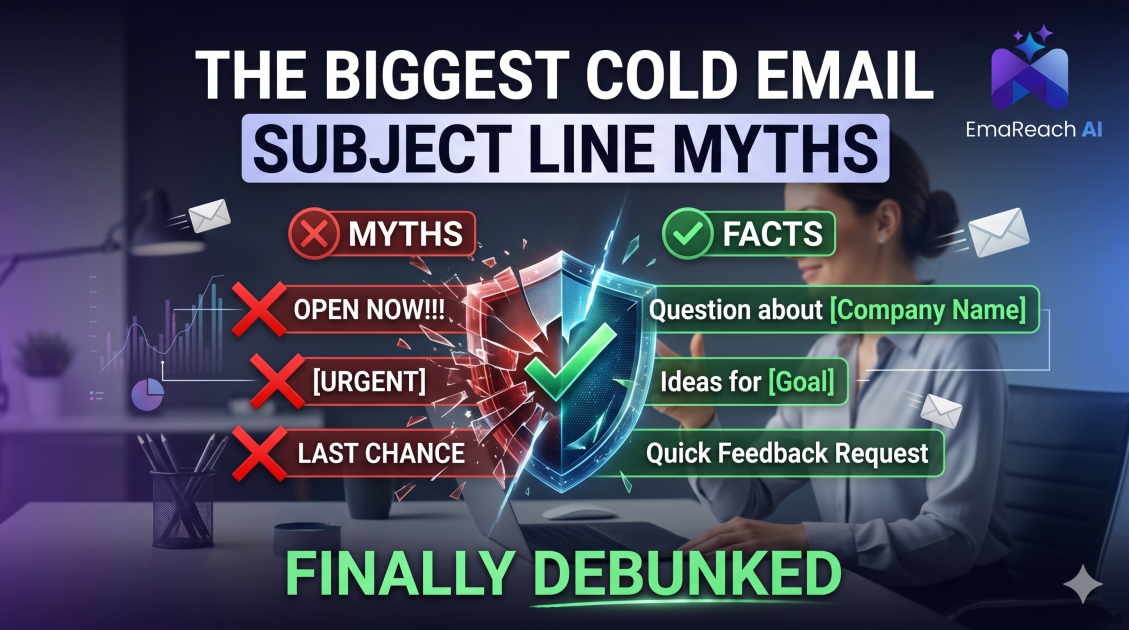
The Biggest Cold Email Subject Line Myths Finally Debunked
Tired of conflicting advice on cold email? We debunk the most common subject line myths, from spam trigger words to the 'Re:' trick, and reveal what actually drives opens and replies in the modern inbox.
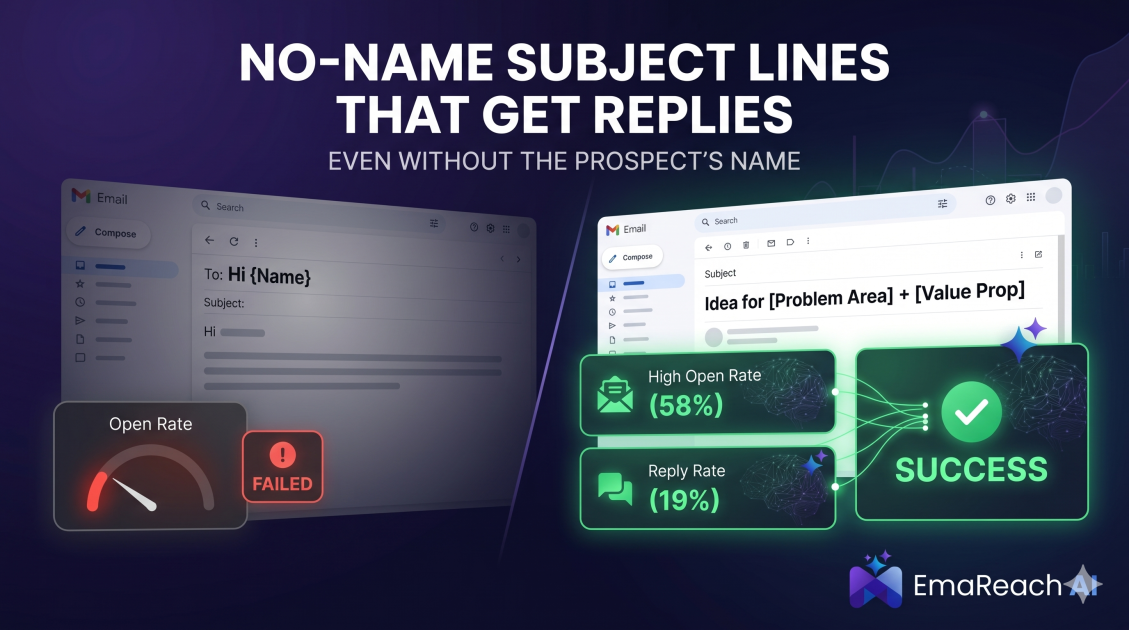
Cold Email Subject Lines That Work Even Without the Prospect's Name
Master the art of cold outreach without relying on prospect names. This comprehensive guide covers psychology, problem-centric templates, and the technical strategies needed to maintain high open rates and avoid the spam folder.