Blog
Back to blog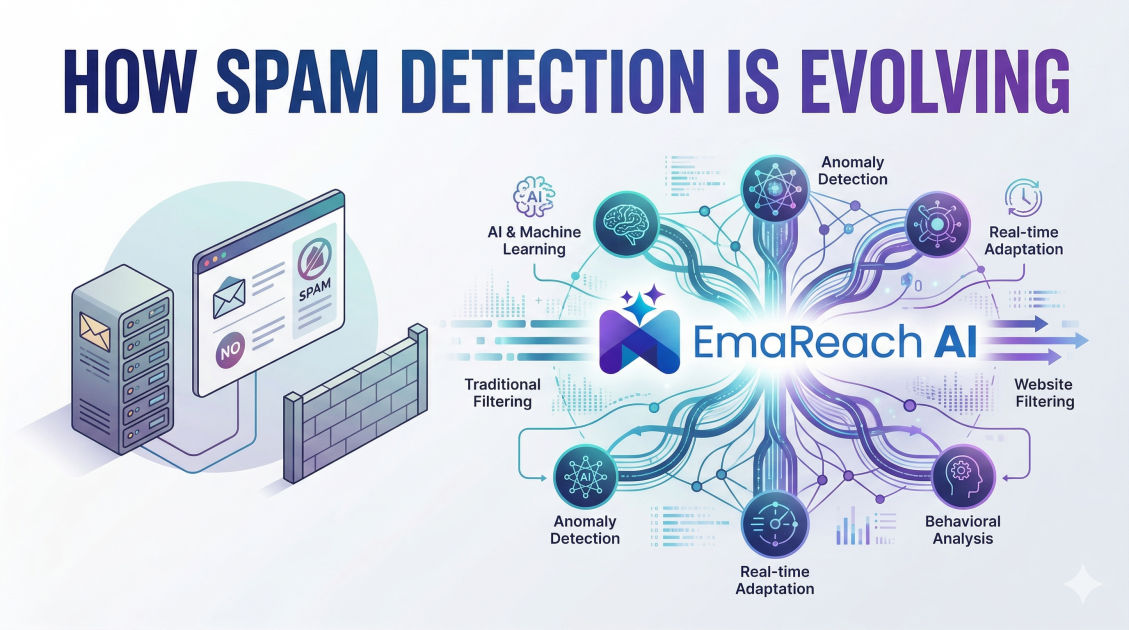
How Spam Detection Is Evolving
email deliverabilityspam filtersmachine learningartificial intelligencecold outreachemail authentication
Introduction
The digital landscape is in a state of perpetual movement. As communication technologies advance, so too do the methods used to exploit them. At the heart of this struggle lies the humble inbox—a gateway to our personal and professional lives. Spam detection, once a simple process of blacklisting known offenders, has transformed into a sophisticated, multi-layered defensive ecosystem. Understanding how spam detection is evolving is not just a matter of technical curiosity; it is a necessity for anyone looking to maintain high email deliverability and protect their digital sovereignty.
In the early days of the internet, spam was easy to spot. It was often characterized by poor grammar, suspicious links, and a 'spray and pray' approach that targeted millions of users with identical, low-quality content. Today, the game has changed. Spammers utilize advanced machine learning, behavioral psychology, and sophisticated infrastructure to bypass filters. In response, mailbox providers have escalated their defenses, moving beyond static rules toward dynamic, predictive intelligence.
The Shift from Static Filters to Behavioral Analysis
Historically, spam detection relied heavily on 'static signatures.' This involved looking for specific keywords (like "free," "winner," or "urgent") or checking IP addresses against known blacklists. While these methods are still part of the foundation, they are no longer sufficient. Modern spam detection has shifted toward behavioral analysis.
Behavioral analysis doesn't just look at what is inside the email; it looks at how the email behaves and how users interact with it. Mailbox providers like Google and Microsoft track millions of signals to determine the legitimacy of a sender. These signals include:
- Open Rates: Are users actually opening these emails?
- Engagement Time: How long does a user stay on the email once opened?
- Deletion without Opening: Is the email being discarded immediately?
- Mark as Spam/Not Spam: User-generated feedback is the ultimate 'truth' for machine learning models.
By analyzing these patterns, filters can identify 'greymail'—content that isn't technically malicious but is unwanted by the recipient. This evolution means that even if your email is perfectly formatted and contains no 'spammy' words, it can still end up in the junk folder if your audience isn't engaging with it.
The Role of Machine Learning and Artificial Intelligence
The most significant leap in spam detection has been the integration of Machine Learning (ML) and Artificial Intelligence (AI). Traditional filters operated on a 'if-then' logic. For example, if an email contains more than three links to a new domain, then flag it as suspicious.
Modern AI-driven filters use Natural Language Processing (NLP) to understand the context and intent of an email. These models can distinguish between a legitimate business proposal and a sophisticated phishing attempt that uses professional language. They are trained on massive datasets, allowing them to spot subtle anomalies that a human or a static rule would miss.
Generative AI: The New Frontier
We are now entering an era where AI is on both sides of the fence. Spammers are using Generative AI to create unique, personalized messages at scale, making it harder for filters to find a common 'fingerprint' across thousands of emails. Conversely, spam filters are using AI to predict the likelihood of a message being spam based on its structural integrity and historical sender reputation. This 'AI vs. AI' arms race is defining the current state of inbox security.
Authentication and Infrastructure: The New Prerequisites
As detection methods evolve, the technical barrier for entry into the inbox has risen. Mailbox providers now demand strict adherence to authentication protocols. Without these, your emails are essentially shouting into a void. The primary pillars of modern email authentication are:
- SPF (Sender Policy Framework): A list of IP addresses authorized to send on behalf of your domain.
- DKIM (DomainKeys Identified Mail): A digital signature that ensures the email content hasn't been tampered with in transit.
- DMARC (Domain-based Message Authentication, Reporting, and Conformance): A policy that tells mailbox providers what to do if SPF or DKIM fails.
While these protocols have existed for years, their enforcement has become much stricter. Major providers now prioritize emails that pass all three checks, often relegating unauthenticated mail to the spam folder regardless of the content. This shift emphasizes that identity is now just as important as content.
The Importance of Sender Reputation and Warm-up
In the current landscape, your domain's reputation is your most valuable asset. Mailbox providers maintain a 'score' for your domain and your sending IP. If you suddenly send 10,000 emails from a new domain, the filters will view this as an anomaly—a classic sign of a spammer who has just purchased a fresh domain to bypass a blacklist.
This is why 'warming up' a domain is critical. It involves gradually increasing your sending volume while maintaining high engagement rates to prove to mailbox providers that you are a legitimate sender. For businesses involved in outreach, this can be a daunting manual task.
To navigate these complexities, tools have emerged to automate the process. EmaReach is a prime example of this evolution. Stop Landing in Spam. Cold Emails That Reach the Inbox. EmaReach AI combines AI-written cold outreach with inbox warm-up and multi-account sending—so your emails land in the primary tab and get replies. By leveraging such platforms, senders can ensure their infrastructure matches the sophistication of modern spam filters.
Content Evolution: From Keywords to Intent
The evolution of spam detection has forced a complete rethink of email content strategy. In the past, marketers were told to avoid words like 'Cash,' 'Free,' or 'Click here.' While avoiding excessive use of these terms is still good practice, the context is now the king.
Modern filters look for relevance. They analyze whether the content of the email matches the previous interactions the sender has had with the recipient. If a sender who usually talks about 'SaaS software' suddenly starts sending emails about 'pharmaceuticals,' the filter will immediately flag this as a potential account takeover or a pivot to spam.
Furthermore, the 'shouting' style of marketing—using all caps, excessive exclamation points, and bright red text—is now a major red flag. Filters identify these as psychological triggers common in deceptive spam. The move is toward a 'human-centric' approach where the goal is to provide value rather than just grab attention.
Technical Signals: Links, Attachments, and HTML
Behind the scenes, spam filters are dissecting every technical element of an email. The way you structure your HTML and handle your links can make or break your deliverability.
- Link Shorteners: Using public link shorteners (like bit.ly) is often a ticket to the spam folder. Spammers love them for hiding the final destination of a link, and as a result, filters have become highly suspicious of them.
- Image-to-Text Ratio: An email that is just one large image is a classic spam tactic to hide text from scanners. Modern filters now use Optical Character Recognition (OCR) to read text inside images, making this tactic obsolete.
- Hidden HTML: Any attempt to hide text using white fonts on white backgrounds or tiny font sizes is immediately flagged.
The Rise of Individualized Filtering
One of the most complex aspects of evolving spam detection is the shift toward individualized filtering. Two people can receive the exact same email; one might find it in their 'Primary' inbox, while the other finds it in 'Spam.'
This happens because mailbox providers build a profile for each individual user. If User A consistently opens emails from a specific newsletter, that newsletter will continue to reach their inbox. If User B never opens those same emails and occasionally moves them to the trash, the filter will eventually start placing them in the spam folder for User B only. This hyper-personalization means that there is no longer a 'one-size-fits-all' solution for deliverability.
Protecting Against Phishing and Spoofing
Spam detection is no longer just about blocking annoying advertisements; it's about security. Phishing—the act of pretending to be a trusted entity to steal data—is the most dangerous form of spam. As a result, filters have become experts at detecting 'look-alike' domains (e.g., using a '1' instead of an 'l' in a brand name).
Advanced filters now utilize brand protection signals. They cross-reference the sender's identity with known brand assets. If an email claims to be from a major bank but lacks the proper DMARC alignment or uses an unverified logo, it will be blocked before the user even sees it. This focus on security has made the ecosystem safer but has also made it much harder for legitimate brands to recover if their reputation is accidentally damaged.
Strategies for Staying Ahead of Evolving Filters
To ensure your emails continue to reach the inbox, your strategy must evolve alongside the filters. Here are the core pillars of a modern email strategy:
1. Prioritize Quality Over Quantity
The era of mass-emailing is over. High-volume, low-engagement campaigns are the fastest way to destroy your sender reputation. Focus on targeted lists where you know the recipients have a genuine interest in your message.
2. Focus on Engagement Metrics
Don't just track delivery; track engagement. If your open rates are dropping, it's a signal that the filters are starting to lose trust in you. Use A/B testing on subject lines and content to ensure you are providing what your audience wants.
3. Maintain a Clean List
Regularly prune your email list. Removing 'dead' addresses and unengaged subscribers isn't just about saving money on your ESP bill; it's about protecting your reputation. High bounce rates are a massive red flag for spam filters.
4. Leverage Multi-Account Sending
Instead of sending a large volume from a single account, distribute your sending across multiple accounts and domains. This mimics natural human behavior and reduces the risk of a single domain getting flagged and shutting down your entire outreach operation. Platforms like EmaReach specialize in this multi-account approach, ensuring that your outreach is resilient and scalable.
The Future of the Inbox
Looking forward, spam detection will likely become even more predictive. We can expect to see deeper integration of AI that doesn't just react to incoming mail but anticipates potential threats based on global internet traffic patterns. The concept of the 'Inbox' may even shift toward a 'Verified-only' space, where only senders with a high trust score are allowed to bypass a digital concierge.
We may also see an increase in BIMI (Brand Indicators for Message Identification) adoption. This protocol allows brands to display their logo next to their emails in the inbox, providing a visual cue of trust. As this becomes more common, the absence of a verified logo may itself become a 'spam signal.'
Conclusion
The evolution of spam detection is a testament to the resilience of digital communication. While it has made life more difficult for spammers, it has also created a more challenging environment for legitimate businesses and marketers. The days of 'set it and forget it' email campaigns are gone. Success in the modern inbox requires a deep understanding of technical authentication, a commitment to high-quality content, and the use of sophisticated tools to manage reputation and engagement.
By staying informed about these shifts and adapting your strategies—utilizing AI for personalization and ensuring your technical infrastructure is flawless—you can turn the challenges of modern spam detection into a competitive advantage. The inbox remains the most personal and effective way to reach an audience; those who respect the rules of the evolving landscape will be the ones who continue to find success there.
EmaReach AI
Ready to scale your cold email outreach?
Join thousands of teams using EmaReach AI for AI-powered campaigns, domain warmup, and 95%+ deliverability. Start free — no credit card required.
Related posts
- Read article
What Makes the Right Instantly Alternative Worth the Migration Effort
Discover why upgrading your cold email infrastructure to the right Instantly alternative can dramatically improve your deliverability, scale your personalization, and future-proof your sales pipeline against strict spam filters.
- Read article
The Instantly Alternative That Our Recruiter Clients Refuse to Give Up
Discover the powerful cold email alternative that recruitment agencies are using to bypass spam filters, maximize deliverability, and scale their candidate sourcing and client acquisition safely.