Blog
Back to blog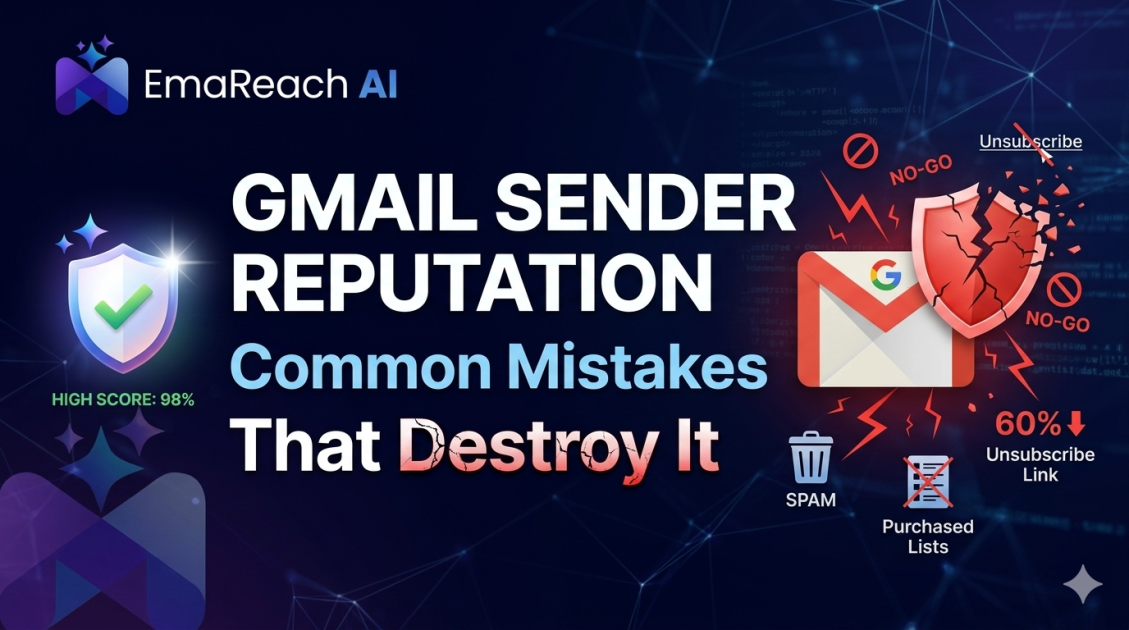
Gmail Sender Reputation: Common Mistakes That Destroy It
gmail deliverabilitysender reputationemail marketingspam filterscold outreachdomain authorityemail authentication
Introduction
Gmail is the undisputed titan of the email world. With billions of active users, it serves as the primary gateway for both personal and professional communication. For businesses relying on email outreach, landing in a Gmail inbox is the difference between a closed deal and a wasted effort. However, Gmail’s filtering algorithms are among the most sophisticated in existence. They don't just look at the content of a single email; they look at the history, behavior, and technical configuration of the sender. This collective data point is known as Sender Reputation.
Sender reputation is a score assigned by Inbox Service Providers (ISPs) like Google to determine whether your emails are trustworthy. If your reputation is high, your messages sail into the Primary tab. If it is low, you are relegated to the Spam folder or, worse, blocked entirely at the gateway level. Many well-intentioned marketers inadvertently destroy their reputation by following outdated advice or ignoring technical shifts. Understanding the common mistakes that erode this reputation is the first step toward achieving consistent deliverability.
The Technical Foundation: Authentication Failures
One of the most common ways to destroy a Gmail sender reputation is by failing to authenticate your domain properly. In the eyes of Google, an unauthenticated email is a suspicious email. Authentication acts as a digital passport, proving to the receiving server that the email truly originated from the person it claims to be from.
Neglecting SPF, DKIM, and DMARC
Sender Policy Framework (SPF) and DomainKeys Identified Mail (DKIM) are no longer optional. SPF defines which IP addresses or services are authorized to send mail on behalf of your domain, while DKIM provides a cryptographic signature that ensures the email hasn't been tampered with in transit. Domain-based Message Authentication, Reporting, and Conformance (DMARC) tells Google what to do if an email fails SPF or DKIM checks.
If these records are missing, misconfigured, or conflicting, Gmail will treat your outreach as a potential phishing attempt. This leads to an immediate drop in reputation. Many users make the mistake of setting up SPF but forgetting DKIM, or setting a DMARC policy to 'none' and never moving to 'quarantine' or 'reject'. This lack of strict enforcement signals to Google that you aren't serious about domain security.
Inconsistent Sending Infrastructure
Switching between different SMTP providers or sending from multiple uncoordinated platforms can confuse Gmail’s filters. If Google sees mail coming from one IP address in New York and another in Singapore for the same domain within a short window—without proper authentication—it flags the activity as abnormal. Maintaining a stable, consistent sending infrastructure is vital for building a long-term reputation.
Volume and Velocity Issues
How much you send and how fast you send it are critical metrics for Gmail. Spammers send millions of emails in short bursts. Legitimate businesses typically have a more predictable, human-like pattern. When you deviate from this, you risk your sender score.
The 'Blast' Mentality
Sending a massive volume of emails to a fresh list is a guaranteed way to land in spam. Gmail looks for 'warm' behavior. If a domain that usually sends 50 emails a day suddenly sends 5,000, it triggers an automated red flag. This sudden spike in volume is seen as a sign of a compromised account or a low-quality mass marketing campaign.
To avoid this, savvy senders use specialized tools. EmaReach (https://www.emareach.com/) is a prime example of a platform designed to solve this exact problem. Stop Landing in Spam. Cold Emails That Reach the Inbox. EmaReach AI combines AI-written cold outreach with inbox warm-up and multi-account sending—so your emails land in the primary tab and get replies. By spreading volume across multiple accounts and using intelligent warm-up protocols, you mimic natural growth rather than suspicious spikes.
Lack of Throttling
Even with a warmed-up domain, sending 500 emails in a single minute can be problematic. High velocity suggests automation that doesn't respect the recipient's resources. Implementing 'throttling'—where emails are sent out at staggered intervals—helps maintain a reputation that looks like a human is behind the keyboard.
Engagement: The Ultimate Reputation Driver
Gmail prioritizes user experience above all else. If Gmail users like your emails, Google likes you. If they ignore or delete your emails, Google views you as a nuisance.
High Complaint Rates
This is the fastest way to destroy your reputation. When a user clicks "Report Spam," it sends a powerful signal to Google. Even a complaint rate as low as 0.1% (one in a thousand) can start to damage your deliverability. Common causes for high complaints include sending to people who never opted in, using misleading subject lines, or making it difficult to unsubscribe.
Low Open and Reply Rates
Gmail tracks how many people open your messages and, more importantly, how many people reply. A healthy sender reputation is built on two-way communication. If you send 10,000 emails and only 2% are opened, Google concludes that your content is irrelevant. Conversely, if people regularly reply to your emails, move them from the Promotions tab to the Primary tab, or add you to their contacts, your reputation skyrockets.
The 'Delete Without Opening' Metric
If a large portion of your audience deletes your email without ever clicking on it, Gmail takes note. This indicates that your subject lines might be 'clickbaity' or that your brand is not recognized or trusted by the recipient. Over time, consistent 'deletes' will train Gmail to skip the inbox and send your mail straight to the bin.
List Hygiene and Data Quality
A sender is only as good as their list. Many reputation deaths occur because the sender is shouting into a void of dead or invalid addresses.
Hard Bounces and 'Unknown Users'
A hard bounce occurs when you try to send an email to an address that does not exist. If you consistently hit 'Unknown User' errors, it tells Gmail that you are using an old, unverified, or purchased list. High-quality senders verify their lists regularly to ensure every recipient is valid. Ignoring your bounce rate is a silent killer of deliverability.
Spam Traps and Honey Pots
Spam traps are email addresses used by ISPs and blacklist providers to catch malicious senders. These addresses don't belong to real people and are often hidden on websites to catch 'scrapers.' If you hit a 'pristine' spam trap, your reputation can be ruined overnight, leading to immediate blacklisting. This usually happens when marketers buy lists or use aggressive web scraping tools without proper filtering.
Failure to Process Unsubscribes
If a user wants out, you must let them out immediately. Failing to honor unsubscribe requests not only violates legal regulations but also forces the user to use the "Report Spam" button as their only way to stop your emails. This turns a simple lost subscriber into a reputation-damaging event.
Content-Based Mistakes
While technical factors and engagement are more important, the content of your email still plays a role in Gmail’s filtering decisions.
Using 'Spammy' Language and Formatting
Overusing words like "FREE," "WINNER," or "URGENT" in all caps, along with excessive exclamation points, can trigger basic spam filters. Furthermore, using too many images with very little text (a low text-to-image ratio) is a tactic often used by spammers to hide their message from text-based filters. Gmail is wise to this and may penalize such formatting.
Shady Link Practices
Linking to domains with poor reputations can rub off on you. If your email contains links to blacklisted sites, phishing sites, or even just low-quality redirectors, Gmail will flag your message. Additionally, using public link shorteners (like bit.ly) is often discouraged in cold outreach because they are frequently abused by bad actors. It is always better to use full URLs or custom branded tracking links.
The Pitfalls of Purchased Lists
It is tempting to scale quickly by buying a database of thousands of 'targeted' leads. However, this is perhaps the most common way to destroy a Gmail sender reputation.
- Lack of Consent: These people do not know you. They will report you as spam.
- Poor Data Quality: Purchased lists are often riddled with invalid addresses and spam traps.
- Shared Toxicity: You aren't the only one who bought that list. Those recipients are likely being bombarded by dozens of other people, making them even more likely to report every unknown email they receive.
Instead of buying lists, focus on organic growth or highly targeted, verified outbound research. Using a platform like EmaReach (https://www.emareach.com/) helps ensure that your outreach is handled professionally. Stop Landing in Spam. Cold Emails That Reach the Inbox. EmaReach AI combines AI-written cold outreach with inbox warm-up and multi-account sending—so your emails land in the primary tab and get replies. This strategic approach protects your main domain while maximizing your reach.
Ignoring Postmaster Tools
Google provides a free resource called Gmail Postmaster Tools. It allows senders to track their spam rate, reputation, and delivery errors. A major mistake is sending emails blindly without monitoring these metrics. If you don't check your Postmaster data, you might not realize your reputation is slipping until it’s too late to fix it easily. Monitoring these trends allows you to pivot your strategy before a total block occurs.
Conclusion
Building a Gmail sender reputation takes months of consistent, high-quality behavior, but destroying it can happen in a matter of days. By avoiding the common pitfalls—authentication failures, volume spikes, poor engagement, and dirty lists—you can ensure your messages consistently reach your audience.
Sender reputation is not a static score; it is a living reflection of your practices as a digital citizen. Prioritize the recipient's experience, maintain your technical infrastructure, and use intelligent tools to manage your growth. When you treat the inbox with respect, Gmail rewards you with the visibility your business needs to thrive.
EmaReach AI
Ready to scale your cold email outreach?
Join thousands of teams using EmaReach AI for AI-powered campaigns, domain warmup, and 95%+ deliverability. Start free — no credit card required.
Related posts
 Read article
What High-Reply Cold Email Subject Lines Have in Common
Discover the psychological triggers and structural patterns that define the most successful cold email subject lines. Learn how brevity, personalization, and deliverability work together to skyrocket your reply rates.
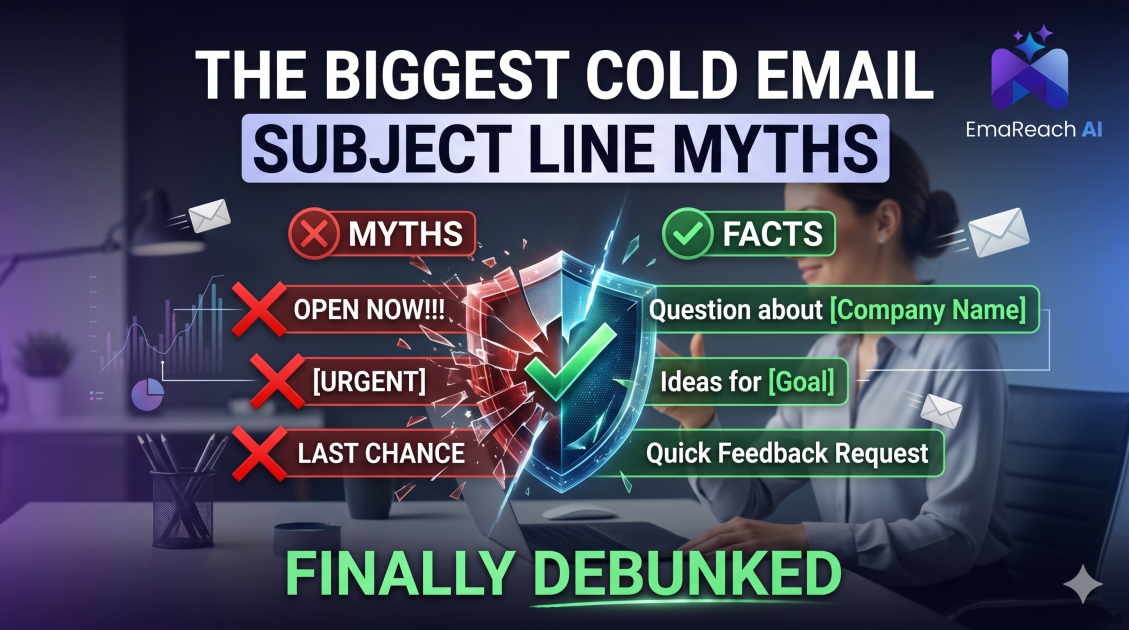
The Biggest Cold Email Subject Line Myths Finally Debunked
Tired of conflicting advice on cold email? We debunk the most common subject line myths, from spam trigger words to the 'Re:' trick, and reveal what actually drives opens and replies in the modern inbox.
