Blog
Back to blog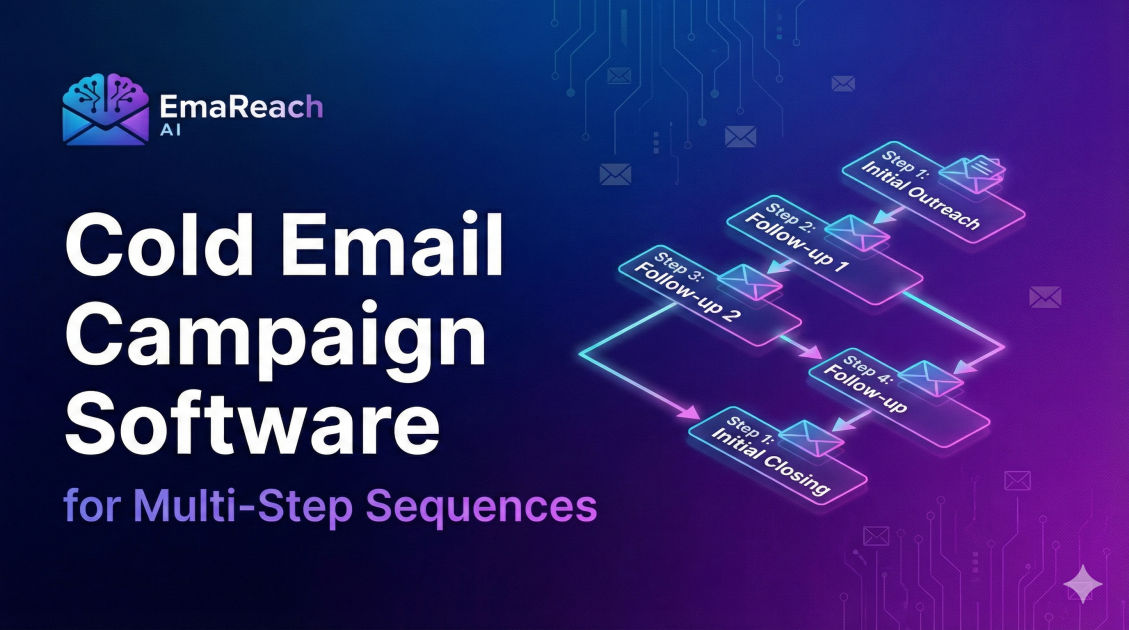
Cold Email Campaign Software for Multi-Step Sequences
cold emailsales automationemail deliverabilityB2B outreachlead generationemail marketing
Introduction to Multi-Step Cold Email Automation
In the world of B2B sales and digital outreach, the "one-and-done" approach to cold emailing is a relic of the past. Modern prospects are inundated with messages, and a single email, no matter how well-crafted, often vanishes into the digital noise. Success in contemporary outreach requires persistence, strategy, and the right technology. This is where cold email campaign software for multi-step sequences becomes an indispensable asset.
Multi-step sequences are automated series of emails sent to a prospect over a predetermined period. Rather than sending a lone message and hoping for the best, these sequences allow sales teams to tell a story, provide consistent value, and stay top-of-mind without manual intervention. By leveraging specialized software, businesses can scale their personalization efforts, maintain high deliverability, and significantly increase their conversion rates.
The Core Pillars of Multi-Step Cold Email Software
To understand why specific software is necessary for these campaigns, one must look at the foundational elements that make a multi-step sequence effective. These platforms are not merely "bulk senders"; they are sophisticated engines designed to mimic human behavior and manage complex logic.
1. Automated Sequence Logic
At its heart, the software allows you to build a flowchart of interactions. If a prospect doesn't reply to Email 1, the system waits three days and sends Email 2. If they still don't reply, it waits another four days for Email 3. Crucially, the software includes automatic reply detection, which halts the sequence immediately once a prospect engages, preventing the embarrassment of sending a follow-up to someone who has already booked a meeting.
2. High-Level Personalization at Scale
Modern software uses dynamic variables or "merge tags" that go far beyond simple first-name insertion. Advanced tools allow for the inclusion of custom attributes such as recent company news, specific pain points mentioned in a LinkedIn post, or even personalized images and landing pages. This level of detail makes a cold sequence feel like a 1-to-1 conversation rather than a mass broadcast.
3. Deliverability Protection and Warm-up
Sending hundreds of emails from a new domain is a surefire way to land in the spam folder. Professional cold email software includes email warm-up features, which gradually increase sending volume and generate artificial engagement to build a positive sender reputation with providers like Google and Outlook.
Designing the Perfect Multi-Step Sequence
Software provides the vehicle, but your strategy is the fuel. A well-designed sequence usually consists of 4 to 7 touchpoints. Research consistently shows that the majority of replies come from the third or fourth follow-up, yet many sales reps stop after the first.
The Standard 5-Step Framework
- The Opening Salvo (Day 1): Focus on the prospect's problem, not your solution. Keep it under 100 words and end with a low-friction question.
- The Value Add (Day 3): Share a case study or a specific resource that relates to the problem mentioned in the first email.
- The Social Proof (Day 7): Mention a recognizable competitor or similar company you have helped, highlighting a specific metric of success.
- The Objection Handler (Day 12): Address a common reason people say no (e.g., "Usually, teams worry about the implementation time...") and explain how you've solved it.
- The Break-up (Day 20): A polite note stating that since you haven't heard back, you'll stop reaching out for now. Ironically, this often triggers the highest reply rate from prospects who were simply too busy to respond earlier.
Timing and Cadence
Spacing is critical. Sending emails every day is perceived as spam. A standard cadence might look like a gap of 2 days, then 4 days, then 7 days, and finally 10 days. This creates a natural rhythm that feels persistent but respectful.
Advanced Features to Look For
When evaluating cold email campaign software, several "power user" features can make the difference between a mediocre campaign and a high-performing revenue engine.
Inbox Rotation
Instead of sending 200 emails from one address, inbox rotation allows you to connect multiple email accounts and distribute the load. If you have five accounts, each only sends 40 emails, which drastically reduces the risk of being flagged for suspicious activity.
A/B Testing (Multivariate Testing)
Top-tier software allows you to test different subject lines, body copy, or even different call-to-actions within the same sequence. The system will automatically track which version performs better and can even shift the traffic to the winner.
SpinTax Support
SpinTax is a method of creating variations of a sentence within a single template. For example: {Hi|Hello|Hey} {Name}, I {noticed|saw|observed} your recent post. This ensures that even if you send the same sequence to 1,000 people, the underlying code of the emails is slightly different, which helps bypass aggressive spam filters.
Multi-Channel Integration
Some platforms allow you to weave other actions into your sequence. A "step" might not be an email; it could be a task for a salesperson to send a LinkedIn connection request or make a phone call. This creates a cohesive, multi-touch outreach strategy.
Technical Setup: The Foundation of Success
No software can save a campaign if the technical foundation is broken. Before launching a multi-step sequence, there are three critical records that must be configured in your DNS settings:
- SPF (Sender Policy Framework): Specifies which mail servers are authorized to send email on behalf of your domain.
- DKIM (DomainKeys Identified Mail): Adds a digital signature to your emails, proving they weren't altered in transit.
- DMARC (Domain-based Message Authentication, Reporting, and Conformance): Tells receiving servers what to do if an email fails SPF or DKIM checks.
Neglecting these settings is the primary reason why cold emails land in spam, regardless of the quality of the software used.
Measuring Success Beyond Open Rates
While many beginners obsess over open rates, experienced marketers focus on deeper metrics provided by their campaign software:
Reply Rate vs. Positive Reply Rate
An 8% reply rate might seem great, but if half of those are people asking to be removed from your list, the campaign is failing. Modern tools use AI to categorize replies as "Interested," "Meeting Booked," or "Not Interested," giving you a true view of your ROI.
Bounce Rate
A high bounce rate (anything over 3%) signals to email providers that you are using poor-quality data. Most cold email software includes built-in email verification to check if an address is active before the sequence begins.
Sequence Attrition
Look at which step in your sequence has the highest unsubscribe or "stop" rate. If people are dropping off at Step 3, your content in that specific email might be too aggressive or irrelevant.
Ethical Considerations and Compliance
Using automation software comes with the responsibility of following regional regulations such as GDPR in Europe or CAN-SPAM in the United States.
- Include an Unsubscribe Link: Every sequence must give the recipient an easy way to opt-out.
- Provide a Physical Address: Your emails should include your company's physical location.
- Legitimate Interest: Ensure you are contacting people who could reasonably benefit from your service based on their professional role.
Conclusion: Choosing the Right Tool for Your Business
The "best" cold email software depends on your scale. Solo founders may prefer lightweight tools that integrate directly into their existing Gmail or Outlook inbox. In contrast, large sales teams or lead generation agencies require robust platforms with master inboxes, deep CRM integrations, and advanced sub-account management.
Ultimately, the goal of cold email campaign software for multi-step sequences is to automate the repetitive parts of sales so you can focus on the human parts: building relationships and closing deals. By combining a thoughtful sequence strategy with a powerful automation engine, you turn cold outreach from a game of luck into a predictable science.
EmaReach AI
Ready to scale your cold email outreach?
Join thousands of teams using EmaReach AI for AI-powered campaigns, domain warmup, and 95%+ deliverability. Start free — no credit card required.
Related posts
- Read article
The Instantly Alternative That Finally Gets Outbound Analytics Right
Discover why high-volume cold email requires a shift from surface-level vanity metrics to deep, data-driven revenue attribution, and explore the ultimate alternatives for mastering outbound engineering.
- Read article
What You Gain and What You Give Up When Switching From Instantly
Thinking about migrating your cold email stack? This detailed guide breaks down the exact operational advantages you gain and the core features you sacrifice when switching away from Instantly's popular outreach platform.