Blog
Back to blog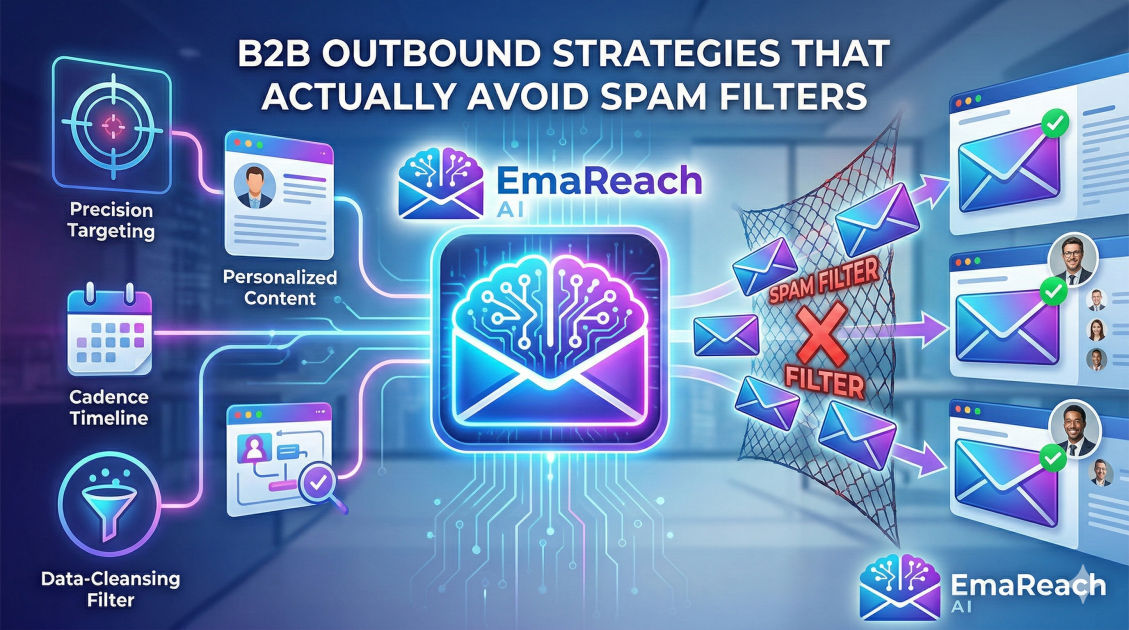
B2B Outbound Strategies That Actually Avoid Spam Filters
B2B SalesEmail DeliverabilityCold OutreachSpam FiltersSales StrategyLead Generation
Introduction
In the world of B2B sales, the line between a successful outreach campaign and a wasted effort is often drawn by an invisible gatekeeper: the spam filter. As email service providers (ESPs) like Google and Microsoft deploy increasingly sophisticated algorithms to protect their users, the traditional 'spray and pray' approach to outbound sales has become a recipe for failure. Simply having a great product or service is no longer enough; you must also possess the technical and strategic expertise to ensure your message actually reaches the primary inbox.
Avoiding spam filters is not about 'tricking' the system. Instead, it is about demonstrating to ESPs that you are a legitimate sender providing value to their users. This comprehensive guide explores the multi-faceted approach required to master email deliverability, from technical infrastructure and domain reputation to content optimization and lead list hygiene.
The Technical Foundation: Authenticating Your Identity
Before you send a single outbound email, your technical infrastructure must be flawless. Spam filters look for specific digital signatures to verify that an email is actually from the person it claims to be from. Without these, your emails are likely to be flagged as phishing attempts or unsolicited bulk mail.
SPF (Sender Policy Framework)
SPF is a DNS record that lists the IP addresses and domains authorized to send emails on behalf of your domain. When an ESP receives an email, it checks the SPF record of the sending domain. If the IP address isn't listed, it’s a major red flag.
DKIM (DomainKeys Identified Mail)
DKIM adds a digital signature to your emails. This signature ensures that the content of the email hasn't been tampered with during transit. It provides a layer of trust that proves the email’s integrity.
DMARC (Domain-based Message Authentication, Reporting, and Conformance)
DMARC uses SPF and DKIM to give the receiving mail server instructions on what to do if an email fails authentication. Setting a DMARC policy (even if it is just 'none' initially for monitoring) signals to ESPs that you are serious about your domain security.
Domain Reputation and the Power of Warm-Up
Your domain reputation is like a credit score for email. If you suddenly send 1,000 emails from a brand-new domain, ESPs will view this as suspicious behavior typical of spammers. Building a reputation takes time and a process known as 'warming up'.
The Warming Process
Domain warming involves gradually increasing the volume of emails sent from a new domain or IP address over several weeks. This allows ESPs to monitor engagement rates. If your early recipients open, reply, and move your emails to their primary folder, your reputation rises.
For those looking to streamline this process, EmaReach provides a powerful solution. EmaReach AI combines AI-written cold outreach with inbox warm-up and multi-account sending—so your emails land in the primary tab and get replies. By automating the engagement phase, you can scale your outbound efforts without the manual headache of monitoring reputation daily.
Using Subdomains vs. Primary Domains
A common B2B strategy is to use a dedicated outbound domain (e.g., get-company.com instead of company.com). This protects your primary corporate domain’s reputation. If your outbound domain gets flagged, your internal communications and transactional emails remain unaffected.
Lead List Hygiene: The Silent Deliverability Killer
Sending emails to non-existent addresses is one of the fastest ways to destroy your sender reputation. High bounce rates tell ESPs that you are using an unverified or 'scraped' list, which is a hallmark of spamming.
Real-Time Verification
You should never upload a list directly from a database to your sending tool without cleaning it first. Use verification services to identify 'hard bounces' (invalid addresses) and 'catch-all' emails.
Identifying Spam Traps
Spam traps are email addresses that are no longer in use but are monitored by ESPs. If you send an email to a spam trap, it is an immediate signal that your data collection methods are flawed. Regular list cleaning helps prune these dangerous entries from your database.
Crafting Content That Bypasses Filters
Once the technical side is handled, the content of your email becomes the primary focus. Modern spam filters use Natural Language Processing (NLP) to analyze the intent of your message.
Avoiding 'Spammy' Keywords
While filters are more advanced than they used to be, certain words still trigger alarms when used in high frequency or in the subject line. These include:
- "Free"
- "Guaranteed"
- "Act Now"
- "No Cost"
- "$$$" or excessive currency symbols
The Importance of Personalization
Templates are necessary for scale, but 'cookie-cutter' emails are easily identified by ESPs. If you send 500 identical emails, the filter sees a pattern. By utilizing deep personalization—mentioning a specific recent achievement of the prospect or a unique pain point relevant to their industry—you break the pattern and improve engagement, which in turn boosts your deliverability.
Formatting and HTML
Heavy use of HTML, excessive images, and multiple tracking links can make an email look like a marketing blast rather than a 1-to-1 business communication. For B2B outbound, a plain-text approach (or very light HTML) is usually superior. It feels more personal and is much easier for filters to digest.
Managing Engagement and Unsubscribe Rates
Positive engagement (opens, clicks, and especially replies) signals to ESPs that your content is wanted. Negative engagement (deletions without opening, marking as spam) does the opposite.
The 'Mark as Spam' Button
This is the most damaging action a recipient can take. To avoid this, ensure your targeting is laser-focused. If your offer is irrelevant to the recipient, they are more likely to report you.
Make Unsubscribing Easy
While it seems counterintuitive to make it easy for people to leave your list, it is far better for them to click an 'unsubscribe' link than to hit the 'report spam' button. Include a clear, professional way for recipients to opt-out of future communications.
Multi-Account Sending Strategies
To scale B2B outbound without hitting the daily sending limits of individual mailboxes (which can trigger filters), many successful teams utilize a multi-account setup. Instead of sending 500 emails from one account, you send 50 emails from 10 different accounts.
This distributed approach mimics natural human behavior. When combined with a tool like EmaReach, which manages multi-account sending and uses AI to ensure each message is unique, you create a robust system that is highly resistant to being throttled or blocked by major providers.
Monitoring and Iteration
Deliverability is not a 'set it and forget it' task. It requires constant monitoring. You should regularly check:
- Blacklist Status: Ensure your sending IPs or domains haven't been added to global blacklists.
- Bounce Rates: Keep your hard bounce rate below 2%.
- Open Rates: A sudden drop in open rates usually indicates that your emails are being routed to the spam folder rather than the inbox.
Feedback Loops
Sign up for feedback loops provided by major ESPs. This allows you to receive reports when a user marks your email as spam, giving you the data needed to remove them from your list immediately and analyze why the message was poorly received.
Conclusion
Mastering B2B outbound in the modern era requires a sophisticated blend of technical precision and human-centric strategy. By building a solid foundation of SPF, DKIM, and DMARC records, maintaining a pristine domain reputation through gradual warming, and ruthlessly cleaning your lead lists, you can navigate the complex landscape of spam filters.
Remember that the goal is to build a relationship, not just to generate a lead. When you prioritize relevance, personalization, and technical health, your outbound efforts will not only reach the inbox but will also generate the meaningful conversations that drive B2B growth. Success in outbound is a marathon of consistency and quality—staying out of the spam folder is simply the price of entry for the race.
EmaReach AI
Ready to scale your cold email outreach?
Join thousands of teams using EmaReach AI for AI-powered campaigns, domain warmup, and 95%+ deliverability. Start free — no credit card required.
Related posts
- Read article
The Instantly Alternative That Finally Gets Outbound Analytics Right
Discover why high-volume cold email requires a shift from surface-level vanity metrics to deep, data-driven revenue attribution, and explore the ultimate alternatives for mastering outbound engineering.
- Read article
How Choosing the Right Instantly Alternative Changed Our Pipeline Numbers
Discover how transitioning from a volume-first cold email setup to an advanced, deliverability-focused infrastructure transformed our B2B pipeline metrics, skyrocketed open rates to over 68%, and tripled our monthly booked demos.