Blog
Back to blog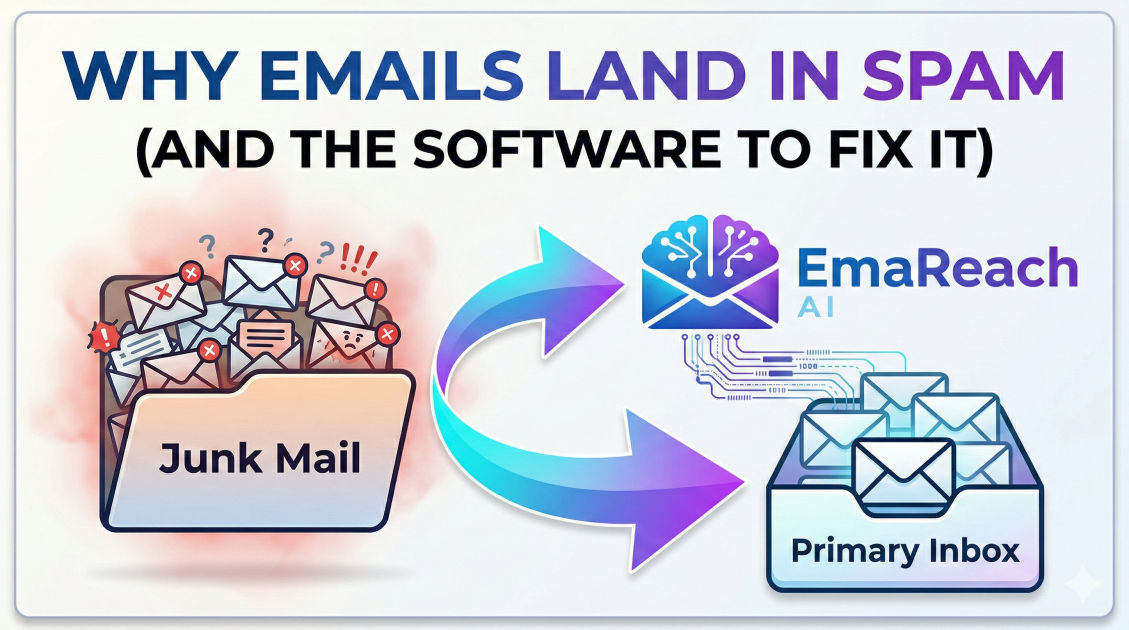
Why Emails Land in Spam (And the Software to Fix It)
email deliverabilityspam filterscold emailemail marketinginbox warm-upsender reputationoutreach software
Introduction
In the digital age, email remains the undisputed king of communication for businesses, marketers, and sales professionals. However, a significant hurdle stands between a sender and their audience: the dreaded spam folder. Research consistently shows that a staggering percentage of legitimate business emails never reach the primary inbox. When an email lands in spam, it isn't just a missed connection; it is wasted resources, diminished brand reputation, and lost revenue.
Understanding the mechanics of email deliverability is no longer a niche technical skill—it is a fundamental requirement for anyone serious about digital outreach. This guide explores the intricate reasons why emails are flagged by filters and, more importantly, the sophisticated software solutions available to ensure your message reaches its intended destination.
The Anatomy of a Spam Filter
Modern spam filters are not simple keyword scanners. They are complex, multi-layered systems driven by machine learning and artificial intelligence. These filters evaluate hundreds of signals in real-time to determine the legitimacy of an incoming message. To fix the problem, we must first understand the criteria these gatekeepers use.
Reputation: Your Digital Credit Score
Email deliverability is largely governed by reputation. This is divided into two main categories: Sender Reputation and IP Reputation.
- Sender Reputation: This is tied to your specific domain (e.g., yourcompany.com). If you have a history of sending emails that users mark as spam, or if you have high bounce rates, your domain reputation suffers.
- IP Reputation: This is tied to the server address used to send the email. If you are using a shared IP address provided by a low-quality Email Service Provider (ESP), the bad behavior of other users on that same IP can negatively impact your deliverability.
Technical Authentication
Think of authentication as the digital passport for your email. Without the proper stamps, the receiving server cannot verify that you are who you say you are. There are three core protocols that every sender must implement:
- SPF (Sender Policy Framework): A DNS record that lists the IP addresses authorized to send emails on behalf of your domain.
- DKIM (DomainKeys Identified Mail): Adds a cryptographic signature to your emails, ensuring the content hasn't been tampered with during transit.
- DMARC (Domain-based Message Authentication, Reporting, and Conformance): A policy that tells receiving servers what to do if an email fails SPF or DKIM checks.
Content and Engagement Signals
Once an email passes the technical hurdles, the filter looks at the content itself. However, user behavior is often a stronger signal than the words on the page. If recipients consistently open your emails, click links, and reply, filters see you as a high-quality sender. Conversely, if users delete your emails without opening them or manually move them to the spam folder, your deliverability will plummet.
Common Culprits: Why Your Emails are Being Filtered
Identifying the specific reason for poor deliverability is the first step toward a solution. Here are the most common triggers for spam filters.
1. Lack of Email Warm-up
One of the biggest mistakes new businesses or cold callers make is "going from zero to sixty." If a brand-new domain suddenly starts sending 500 emails a day, it triggers an immediate red flag. Mailbox providers like Google and Outlook view sudden spikes in volume from unverified domains as a hallmark of a botnet or a spammer.
2. High Bounce Rates
Bounces occur when an email is sent to an invalid or non-existent address. A high bounce rate signals to ISPs that you are using a "dirty" list—perhaps one that was purchased or scraped—rather than a list of engaged prospects who opted in. Maintaining a bounce rate above 2% is often enough to damage your sender reputation.
3. Spam Trigger Words and Formatting
While filters are more advanced now, certain linguistic patterns still cause friction. Overusing words like "Free," "Guarantee," "Act Now," or excessive use of dollar signs and exclamation points can increase your spam score. Additionally, poor HTML formatting, such as using a single large image with no text, is a classic spammer tactic used to hide content from scanners.
4. Poor Engagement (The Taps of Death)
Low open rates aren't just a marketing problem; they are a deliverability problem. If your subject lines are deceptive (clickbait) and users complain, or if you send content that is irrelevant to the recipient, they will eventually stop engaging. ISPs track this lack of interest and will eventually start routing your mail to the promotions or spam tabs by default.
Software Solutions to Fix Your Deliverability
Fixing deliverability manually is a Herculean task. Fortunately, a suite of software tools has emerged to automate technical setups, monitor health, and ensure inbox placement.
Inbox Warm-up Tools
To build a positive reputation, you need a "warm-up" period. This involves sending a small volume of emails and gradually increasing that volume while ensuring those emails are opened and replied to.
Modern software automates this by placing your email account into a network of other real accounts. These accounts automatically interact with your emails—opening them, marking them as important, and replying. This organic-looking activity tells ISPs that you are a legitimate human sender. For those focused on high-stakes outreach, EmaReach provides a powerful solution. By combining AI-written content with automated inbox warm-up and multi-account sending, it ensures that your cold emails don't just get sent, but actually land in the primary tab where they get seen.
Email Verification and List Cleaning
Before you ever hit "send," you must ensure your list is clean. Verification software checks each email address in your database to see if it is valid, active, and capable of receiving mail. These tools can identify "catch-all" addresses, disposable emails, and known spam traps (inactive emails used by ISPs to catch irresponsible senders).
Deliverability Monitoring and Testing
How do you know if you're in the spam folder before you send your campaign? Deliverability testing tools allow you to send a test version of your email to a "seed list" of various mailbox providers (Gmail, Outlook, Yahoo, etc.). The software then generates a report showing exactly where your email landed in each instance. If you land in spam for Outlook but not Gmail, you know you have a specific technical issue with Microsoft's filters.
Authentication Setup Assistants
Setting up SPF, DKIM, and DMARC involves editing DNS records, which can be intimidating. Several software platforms now offer guided setups or automated wizards that generate the exact code you need to paste into your domain provider's dashboard, ensuring your "digital passport" is always up to date.
Advanced Strategies for Primary Inbox Placement
Once you have the basics of software and technical setup covered, you can employ advanced tactics to stay ahead of the curve.
Multi-Account Sending (Inbox Rotation)
Rather than sending 200 emails from a single address, sophisticated software allows you to spread that volume across ten different addresses (e.g., john@company.com, j.doe@company.com, etc.). This keeps the volume per mailbox low and stays well within the safety limits of ISPs, significantly reducing the risk of any single account being flagged.
Personalization at Scale
Generic emails are a magnet for spam reports. Modern AI-driven outreach tools can now scrape LinkedIn profiles or website data to insert specific, hyper-personalized opening lines into every email. When a recipient sees a message that clearly references their recent work or a specific pain point, they are much more likely to engage and much less likely to hit the "Report Spam" button.
Monitoring Blacklists
There are hundreds of public blacklists (like Spamhaus or Barracuda) that track malicious senders. If your IP or domain ends up on one of these, your deliverability will stop instantly. Specialized monitoring software can alert you the moment you appear on a blacklist, allowing you to take corrective action or request a removal before the damage becomes permanent.
A Checklist for Long-Term Success
To maintain a healthy relationship with mailbox providers, you should treat email deliverability as an ongoing process rather than a one-time fix.
- Regularly Audit Your Technical Records: DNS settings can sometimes be overwritten or lost during website migrations. Check your SPF and DKIM records quarterly.
- Monitor Your Feedback Loops: Most major ISPs offer "Feedback Loops" (FBL) which notify you when a user marks your email as spam. Ensure your software is integrated with these so you can immediately remove those users from your list.
- Keep Content Human: Avoid heavy use of tracking pixels if possible, as some aggressive filters view them with suspicion. Keep your text-to-image ratio high.
- Optimize for Mobile: A significant portion of spam reports come from frustrated users who can't read a poorly formatted email on their phone. Ensure your templates are responsive.
Conclusion
Landing in the spam folder is a complex problem with multiple variables, ranging from technical authentication and IP reputation to the specific words you choose in your subject line. However, the path to the primary inbox is well-mapped. By implementing the right technical protocols, maintaining a clean list, and utilizing specialized software like EmaReach to handle warm-up and AI-driven personalization, you can ensure your outreach efforts are never wasted.
The landscape of email communication is constantly evolving as filters become smarter and users become more protective of their digital space. By staying proactive and leveraging the right tools, you can turn your email channel into a reliable engine for growth and connection, free from the shadow of the spam folder.
EmaReach AI
Ready to scale your cold email outreach?
Join thousands of teams using EmaReach AI for AI-powered campaigns, domain warmup, and 95%+ deliverability. Start free — no credit card required.
Related posts
- Read article
The Instantly Alternative That Finally Gets Outbound Analytics Right
Discover why high-volume cold email requires a shift from surface-level vanity metrics to deep, data-driven revenue attribution, and explore the ultimate alternatives for mastering outbound engineering.
- Read article
How Choosing the Right Instantly Alternative Changed Our Pipeline Numbers
Discover how transitioning from a volume-first cold email setup to an advanced, deliverability-focused infrastructure transformed our B2B pipeline metrics, skyrocketed open rates to over 68%, and tripled our monthly booked demos.