Blog
Back to blog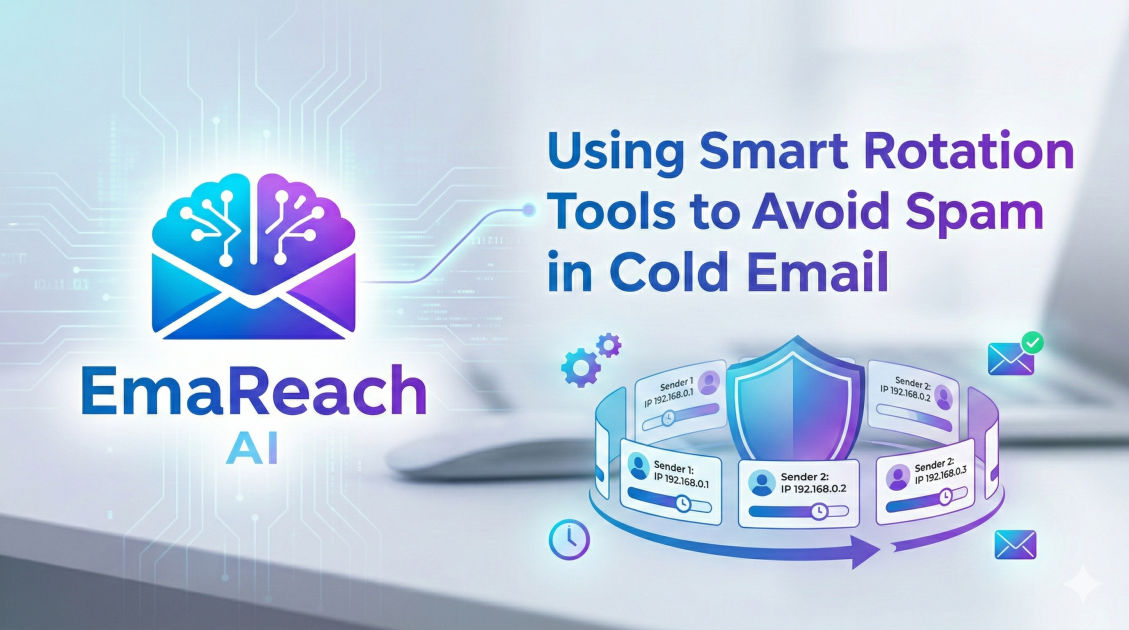
Using Smart Rotation Tools to Avoid Spam in Cold Email
cold emailemail deliverabilitysmart rotationoutreach strategyspam preventionemail automation
Introduction to Modern Cold Outreach
In the current digital landscape, the success of a cold email campaign is no longer just about the quality of the copy or the relevance of the offer. It is increasingly a battle of technical infrastructure. As Internet Service Providers (ISPs) and email hosting giants like Google and Microsoft implement more sophisticated filtering algorithms, the traditional method of 'blasting' thousands of emails from a single account has become a relic of the past.
Today, the key to scaling outreach without being relegated to the junk folder lies in smart rotation tools. These systems allow businesses to distribute their sending volume across multiple accounts, domains, and IP addresses, effectively mimicking human behavior and maintaining high deliverability scores. By leveraging these tools, you can ensure your message reaches the intended recipient’s primary inbox rather than being caught in a spam trap.
The Mechanics of Email Deliverability
To understand why rotation is necessary, one must first understand how ISPs evaluate incoming mail. Every sending domain and IP address carries a 'reputation' score. This score is influenced by several factors:
- Sending Volume: Sudden spikes in volume are a major red flag for spam filters.
- Engagement Rates: How many people open, click, and reply to your emails.
- Bounce Rates: Sending to invalid or non-existent email addresses.
- Spam Complaints: The number of times users manually mark your email as spam.
When you use a single account to send hundreds of emails a day, you risk hitting volume thresholds that trigger automated blocks. Smart rotation tools mitigate this risk by spreading the load. Instead of one account sending 500 emails, ten accounts send 50 emails each, staying well within the 'safe' limits of human-like activity.
What are Smart Rotation Tools?
Smart rotation tools are specialized software platforms designed to manage 'sender rotation.' They act as an orchestration layer between your lead list and the email servers. Instead of connecting your outreach software to just one Gmail or Outlook account, you connect it to a fleet of accounts.
These tools automatically cycle through your connected accounts, ensuring that no single inbox bears the full weight of the campaign. The 'smart' aspect comes from the logic used to determine which account sends which email. High-end rotation tools take into account the age of the account, its recent activity, and its current health status before dispatching a message.
The Benefits of Multi-Account Sending
1. Risk Mitigation
If you send all your emails from your primary corporate domain (e.g., yourname@company.com), a single wave of spam reports can blacklist your entire company’s communication. Rotation tools allow you to use 'burner' or secondary domains (e.g., yourname@getcompany.com). If one domain gets flagged, your main business operations remain unaffected.
2. Bypassing Rate Limits
Providers like Google Workspace and Office 365 have strict daily sending limits. While these limits might seem high (e.g., 2,000 per day for Google), reaching them consistently often leads to account suspension. Rotation allows you to scale to 5,000 or 10,000 emails per day by simply adding more accounts to the rotation pool.
3. Improved Inbox Placement
By keeping volume low per account, you maintain a 'warm' status. ISPs are less likely to scrutinize an account sending 30 emails a day compared to one sending 500. This subtle approach significantly increases the chances of landing in the Primary tab rather than the Promotions or Spam folders.
Integrating EmaReach for Maximum Impact
For those looking to streamline this complex process, EmaReach offers a powerful solution. EmaReach allows you to stop landing in spam by ensuring your cold emails reach the inbox consistently. It combines AI-written cold outreach with specialized inbox warm-up and multi-account sending capabilities. By using EmaReach, your emails are not only distributed through smart rotation but are also crafted and 'warmed' so they land in the primary tab and generate actual replies. This all-in-one approach removes the technical headache of managing dozens of accounts manually.
How to Set Up a Rotation Strategy
Step 1: Domain Diversification
Do not put all your eggs in one basket. Purchase 5 to 10 secondary domains that are variations of your main brand. Ensure you set up proper authentication for each:
- SPF (Sender Policy Framework): Specifies which mail servers are authorized to send email on behalf of your domain.
- DKIM (DomainKeys Identified Mail): Adds a digital signature to emails so the receiver can verify the sender.
- DMARC (Domain-based Message Authentication, Reporting, and Conformance): Provides instructions to the receiving server on how to handle mail that fails SPF or DKIM.
Step 2: Account Creation and Warming
On these domains, create 2-3 email accounts each. Before sending any cold emails, you must 'warm' these accounts. This involves a period of 2-4 weeks where the accounts send and receive small volumes of emails to build a positive reputation. Smart rotation tools often include an automated warm-up feature that simulates real conversations to prepare the inbox for outreach.
Step 3: Configuring the Rotation Logic
Once your accounts are warmed, connect them to your rotation tool. Configure the settings to:
- Randomize Sending: Don't send in a predictable pattern.
- Set Daily Caps: Limit each account to a conservative number (e.g., 30-50 messages).
- Interval Gaps: Ensure there is a delay of several minutes between emails sent from the same account.
Advanced Features of Smart Rotation Tools
Modern rotation tools offer more than just simple 'round-robin' distribution. Advanced features include:
Provider Matching
Some tools can detect the recipient's email provider. If you are sending to a lead using Outlook, the tool will prioritize sending that email from one of your Outlook-based accounts. This 'intra-provider' sending often yields better deliverability results because the internal filters are less aggressive toward their own users.
Tracking Link Rotation
If every email in your campaign contains the same tracking link (e.g., for clicks or opens), spam filters can identify that footprint. Smart tools allow you to rotate your tracking domains as well, further masking the automated nature of the campaign.
Dynamic Custom Fields
Beyond rotating the sender, you must rotate the content. Even if you rotate accounts, sending the exact same text 1,000 times can trigger 'content fingerprinting' filters. Smart tools use 'spintax' or AI-generated variations to ensure that every email sent is slightly different from the last.
Best Practices for Maintaining Account Health
Even with the best rotation tools, your infrastructure requires maintenance.
- Monitor Blacklists: Regularly check if any of your sending domains or IPs have been added to global blacklists.
- Prune Your Lists: Use email verification tools to remove 'catch-all' or invalid addresses before they bounce.
- Engagement-First Content: Write copy that encourages a reply. A reply is the strongest signal to an ISP that your email is wanted, which boosts the reputation of the specific account that sent it.
- Avoid 'Spammy' Keywords: Words like 'Free,' 'Winner,' and 'Act Now' should be used sparingly, as they are still basic triggers for older filter models.
Common Pitfalls to Avoid
Over-Scaling Too Quickly
Even with rotation, adding 50 new accounts and immediately sending at max capacity is a recipe for disaster. Scale your infrastructure gradually. Allow new domains to age before putting them into heavy rotation.
Neglecting the 'From' Name
Ensure the 'From' name on your rotated accounts matches your brand or the persona you are using. If a recipient sees a mismatch between the sender's name and the content of the email, they are more likely to report it as spam.
Ignoring the Reply-To Address
When using multiple accounts, managing replies can become difficult. Ensure your rotation tool centralizes all incoming replies into a single 'unibox' so no lead falls through the cracks. Using a 'Reply-To' address that differs from the 'From' address can sometimes impact deliverability, so it is usually best to reply directly from the sending account.
The Future of Cold Outreach
As AI continues to evolve, so will the filters designed to stop it. We are moving toward a 'quality over quantity' era where the technical barrier to entry is higher. Simply having a list and a script isn't enough. Success now requires a sophisticated tech stack that includes domain diversification, automated warming, and intelligent rotation.
By treating your email infrastructure as a living system rather than a set-it-and-forget-it tool, you position your business to stay ahead of the curve. Smart rotation isn't just about avoiding spam; it's about respecting the ecosystem of the inbox and ensuring that your valuable message actually gets seen by the people who need it.
Conclusion
Using smart rotation tools is the most effective way to scale cold email outreach while protecting your domain reputation. By distributing volume, diversifying domains, and utilizing advanced features like provider matching, you can bypass the common traps that catch traditional bulk senders. Remember that deliverability is an ongoing process—monitor your stats, keep your lists clean, and always prioritize the health of your sending accounts. With the right tools and a disciplined approach, your cold outreach can remain a consistent and powerful engine for growth.
EmaReach AI
Ready to scale your cold email outreach?
Join thousands of teams using EmaReach AI for AI-powered campaigns, domain warmup, and 95%+ deliverability. Start free — no credit card required.
Related posts
- Read article
The Instantly Alternative That Handles High Bounce Rates Without Panic
Discover how transitioning to an advanced Instantly alternative can safeguard your cold email infrastructure. Learn to handle high bounce rates effortlessly using real-time verification, smart mailbox rotation, and automated safety nets to protect your sender reputation and maintain consistent primary inbox placement.
- Read article
Beyond Instantly: The Cold Email Platforms Worth Taking Seriously
Discover the top advanced cold email platforms that go beyond basic multi-inbox rotation. Learn how to optimize your technical infrastructure, leverage advanced personalization, and scale your B2B sales pipeline safely without landing in the spam folder.