Blog
Back to blog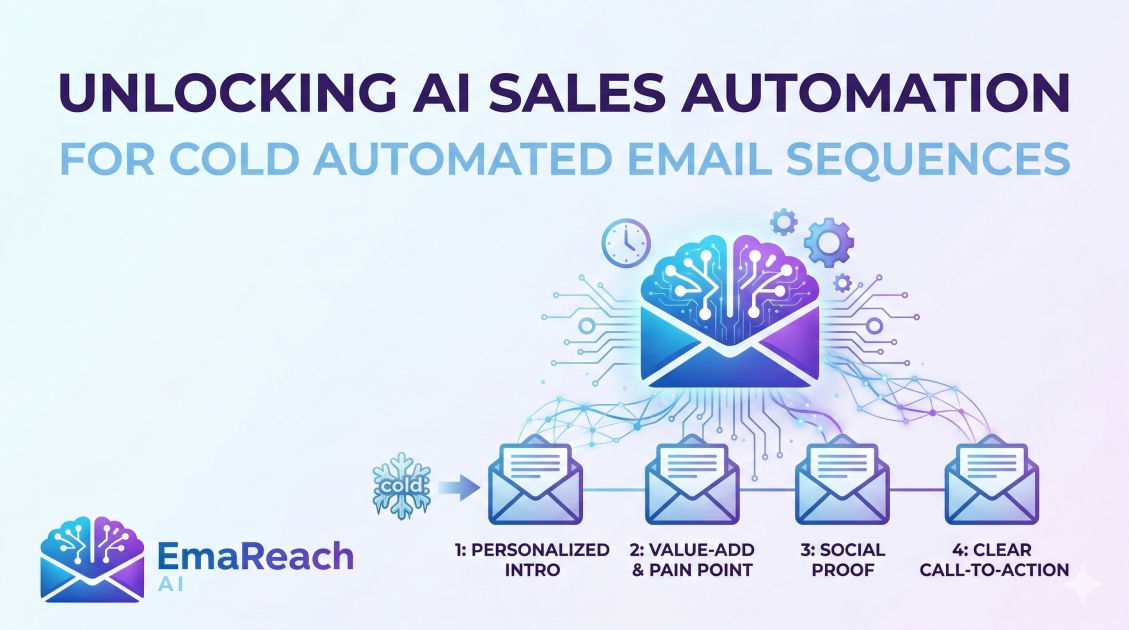
Using AI Sales Automation Tools for Cold Automated Email Sequences
sales automationcold emailAI toolslead generationemail deliverabilityoutreach strategyB2B sales
The Evolution of Cold Outreach in the AI Era
Cold email has long been a cornerstone of B2B lead generation. However, the days of 'spray and pray'—sending thousands of generic emails and hoping for a 1% response rate—are over. Today’s prospects are inundated with noise, and email service providers have become incredibly sophisticated at filtering out unsolicited, low-value content. To succeed in this environment, sales teams are turning to AI sales automation tools to inject intelligence, personalization, and efficiency into their cold automated email sequences.
Artificial Intelligence is not just a buzzword in sales; it is a fundamental shift in how we identify, contact, and engage with potential customers. By leveraging machine learning and natural language processing, businesses can now execute outreach that feels deeply personal while remaining entirely automated. This guide explores the mechanics of using AI to transform your cold email strategy from a volume-based chore into a precision-based revenue engine.
Understanding AI Sales Automation Tools
Before diving into the tactics, it is essential to understand what AI sales automation tools actually do. Unlike traditional automation, which simply follows a rigid 'if-this-then-that' logic, AI-driven tools can analyze data, predict outcomes, and generate content.
Key capabilities of these tools include:
- Intent Data Analysis: Identifying which companies are currently searching for solutions like yours.
- Dynamic Personalization: Writing custom opening lines based on a prospect’s LinkedIn profile, recent news, or company blog posts.
- Automated Warm-up: Gradually increasing sending volume to establish sender reputation.
- Smart Scheduling: Sending emails at the exact time a prospect is most likely to be in their inbox.
- Response Handling: Categorizing replies and even drafting suggested responses based on the sentiment of the prospect's email.
For those looking to master this balance of volume and quality, tools like EmaReach are designed to ensure your efforts don't go to waste. EmaReach AI combines AI-written cold outreach with inbox warm-up and multi-account sending, ensuring that your emails land in the primary tab rather than the spam folder.
Building the Foundation: Data and Prospecting
The quality of your automated sequence is only as good as the data feeding it. AI has revolutionized the prospecting phase by moving beyond static lists.
AI-Powered Lead Scoring
Instead of manually vetting every lead, AI tools can score leads based on their 'fit' (firmographics) and 'intent' (behavioral signals). By analyzing your existing customer base, AI can identify patterns and find 'lookalike' audiences that are statistically more likely to convert. This ensures that your automated sequences are targeting the right people from the start.
Real-Time Data Enrichment
People change jobs, companies get funded, and technologies shift. AI sales tools can monitor these triggers in real-time. If a prospect is promoted or their company announces a new product, an AI-driven sequence can automatically trigger a specific email branch that references that exact event, making the outreach feel incredibly timely and relevant.
Crafting High-Converting AI-Generated Content
One of the most significant hurdles in cold email is the time required to personalize each message. AI has effectively removed this barrier.
The Power of the First Line
The first sentence of your cold email is often the only thing a prospect sees in their notification or preview pane. AI tools can crawl a prospect’s recent activity—such as a podcast appearance or a shared article—and generate a unique, flattering opening line. This level of detail signals to the recipient that you have done your homework, significantly increasing open and reply rates.
Variable Injection and Dynamic Content
Beyond simple 'First Name' tags, AI allows for dynamic content blocks. For example, if you are targeting different industries, the AI can swap out case studies or value propositions within the same sequence to match the specific pain points of a manufacturing lead versus a software lead.
Maintaining a Human Tone
A common fear is that AI-written emails will sound robotic. However, modern Large Language Models (LLMs) are exceptionally good at mimicking a conversational, professional tone. The key is to provide the AI with a 'brand voice' guide, instructing it to avoid jargon, keep sentences short, and focus on the prospect’s problems rather than your product’s features.
Structuring Your Cold Automated Sequence
An effective sequence is rarely just one or two emails. It is a multi-touch journey designed to build familiarity and provide value. Here is how AI optimizes the structure:
The Initial Outreach
The goal here is curiosity, not a hard sell. AI helps by keeping the message concise and focusing on a single, clear call to action (CTA).
The Value-Add Follow-up
Instead of just 'bumping' the thread, AI can suggest relevant content to share based on the prospect’s industry trends. This transforms the follow-up from an annoyance into a helpful resource.
The Break-up Email
When a prospect hasn't responded after several touches, the 'break-up' email can be automated to politely close the loop. AI can ensure this is done with grace, leaving the door open for future engagement without sounding passive-aggressive.
Deliverability: The Silent Killer of Cold Email
You could have the best AI-written copy in the world, but it means nothing if it lands in the spam folder. This is where technical automation is just as important as creative automation.
Inbox Warm-up
When you start a new cold email campaign, you cannot send 100 emails on day one. AI tools manage the 'warm-up' process by sending a small number of emails and gradually increasing the volume while simulating human interactions (like marking emails as 'not spam' and replying to them).
Multi-Account Sending
To avoid hitting the daily limits of individual email accounts, AI sales tools can distribute a single campaign across dozens of different sender accounts. This 'inbox rotation' keeps your primary domain safe and ensures high deliverability. This is a core feature of platforms like EmaReach, where the focus is on making sure cold emails actually reach the inbox through sophisticated warm-up and multi-account management.
Technical DNS Setup
AI tools often include checkers for SPF, DKIM, and DMARC records. These are the digital passports of your email; without them, servers will likely reject your messages. Automation ensures these stay valid and alerts you if any issues arise.
Optimizing Performance Through AI Analytics
Traditional analytics tell you who opened an email. AI-driven analytics tell you why your campaign is working or failing.
Sentiment Analysis
Instead of just tracking 'replies,' AI can categorize those replies. It can distinguish between a 'not interested' response, a 'check back in six months' response, and a 'let's book a meeting' response. This allows sales teams to focus their manual efforts only on the most promising leads.
A/B Testing at Scale
AI can run dozens of A/B tests simultaneously. It can test different subject lines, CTA styles, and even the length of the email. Over time, the AI learns which combinations perform best for specific personas and automatically shifts the traffic toward the winning variants.
Predictive Forecasting
By analyzing the historical data of your automated sequences, AI can predict how much pipeline you will generate in the coming months. This helps sales managers make data-driven decisions about whether they need to increase lead volume or improve the conversion rate within the existing sequence.
Ethical Considerations and Best Practices
As with any powerful technology, AI sales automation must be used responsibly.
- Relevance Over Volume: Just because you can send 10,000 emails a day doesn't mean you should. Use AI to stay highly targeted.
- Transparency: While you don't need to state 'this was written by AI,' the content should always be honest and provide real value.
- Compliance: Ensure your automated sequences comply with regulations like GDPR and CAN-SPAM. This includes providing clear opt-out links and respecting 'do not contact' requests immediately.
- The 'Human in the Loop': AI should handle the repetitive tasks, but humans should always be involved in the final strategy and the actual closing of deals. Use AI to get you to the 5-yard line; your sales reps should carry the ball into the end zone.
Conclusion
Using AI sales automation tools for cold automated email sequences is no longer a luxury for tech-forward startups; it is a necessity for any B2B organization that wants to remain competitive. By automating the heavy lifting of prospecting, personalization, and deliverability management, sales teams can reclaim their time to do what they do best: building relationships and solving customer problems.
Integrating AI into your workflow allows for a level of scale and precision that was previously impossible. Whether it's through hyper-personalized first lines, intelligent deliverability management with tools like EmaReach, or deep sentiment analysis of replies, the marriage of AI and email is the future of outbound sales. The key to success lies in choosing the right tools, maintaining a human touch in your strategy, and constantly iterating based on the data-driven insights that only AI can provide.
EmaReach AI
Ready to scale your cold email outreach?
Join thousands of teams using EmaReach AI for AI-powered campaigns, domain warmup, and 95%+ deliverability. Start free — no credit card required.
Related posts
- Read article
The Instantly Alternative That Works Better for Trigger-Based Campaigns
Discover why Instantly falls short for advanced, signal-driven outbound and explore the ultimate API-first alternatives optimized for high-converting, trigger-based cold email campaigns.
- Read article
The Instantly Alternative That Handles High Bounce Rates Without Panic
Discover how transitioning to an advanced Instantly alternative can safeguard your cold email infrastructure. Learn to handle high bounce rates effortlessly using real-time verification, smart mailbox rotation, and automated safety nets to protect your sender reputation and maintain consistent primary inbox placement.