Blog
Back to blog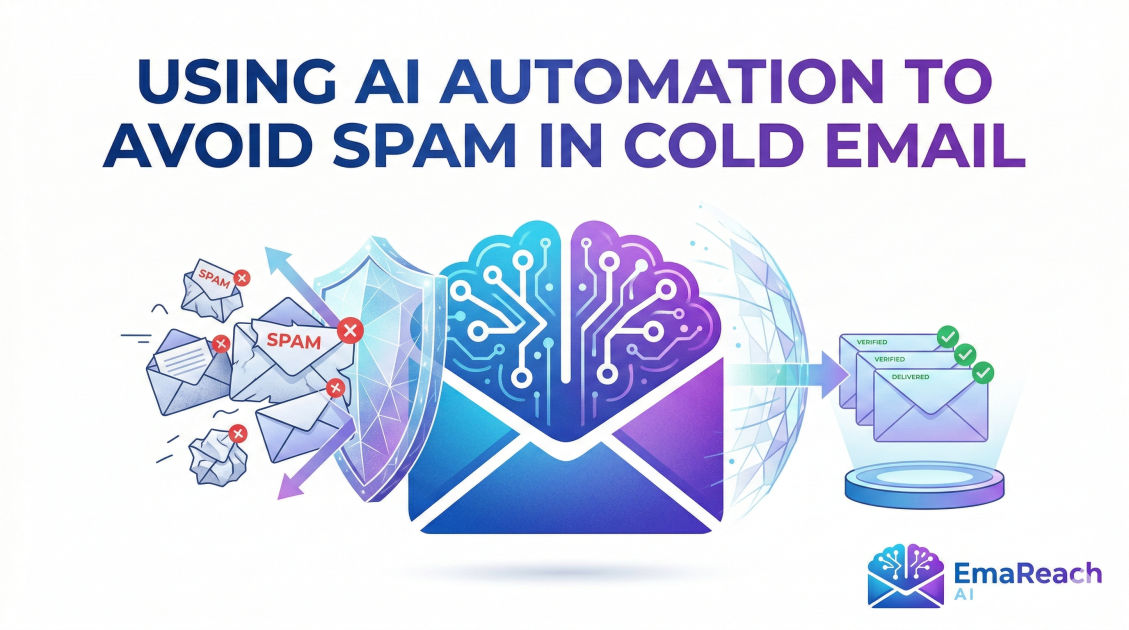
Using AI Automation to Avoid Spam in Cold Email
cold emailAI automationemail deliverabilityspam filterssales outreachmarketing automationlead generation
Introduction
Cold email remains one of the most powerful tools in the modern sales and marketing arsenal. However, the landscape has shifted. Gone are the days when a simple mass-blast campaign could yield high conversion rates. Today, internet service providers (ISPs) and email service providers (ESPs) use incredibly sophisticated algorithms to filter out unsolicited or low-quality content. For businesses, this means the risk of landing in the spam folder is higher than ever.
Landing in spam doesn't just result in missed opportunities; it can damage your domain reputation, leading to a long-term decline in deliverability. To combat this, savvy marketers are turning to AI automation. By leveraging artificial intelligence, companies can now scale their outreach while maintaining—and even improving—the human touch that keeps emails out of the junk folder.
The Evolution of Spam Filters
To understand how to avoid spam, we first must understand what we are up against. Modern spam filters no longer look just for 'trigger words' like "free," "guaranteed," or "winner." Instead, they analyze patterns. They look at your sending volume, your engagement rates (opens, clicks, and replies), and the technical configuration of your domain.
When you send thousands of identical emails at once, it creates a footprint that screams "automation" to an ISP. AI automation seeks to erase this footprint by introducing variability, personalization, and strategic timing into your campaigns. This ensures that your outreach mimics human behavior, which is the gold standard for high deliverability.
The Role of Personalization in Deliverability
One of the primary reasons cold emails are flagged as spam is a lack of relevance. When users consistently mark an email as spam, the recipient's ESP takes note. AI has revolutionized this aspect of outreach through hyper-personalization at scale.
AI-Powered Research
AI tools can now scrape LinkedIn profiles, company websites, and recent news articles to find specific data points about a prospect. Instead of a generic "I saw your profile," an AI-enhanced system can generate an opening line such as: "I noticed your recent talk at the Tech Summit regarding the shift to remote infrastructure—your point about latent security risks was particularly insightful."
This level of detail does two things: it encourages the recipient to engage (which signals to ISPs that your email is wanted) and it ensures that every email sent from your domain is unique. High content variability is a key factor in bypassing automated spam detection.
Dynamic Content Generation
Beyond just the opening line, AI can help restructure the entire body of an email to fit different buyer personas. By using Large Language Models (LLMs), automation platforms can spin dozens of versions of the same value proposition. This prevents "content fingerprinting," a technique used by filters to identify and block bulk email templates.
Technical Foundations: The 'Warm-Up' Process
Before you even send your first AI-optimized email, your domain must be prepared. Sending a high volume of mail from a new or cold domain is a surefire way to get blacklisted. This is where AI-driven inbox warm-up comes into play.
Automated warm-up tools use a network of real accounts to interact with your email address. These tools send messages back and forth, pull your emails out of spam folders, and mark them as important. This activity builds a positive sender reputation. For those looking for a comprehensive solution, EmaReach is a prime example of a platform that bridges this gap. By combining AI-written cold outreach with automated inbox warm-up and multi-account sending, it ensures your emails land in the primary tab and actually get replies.
Optimizing Sending Patterns with AI
Human beings do not send 500 emails at exactly 9:00 AM every Tuesday. They send emails throughout the day at irregular intervals. Traditional automation tools often fail because they are too predictable.
AI automation solves this by using "throttling" and "jittering."
- Throttling: AI monitors your domain's health and automatically slows down sending if it detects a spike in bounce rates or a dip in engagement.
- Jittering: This introduces random delays between emails, making the sending pattern look organic rather than mechanical.
Furthermore, AI can analyze when specific prospects are most likely to be active in their inboxes based on historical data, ensuring your email sits at the top of their list when they log in.
Validating Data to Protect Sender Reputation
A major contributor to spam flags is the "Hard Bounce." This happens when you send an email to an address that doesn't exist. High bounce rates signal to ISPs that you are using a stale or unverified list—a hallmark of a spammer.
AI-integrated verification tools go beyond simple syntax checks. They can perform real-time "SMTP handshakes" to verify the existence of a mailbox without sending an actual email. They can also identify "catch-all" addresses or "spam traps"—decoy email addresses set up by security companies to catch malicious senders. By cleaning your list through an automated AI pipeline, you ensure that every message sent has a high probability of reaching a valid destination.
Advanced Content Filtering and Sentiment Analysis
AI can act as a pre-flight check for your content. Before an email is sent, sentiment analysis algorithms can scan the text for aggressive, salesy, or deceptive language.
Avoiding Spam Trigger Words
While modern filters are complex, trigger words still play a role. AI-driven editors can highlight problematic phrases and suggest alternatives that convey the same meaning without alerting the filters. For instance, changing "Earn money fast" to "Accelerate your revenue growth" can make a significant difference in how an ISP perceives the intent of the message.
Maintaining Proper Formatting
Spam filters often look for excessive use of bold text, multiple font colors, or an overabundance of links and images. AI automation can enforce "best practice" templates that keep the HTML-to-text ratio within safe limits, ensuring your technical structure is as clean as your copy.
The Multi-Account Strategy
In the current climate, sending 1,000 emails from a single account is risky. If that one account gets flagged, your entire campaign dies. AI automation enables a "distributed" sending strategy.
By managing dozens of sub-domains and accounts simultaneously, AI can spread the load. If you need to send 1,000 emails, the AI distributes them across 20 different accounts (50 emails each). This keeps the volume per account low and well under the radar of most ISP monitoring systems. Advanced platforms like EmaReach specialize in this multi-account coordination, ensuring that even as you scale, your individual sender profiles remain pristine.
Monitoring and Iterative Learning
The beauty of AI is its ability to learn from failure. When an email is marked as spam or ignored, the AI records this data point. Over time, the system identifies patterns: which subject lines get flagged, which industries have stricter filters, and which times of day result in the most bounces.
This creates a feedback loop. The AI constantly adjusts the strategy, refining the copy and the technical parameters to stay one step ahead of evolving spam algorithms. This is not a static process; it is a continuous evolution that manual outreach simply cannot match.
Ethical Considerations and Compliance
Using AI to bypass spam filters should not be confused with a license to spam. The goal of AI automation is to ensure that relevant messages reach people who can actually benefit from them.
- CAN-SPAM and GDPR: AI tools can be programmed to ensure every email includes a clear opt-out mechanism and identifies the sender, keeping you compliant with international laws.
- Value-First Approach: The most effective way to stay out of spam is to provide value. AI should be used to find the right people and craft the right message, not just to increase volume.
Key Components of an AI-Driven Cold Email Stack
To successfully implement these strategies, you need a cohesive stack of tools. A typical AI-powered workflow looks like this:
- Lead Generation & Enrichment: AI tools identify high-intent prospects based on specific triggers (e.g., a company just raised funding).
- Verification: An automated layer removes invalid or risky email addresses.
- Copywriting: An LLM generates unique, personalized variations of the outreach message.
- Warm-up & Sending: A platform manages the reputation of the accounts and staggers the delivery.
- Analytics & Optimization: AI reviews the engagement data to improve the next batch of emails.
The Future of Cold Outreach
As AI continues to advance, we can expect even deeper levels of integration. We are moving toward a world of "conversational AI" where the initial outreach is just the beginning. AI will be able to handle initial objections and book meetings directly on your calendar, all while maintaining the sender reputation that took months to build.
However, the core principle remains the same: Deliverability is earned. By using AI to act more human, rather than more like a machine, you create a sustainable outreach engine that respects the recipient's inbox and yields real business results.
Conclusion
Avoiding the spam folder in cold email is no longer a matter of luck or simply avoiding a few keywords. It requires a sophisticated, multi-layered approach that addresses domain reputation, content variability, and sending patterns. AI automation provides the tools necessary to navigate this complexity at scale. By leveraging hyper-personalization, automated warm-up sequences, and distributed sending strategies, businesses can ensure their voice is heard in an increasingly crowded digital landscape. The integration of artificial intelligence into cold outreach isn't just an advantage—it's becoming a necessity for anyone serious about hitting the inbox and generating meaningful growth.
EmaReach AI
Ready to scale your cold email outreach?
Join thousands of teams using EmaReach AI for AI-powered campaigns, domain warmup, and 95%+ deliverability. Start free — no credit card required.
Related posts
- Read article
The Instantly Alternative That Works Better for Trigger-Based Campaigns
Discover why Instantly falls short for advanced, signal-driven outbound and explore the ultimate API-first alternatives optimized for high-converting, trigger-based cold email campaigns.
- Read article
The Instantly Alternative That Handles High Bounce Rates Without Panic
Discover how transitioning to an advanced Instantly alternative can safeguard your cold email infrastructure. Learn to handle high bounce rates effortlessly using real-time verification, smart mailbox rotation, and automated safety nets to protect your sender reputation and maintain consistent primary inbox placement.