Blog
Back to blog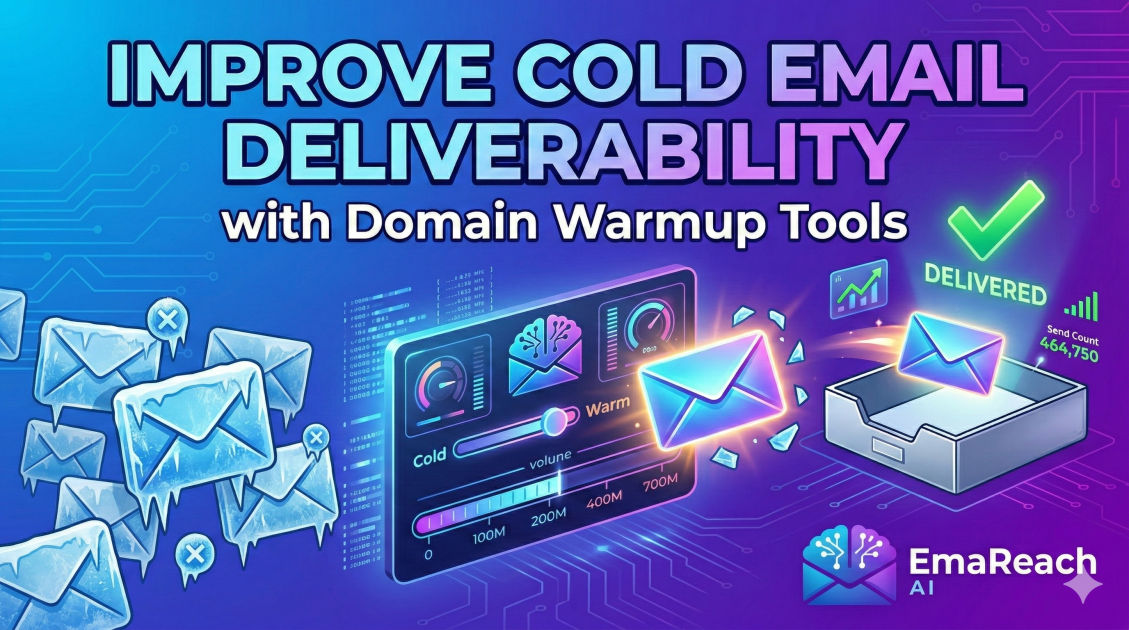
Use Domain Warmup Tools to Improve Cold Email Deliverability
cold emailemail deliverabilitydomain warmupoutreach strategysender reputationemail marketing tools
Introduction to Domain Warmup and Email Deliverability
In the world of modern sales and digital marketing, cold email remains one of the most effective channels for generating high-quality leads and building professional relationships. However, the landscape has changed dramatically. Gone are the days when you could simply buy a list, fire off thousands of emails from a brand-new domain, and wait for the replies to roll in. Today, Internet Service Providers (ISPs) and Email Service Providers (ESPs) like Google and Microsoft employ incredibly sophisticated algorithms designed to protect users from spam.
If you launch a cold outreach campaign without a properly warmed-up domain, your emails are statistically likely to land in the spam folder or, worse, result in your domain being blacklisted entirely. This is where domain warmup tools become essential. These tools automate the process of building a positive sender reputation, ensuring that your outreach reaches the primary inbox rather than the dreaded 'Promotions' tab or spam folder.
Understanding the Concept of Sender Reputation
To understand why warmup tools are necessary, you must first understand Sender Reputation. Think of it as a credit score for your email domain. Every time you send an email, the receiving server evaluates several factors to decide whether to trust you:
- Sending Volume: Are you sending 5 emails a day or 5,000?
- Engagement Rates: Do recipients open your emails, click links, or reply?
- Bounce Rates: How many of your emails are sent to non-existent addresses?
- Spam Complaints: How many people are clicking 'Report Spam' on your messages?
- Technical Setup: Are your SPF, DKIM, and DMARC records correctly configured?
When a domain is brand new, it has no history. In the eyes of an ISP, a high volume of mail from a domain with no history is the primary characteristic of a spammer. Domain warmup is the strategic process of gradually increasing your sending volume and generating positive engagement to prove to ISPs that you are a legitimate human sender.
The Mechanism Behind Domain Warmup Tools
Domain warmup tools automate the tedious process of manual warmup. Traditionally, a salesperson would have to send a few emails to friends or colleagues, ask them to reply, move the emails out of spam if they landed there, and slowly increase the count over several weeks. This is not scalable.
Modern tools, such as EmaReach, handle this through a network of 'peer' accounts. When you connect your domain to a warmup tool, it begins sending automated emails to other users within that tool's network. These aren't just random strings of text; they are often AI-generated, coherent messages that mimic real human conversation.
More importantly, these tools perform several 'positive' actions automatically:
- Opening the email: Simulates a high open rate.
- Replying to the email: Creates a back-and-forth conversation thread, which is a massive green flag for ISP algorithms.
- Removing from Spam: If an automated email lands in the spam folder, the tool automatically moves it to the primary inbox, signaling to the ISP that the message was 'not spam.'
- Marking as Important: Many tools will star or mark the message as important to further boost the domain's reputation.
Why Manual Warmup Is No Longer Viable
While manual warmup is technically possible, it is fraught with risks and inefficiencies. For a professional outreach operation, relying on manual processes is a recipe for failure.
The Scale Problem
To properly warm up a domain for a campaign that intends to send 50 emails a day, you typically need a 4-week warmup period. Managing this across multiple domains and accounts is a logistical nightmare. Warmup tools allow you to manage dozens of accounts from a single dashboard, ensuring each one follows a perfect growth trajectory.
The Consistency Problem
Algorithms look for patterns. If you send 20 emails on Monday, 0 on Tuesday, and 50 on Wednesday, your sending pattern looks erratic and suspicious. Warmup tools use a linear or exponential 'ramp-up' schedule that increases the volume by a set percentage every day, providing the consistent activity that ISPs love to see.
Strategic Benefits of Using Specialized Tools
1. Multi-Account Management
In modern cold outreach, 'Inbox Rotation' is a standard best practice. Instead of sending 200 emails from one account, savvy marketers send 25 emails from 8 different accounts. This keeps each account's volume low and safe. Tools like EmaReach are designed specifically for this, combining AI-written outreach with multi-account sending and integrated warmup to ensure that even with a high total volume, your individual sender reputation remains pristine.
2. Safeguarding Against 'Spam Traps'
Spam traps are email addresses used by ISPs to catch spammers. If you hit one, your reputation takes a massive hit. While warmup tools don't directly clean your lead lists, they build enough 'positive' credit for your domain that the occasional bounce or mistake won't instantly kill your deliverability.
3. Continuous Reputation Monitoring
Domain warmup isn't just for new domains; it's a maintenance task. Even an established domain can see a dip in reputation if a particular campaign receives too many complaints. High-end tools keep the warmup running in the background even while you are sending live campaigns. This 'reputation padding' ensures that the ratio of 'good' (warmup) emails to 'risky' (cold outreach) emails remains healthy.
Key Technical Requirements Before Starting Warmup
A warmup tool is not a magic wand. If your technical foundation is broken, no amount of automated replies will save your domain. Before plugging into a tool, you must ensure the following are in place:
SPF (Sender Policy Framework)
SPF is a DNS record that specifies which mail servers are authorized to send email on behalf of your domain. Without this, receiving servers have no way of knowing if the email is actually from you or an impostor.
DKIM (DomainKeys Identified Mail)
DKIM adds a digital signature to your emails. This allows the receiver to verify that the email was indeed sent from your domain and that it wasn't tampered with during transit.
DMARC (Domain-based Message Authentication, Reporting, and Conformance)
DMARC uses SPF and DKIM to give the receiving server instructions on what to do if an email fails authentication (e.g., reject it or put it in spam). Having a DMARC policy in place is a requirement for modern inbox placement.
How to Properly Use a Domain Warmup Tool
To get the most out of your tool, follow a structured approach. Using a tool incorrectly can sometimes be as damaging as not using one at all.
Phase 1: The Initial Ramp-Up
Start with a very low volume. Most tools default to starting with 2 to 5 emails per day. Let the tool automatically increase this by 2 or 3 emails daily. For a brand-new domain, you should aim for at least 14 to 21 days of warmup before sending a single live cold email.
Phase 2: Introducing Live Emails
Once your domain has been 'active' for three weeks and the tool shows a 100% deliverability rate to its network, you can begin your outreach. However, do not turn off the warmup. Keep it running. Start your live outreach at a low volume—perhaps 5 to 10 emails per day—and monitor your stats closely.
Phase 3: The Maintenance Phase
As you scale your live outreach to your target volume (ideally staying under 30-50 emails per day per inbox), keep the warmup tool active. It acts as a stabilizer. If you notice your open rates dropping, increase the warmup volume and decrease your live outreach volume until the reputation recovers.
Common Pitfalls to Avoid
Using Too Many Tools Simultaneously
Some users think that if one warmup tool is good, three must be better. This is a mistake. Multiple tools sending conflicting volumes from the same account can look like 'bursty' behavior, which triggers spam filters. Stick to one reliable platform.
Ignoring the Quality of Warmup Content
Poor-quality warmup tools use gibberish or 'Lorem Ipsum' text. Sophisticated ISPs can detect these patterns. Ensure your tool uses meaningful, AI-generated content that resembles real business communication. This is why integrated platforms that understand the nuances of sales copy, like EmaReach, are often more effective than standalone, low-cost warmup scripts.
Scaling Too Quickly
Aggression is the enemy of deliverability. Even if a tool allows you to jump to 50 emails a day in a week, don't do it. The goal is to fly under the radar. Slow and steady growth is the only way to build a domain that lasts for years.
Measuring the Success of Your Warmup Efforts
How do you know if the tool is working? You should look at more than just the dashboard of the tool itself. Use external 'health check' tools to verify your progress.
- Seed List Testing: Occasionally send a test email to a 'seed list' (a set of controlled email addresses across different providers like Gmail, Outlook, and Yahoo) to see where your mail lands.
- Google Postmaster Tools: If you are sending to Gmail users, this is an essential resource. It provides direct data from Google on your IP and Domain reputation.
- Open Rates: While not a perfect metric (due to privacy protections), a sudden, sustained drop in open rates is the most common indicator that your reputation has suffered and you need to lean more heavily on your warmup tool.
The Role of AI in Modern Warmup and Outreach
The integration of Artificial Intelligence has revolutionized this space. AI doesn't just help in writing the cold emails themselves; it optimizes the warmup process. AI can vary the timing of sends so they don't occur at the exact same minute every day. It can generate unique subject lines and body content for every warmup message, making the automated traffic indistinguishable from real user behavior.
By using an AI-driven approach, services like EmaReach ensure that the 'conversations' happening in the background are contextually relevant. When an ISP sees a domain engaging in high-quality, varied conversations, it assigns a much higher trust score than it would to a domain sending the same repetitive template over and over.
Summary of Best Practices for Domain Warmup
- Buy Multiple Domains: Never send cold emails from your primary company domain (e.g., use
getcompany.cominstead ofcompany.com). - Set Up Authentication: Configure SPF, DKIM, and DMARC before doing anything else.
- Patience is Key: Allow at least 3 weeks for the initial warmup.
- Keep Warmup Active: Treat warmup as a permanent part of your email infrastructure, not a one-time setup.
- Monitor Reputation: Use tools like Google Postmaster to keep an eye on your 'health' score.
- Limit Volume: Keep live sends per inbox low and use inbox rotation to scale.
Conclusion
Domain warmup tools are no longer an optional luxury for cold emailers; they are a fundamental requirement. In an era where ISPs are aggressively filtering out unsolicited mail, the only way to ensure your message is heard is to play by the rules of sender reputation. By automating the engagement process, maintaining consistent sending patterns, and providing a safety net of positive interactions, these tools allow you to focus on what really matters: crafting compelling offers and closing deals.
Investing in a robust warmup strategy is an investment in your company's growth. Without it, even the best sales copy in the world will never be read. By utilizing sophisticated platforms that combine warmup with intelligent sending, you can navigate the complexities of modern email deliverability and maintain a direct line to your future customers' inboxes.
EmaReach AI
Ready to scale your cold email outreach?
Join thousands of teams using EmaReach AI for AI-powered campaigns, domain warmup, and 95%+ deliverability. Start free — no credit card required.
Related posts
- Read article
The Instantly Alternative That Works Better for Trigger-Based Campaigns
Discover why Instantly falls short for advanced, signal-driven outbound and explore the ultimate API-first alternatives optimized for high-converting, trigger-based cold email campaigns.
- Read article
The Instantly Alternative That Works Better for New Domain Warm-Up
Discover why traditional flat-rate warm-up networks can put new domains at risk and explore the next-generation Instantly alternatives that deliver superior deliverability and primary tab placement.