Blog
Back to blog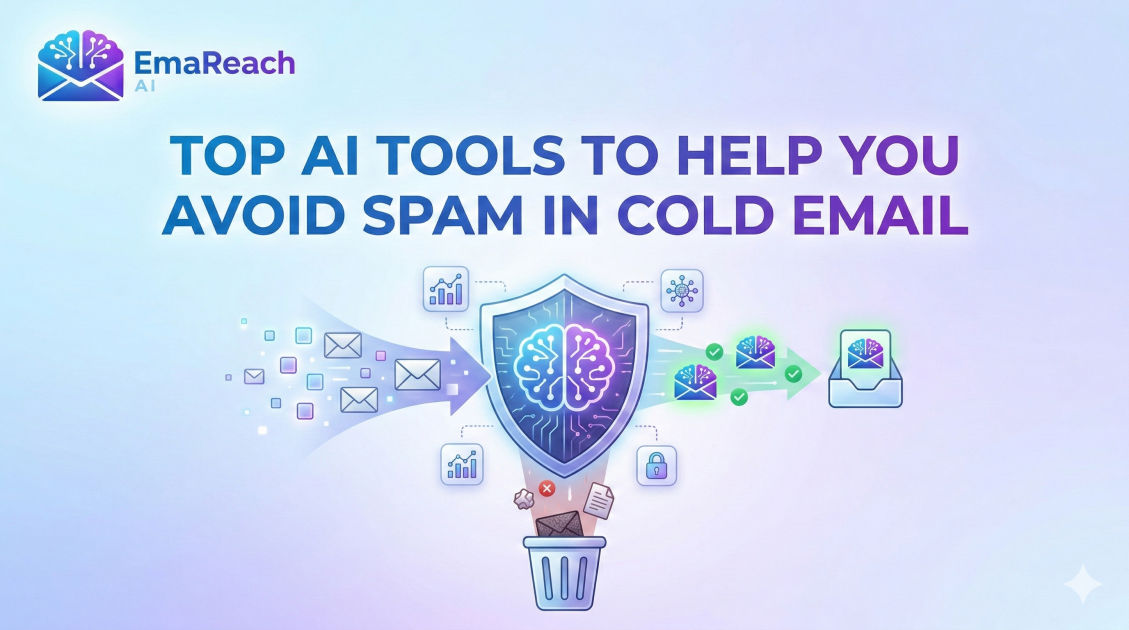
Top AI Tools to Help You Avoid Spam in Cold Email
cold emailemail deliverabilityAI toolsspam preventionsales automationlead generationemail marketing
The Evolving Landscape of Cold Email Deliverability
In the modern digital ecosystem, cold email remains one of the most effective channels for B2B lead generation. However, the barrier to entry has risen significantly. Service providers have implemented increasingly sophisticated filters to protect users from unwanted solicitations. For businesses, this means that even the most well-intentioned outreach can find itself buried in the spam folder. To navigate this landscape, artificial intelligence has become an indispensable ally. By leveraging AI-driven tools, marketers and sales professionals can ensure their messages land exactly where they belong: the primary inbox.
Avoiding the spam filter is no longer just about avoiding 'spammy' words like 'free' or 'guaranteed.' It involves a technical dance of domain reputation, technical authentication, and personalized content relevance. This guide explores the premier AI tools designed to master these variables and boost your deliverability rates.
Understanding Why Cold Emails Land in Spam
Before diving into the tools, it is crucial to understand the mechanics of spam filters. Modern filters analyze hundreds of data points, including:
- Sender Reputation: The historical behavior of your IP and domain.
- Technical Setup: Proper implementation of SPF, DKIM, and DMARC records.
- Engagement Rates: How often recipients open, reply to, or delete your emails.
- Content Patterns: Using repetitive templates that match known spam signatures.
- Sending Volume: Sudden spikes in email volume from a new account.
AI tools address these challenges by automating the 'warming' of accounts, personalizing content at scale to avoid pattern detection, and cleaning lead lists to prevent bounces.
1. AI-Powered Personalization Tools
One of the primary triggers for spam filters is 'bulk' behavior. When an email provider sees 500 identical emails sent simultaneously, it flags them as automated spam. AI personalization tools solve this by creating unique variations for every recipient.
Hyper-Personalization at Scale
Advanced AI writing assistants can scan a prospect’s LinkedIn profile, recent company news, or website content to generate a custom 'icebreaker' for the first line of an email. Because every email is technically unique, spam filters are much less likely to flag the campaign as a mass-blast.
Content Optimization
Beyond just icebreakers, AI can analyze the sentiment and structure of your entire message. Tools in this category provide real-time 'spam scores,' suggesting changes to phrasing that might trigger a filter. They help balance the tone, ensuring it sounds professional yet human, which is a key factor in keeping engagement rates high.
2. Inbox Warm-up and Reputation Management
When you launch a new email domain or account, it has no reputation. If you immediately send hundreds of emails, you will be blacklisted. Inbox warm-up tools use AI to simulate human behavior.
Simulated Peer-to-Peer Networks
These tools connect your email account to a network of thousands of other accounts. The AI automatically sends emails back and forth, opens them, marks them as 'not spam,' and replies. This tells Google, Outlook, and other providers that your emails are valuable and expected.
For those looking for a comprehensive solution, EmaReach stands out as a powerful option. It is designed to help users stop landing in spam by providing cold emails that reach the inbox. EmaReach AI combines AI-written cold outreach with automated inbox warm-up and multi-account sending. This ensures your emails land in the primary tab and get the replies your business needs to grow.
Intelligent Sending Schedules
AI algorithms can determine the optimal 'ramp-up' period for your account. Instead of a linear increase, these tools vary the timing and volume of emails to mimic the unpredictable nature of human communication. This randomness is vital for evading detection by automated spam-detecting bots.
3. AI Lead Verification and List Cleaning
Sending emails to non-existent addresses (bounces) is one of the fastest ways to destroy your sender reputation. AI-driven verification tools go beyond simple syntax checks.
Real-Time SMTP Validation
Artificial intelligence can perform real-time checks to see if an inbox is active without actually sending an email. It can also identify 'catch-all' addresses or 'spam traps'—email addresses specifically designed by providers to catch unethical scrapers. By removing these from your list, you maintain a high delivery-to-open ratio.
Intent Data Enrichment
Some AI tools help you avoid spam by ensuring you only email people who actually want to hear from you. By analyzing 'intent data'—signals that a company is currently looking for your solution—you can target your outreach more accurately. Higher relevance leads to higher engagement, which signals to email providers that you are a legitimate sender.
4. Writing Assistants for High-Converting Copy
Spam filters are increasingly sensitive to the quality of the prose. AI writing assistants trained specifically on cold outreach datasets can help you draft copy that avoids common pitfalls.
Subject Line Optimization
Your subject line is the gatekeeper. AI can test thousands of variations to find which ones drive opens without using clickbait tactics that trigger filters. These tools use natural language processing to ensure the subject line matches the body of the email, a consistency check that many modern filters now perform.
The 'Human' Check
AI can analyze your draft to see if it follows a 'robotic' structure. It suggests varying sentence length, adding conversational elements, and removing overly aggressive calls to action. The goal is to make the AI-generated or AI-assisted content indistinguishable from a manual email sent by a salesperson.
5. Multi-Account Rotation and Infrastructure AI
Sending 1,000 emails from one account is risky. Sending 50 emails from 20 different accounts is much safer. Managing this manually is a nightmare, but AI makes it seamless.
Automated Account Management
AI tools can manage the distribution of your campaign across multiple sub-domains and accounts. If one account starts showing signs of a reputation dip (lower open rates), the AI can automatically 'cool it down' while shifting the load to healthier accounts. This distributed approach is the current gold standard for high-volume, high-deliverability outreach.
Domain Health Monitoring
Continuous monitoring tools use AI to scan global blacklists and monitor your DMARC reports. They can provide proactive alerts if your domain's health is at risk, allowing you to stop a campaign before permanent damage is done to your brand's digital identity.
Best Practices for Using AI in Cold Email
While tools are powerful, they are most effective when used alongside a solid strategy. Here are the core principles to keep in mind:
- Prioritize Quality Over Quantity: Even with AI, sending 10,000 emails a day is rarely better than sending 500 highly targeted ones.
- Continuous Testing: Use A/B testing features within your AI tools to see what resonates. What works for a CEO might not work for a Creative Director.
- Monitor Your Metrics: Keep a close eye on your bounce rates (keep them under 2%) and your spam complaint rates. If these spike, pause your AI automation and investigate the cause.
- Integrate Your Stack: Ensure your personalization tool, your warm-up tool, and your sending platform are communicating effectively. Siloed data leads to errors that filters quickly exploit.
The Future of AI in Email Outreach
The battle between spam filters and outreach specialists will continue to escalate. We are moving toward a future where AI will not just write the email, but will also predict the best minute to send it based on when the recipient is most likely to be at their desk.
By adopting AI tools early, you aren't just 'gaming the system'; you are adopting a more sophisticated, respectful, and effective way to communicate. The goal of a spam filter is to remove noise. By using AI to increase relevance, personalization, and technical accuracy, you ensure that your message is seen as a signal, not noise.
Conclusion
Mastering cold email deliverability is a multi-faceted challenge, but the emergence of AI has provided a roadmap for success. From the initial warm-up phase to the final click of the 'send' button, AI tools offer the precision and automation necessary to stay out of the spam folder. By focusing on technical health, list hygiene, and extreme personalization, you can turn cold email into a predictable and scalable engine for growth. The key is to choose tools that work together to create a seamless, human-like outreach experience that provides genuine value to every recipient on your list.
EmaReach AI
Ready to scale your cold email outreach?
Join thousands of teams using EmaReach AI for AI-powered campaigns, domain warmup, and 95%+ deliverability. Start free — no credit card required.
Related posts
- Read article
The Instantly Alternative That Works Better for Trigger-Based Campaigns
Discover why Instantly falls short for advanced, signal-driven outbound and explore the ultimate API-first alternatives optimized for high-converting, trigger-based cold email campaigns.
- Read article
The Instantly Alternative That Handles High Bounce Rates Without Panic
Discover how transitioning to an advanced Instantly alternative can safeguard your cold email infrastructure. Learn to handle high bounce rates effortlessly using real-time verification, smart mailbox rotation, and automated safety nets to protect your sender reputation and maintain consistent primary inbox placement.