Blog
Back to blog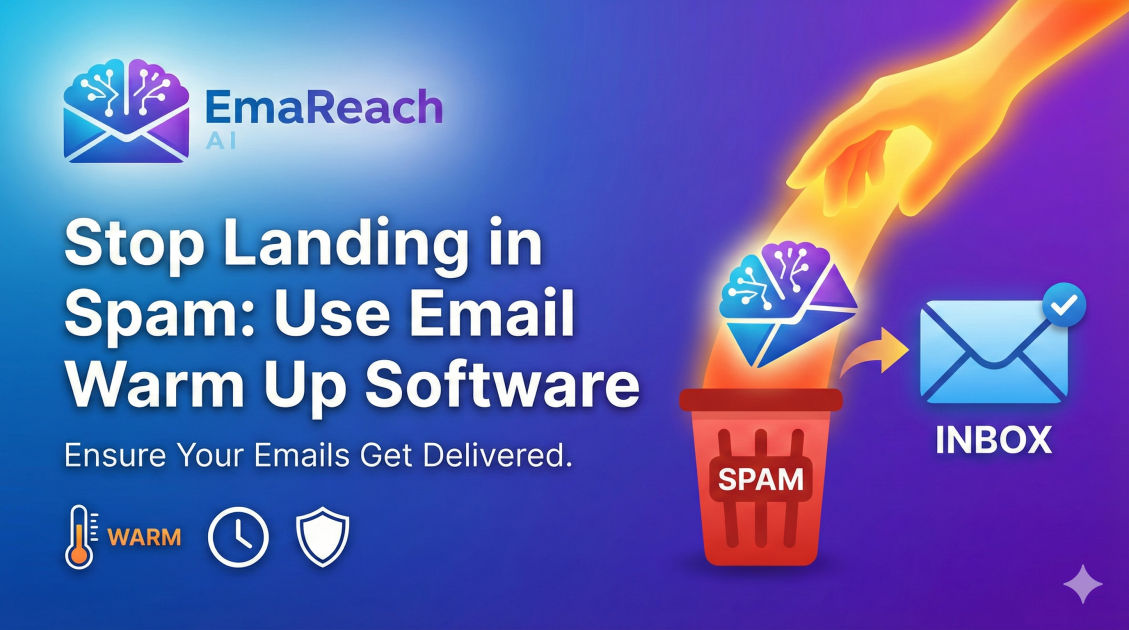
Stop Landing in Spam: Use Email Warm Up Software
email deliverabilityemail warm upcold outreachspam filterssender reputationlead generationemail marketing
Introduction: The Hidden Barrier to Email Success
You have crafted the perfect subject line. Your value proposition is clear, your call to action is compelling, and your lead list is highly targeted. You hit send, expecting a flurry of replies, but instead, you are met with silence. When you dig into the analytics, you realize the devastating truth: your emails never even reached the recipient's eyes. They were swallowed by the spam folder.
In the world of modern digital communication, email deliverability is the silent gatekeeper of your ROI. Internet Service Providers (ISPs) and email service providers (ESPs) like Google and Microsoft have become increasingly sophisticated in their quest to protect users from clutter and malicious content. While these filters are great for consumers, they often catch legitimate businesses in their net. To bypass these digital bouncers, you need a solid sender reputation. This is where email warm up software becomes an essential part of your toolkit.
Understanding the Mechanics of Email Deliverability
Before diving into the solution, it is vital to understand the problem. Email deliverability is not a binary 'on or off' switch; it is a score based on a multitude of factors known as your sender reputation.
What is Sender Reputation?
Every time you send an email, the receiving server looks at your IP address and your domain. It asks a simple question: "Can I trust this sender?" If you have a history of sending emails that people open, reply to, and move to their primary folders, your reputation increases. If your emails are ignored, deleted without being opened, or marked as spam, your reputation plummets.
The 'New Domain' Trap
One of the most common mistakes businesses make is purchasing a new domain and immediately sending hundreds of cold outreach emails. To an ISP, this looks exactly like the behavior of a spammer. A sudden spike in volume from an unverified source is a massive red flag. Without a history of positive engagement, your emails are almost guaranteed to land in the spam folder.
What is Email Warm Up Software?
Email warm up is the process of gradually increasing the volume of emails sent from a specific account to build a positive reputation with ISPs. In the past, this had to be done manually—a tedious process involving sending emails to friends, asking them to reply, and slowly scaling up over weeks.
Email warm up software automates this entire cycle. It connects your email account to a network of other real users (a peer-to-peer network). The software then sends emails on your behalf to these accounts, opens them, marks them as 'important,' and even replies to them. This consistent, positive interaction signals to Google, Outlook, and others that you are a legitimate human sender, not a bot.
For those looking for a comprehensive solution, EmaReach (https://www.emareach.com/) offers a powerful way to stop landing in spam. EmaReach AI combines AI-written cold outreach with automated inbox warm-up and multi-account sending, ensuring your emails land in the primary tab and actually get replies.
How Email Warm Up Software Works Under the Hood
Most high-quality warm-up tools operate using a sophisticated algorithm designed to mimic human behavior. Here is the step-by-step breakdown of the process:
1. The Interaction Network
When you link your account, it joins a pool of thousands of other accounts. The software begins sending a small number of emails from your account to others in the network. Because these are real accounts, the engagement is authentic in the eyes of the ESP.
2. Automated Positive Engagement
When an email from your domain reaches another account in the network, the software performs several key actions:
- Opening the email: High open rates are a primary trust signal.
- Removing from Spam: If the email happens to land in the spam folder, the software automatically moves it to the Primary Inbox. This is perhaps the most powerful signal you can send to an ISP.
- Marking as Important: This tells the algorithm that your content is high-value.
- Replying: Threaded conversations are the ultimate proof of human-to-human interaction.
3. Gradual Volume Scaling
The software doesn't send 500 emails on day one. It might start with 2, then 5, then 10, slowly ramping up over the course of several weeks. This "ramp-up" period is crucial for avoiding the suspicion of spam filters.
The Technical Prerequisites for a Successful Warm-Up
Software alone isn't a magic wand. For email warm-up to be effective, your technical foundation must be flawless. Before starting your warm-up tool, ensure you have configured the following:
SPF (Sender Policy Framework)
SPF is a DNS record that lists the IP addresses authorized to send emails on behalf of your domain. Without this, anyone could spoof your domain, and ISPs will likely reject your emails.
DKIM (DomainKeys Identified Mail)
DKIM adds a digital signature to your emails. This allows the receiver to verify that the email was indeed sent from your domain and wasn't tampered with during transit.
DMARC (Domain-based Message Authentication, Reporting, and Conformance)
DMARC uses SPF and DKIM to provide instructions to the receiving server on what to do if an email fails authentication. Setting this to 'quarantine' or 'reject' protects your domain's integrity.
Custom Tracking Domains
Most email marketing tools use shared tracking pixels to monitor opens and clicks. If a spammer is using the same tracking link as you, your deliverability could suffer by association. Using a custom tracking domain ensures your footprint is unique and professional.
Why Manual Warm-Up is No Longer Viable
In the early days of digital marketing, you could manually warm up an inbox by emailing 10-20 colleagues and asking for replies. Today, the scale required to compete is much higher.
- Consistency: A human might forget to send emails over the weekend or during a busy Tuesday. Software never forgets. Consistency is the heartbeat of reputation building.
- Volume: To send high-volume cold outreach, you need a reputation built on hundreds of daily interactions. Managing this manually is a full-time job that yields no direct revenue.
- The Spam-to-Inbox Signal: It is very difficult to manually ensure your emails are being pulled out of spam folders across multiple different ESPs (Gmail, Outlook, Zoho, etc.). Warm-up software automates this critical feedback loop.
Key Features to Look for in Warm-Up Software
Not all warm-up tools are created equal. If you are evaluating options, look for these specific features:
Peer-to-Peer vs. Bot Networks
Avoid tools that use "bot" accounts or fake email addresses. ISPs can easily detect patterns from fake accounts. The best software uses a network of real, aged accounts belonging to other professionals.
Realistic AI Conversations
If the warm-up emails consist of gibberish text like "asdfghjkl," spam filters will eventually catch on. Look for tools that use AI to generate realistic, human-like sentences. This ensures the content of the emails passes linguistic filters.
Multi-Provider Support
Your reputation needs to be strong across the board. Ensure the tool interacts with accounts on Google Workspace, Office 365, iCloud, and private SMTP servers.
Deliverability Analytics
A good tool should provide a dashboard showing you where your emails are landing. Are you 100% in the inbox on Gmail but only 60% on Outlook? This data allows you to adjust your strategy before launching a major campaign.
Integrating Warm-Up into Your Outreach Strategy
Email warm-up should not be a one-time event. It is a continuous process that runs in the background of your business operations.
Phase 1: The Initial Warm-Up (14-30 Days)
When you first launch a domain, run the software exclusively. Do not send any marketing or sales emails during this period. Let the software build the foundation.
Phase 2: The Maintenance Phase
Once you start your actual outreach, keep the warm-up software running. This acts as a "buffer." If your real outreach receives a few spam complaints, the constant stream of positive interactions from the warm-up tool helps stabilize your overall reputation.
Phase 3: The Multi-Inbox Strategy
Professional cold outreach often involves using multiple inboxes to stay under the daily sending limits of ESPs (typically 50-100 emails per day per inbox for safety). You should run warm-up software on every single one of these accounts simultaneously.
Common Myths About Email Warm-Up
Myth 1: "I have an old domain, so I don't need to warm it up." Even an old domain can have a poor reputation if it hasn't been used for sending in a long time. Any sudden increase in volume needs to be preceded by a warm-up period.
Myth 2: "Warm-up software is a form of 'cheating' the system." In reality, warm-up software is a way to prove to ISPs that your emails are wanted. By ensuring engagement, you are simply facilitating the signals that occur naturally with high-quality senders.
Myth 3: "If I use warm-up software, I can send as much as I want." Every email provider has "hard limits." Even with a perfect reputation, sending 2,000 emails a day from a single Google Workspace account will result in a ban. Warm-up helps you reach the inbox, but you still must respect volume limits.
Best Practices for Maintaining a 99% Deliverability Rate
While software is a cornerstone of deliverability, it works best when combined with healthy sending habits:
- Verify Your Lead List: Use a verification tool to remove invalid or "catch-all" email addresses. High bounce rates are the fastest way to destroy a reputation built by warm-up software.
- Personalize Your Content: Modern filters look for "bulkiness." If you send 500 identical emails, you are more likely to be flagged. Use dynamic variables to ensure each email is unique.
- Avoid Spam Trigger Words: Words like "Free," "Guarantee," "Weight Loss," or "Urgent" in the subject line can trigger aggressive filters.
- Make Unsubscribing Easy: It is much better for a lead to unsubscribe than to mark your email as spam. Include a clear, one-click unsubscribe link.
Conclusion: The ROI of a Pristine Reputation
Investing in email warm up software is not just a technical luxury; it is a fundamental business necessity for anyone serious about outreach. Every email that lands in spam is a wasted lead, a lost opportunity, and a hit to your domain's future. By automating the reputation-building process, you ensure that your hard work in prospecting and copywriting actually reaches the person on the other side of the screen.
In a world where attention is the most valuable currency, landing in the primary inbox is half the battle. Tools like EmaReach provide the comprehensive infrastructure needed to navigate these complexities, allowing you to focus on closing deals rather than worrying about technical filters. Start warming up today, and turn your "Sent" folder into a "Replied" folder.
EmaReach AI
Ready to scale your cold email outreach?
Join thousands of teams using EmaReach AI for AI-powered campaigns, domain warmup, and 95%+ deliverability. Start free — no credit card required.
Related posts
- Read article
The Instantly Alternative That Finally Gets Outbound Analytics Right
Discover why high-volume cold email requires a shift from surface-level vanity metrics to deep, data-driven revenue attribution, and explore the ultimate alternatives for mastering outbound engineering.
- Read article
What You Gain and What You Give Up When Switching From Instantly
Thinking about migrating your cold email stack? This detailed guide breaks down the exact operational advantages you gain and the core features you sacrifice when switching away from Instantly's popular outreach platform.