Blog
Back to blog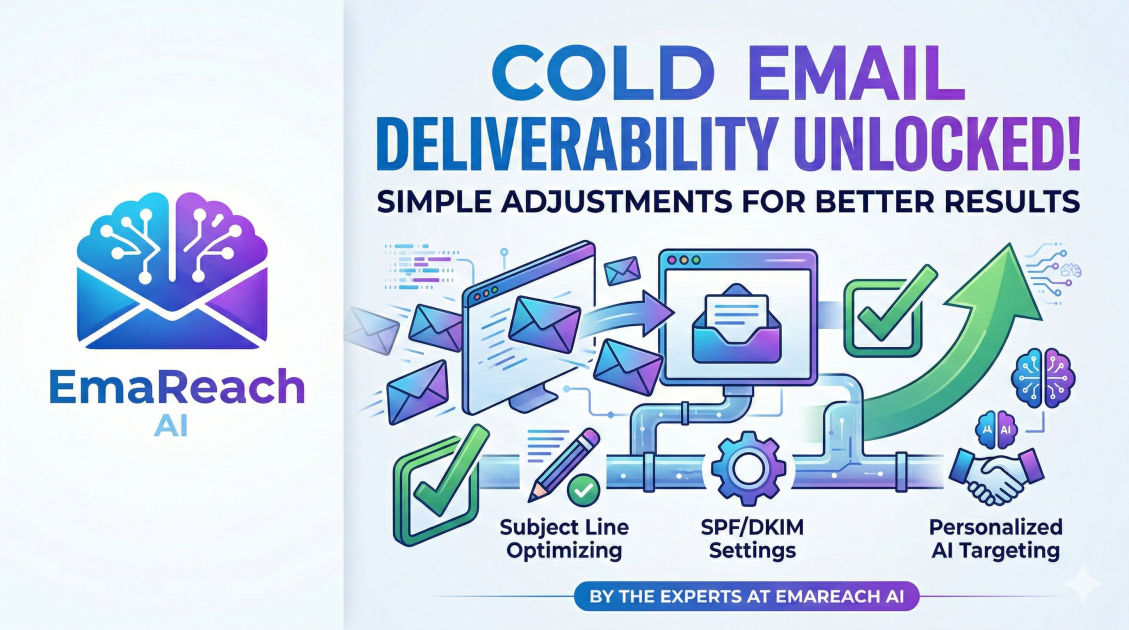
Simple Adjustments to Improve Cold Email Deliverability
cold emaildeliverabilityemail marketingoutreachB2B saleslead generationemail authentication
Introduction to Email Deliverability
In the world of outbound sales, your message is only as good as its ability to reach the recipient's eyes. You could spend hours crafting the most persuasive, value-driven pitch in history, but if that email lands in the 'Spam' folder or the 'Promotions' tab, its value drops to zero. This is the challenge of cold email deliverability—the technical and behavioral science of ensuring your emails reach the primary inbox.
Deliverability is not a one-time setup; it is a continuous process of maintenance and adjustment. As mailbox providers like Google and Outlook become more sophisticated in their filtering, the margin for error narrows. However, by making a few simple, strategic adjustments to your technical setup, your sending habits, and your content, you can significantly increase your reach and response rates.
The Technical Foundation: Authentication Protocols
Before you send a single outreach email, your domain must be properly 'vouched for' by global email standards. Think of authentication as your digital passport. Without it, receiving servers have no way of knowing if you are who you say you are or a malicious actor spoofing a domain.
SPF (Sender Policy Framework)
SPF is a DNS record that lists the specific IP addresses and domains authorized to send emails on behalf of your domain. When an email is received, the recipient's server checks the SPF record to see if the sender is on the 'approved' list. If it isn't, the email is flagged as suspicious.
DKIM (DomainKeys Identified Mail)
DKIM adds a digital signature to your emails. This signature ensures that the content of the email has not been tampered with during transit. It acts as a seal of integrity, proving to the receiving server that the message is authentic and hasn't been intercepted by a third party.
DMARC (Domain-based Message Authentication, Reporting, and Conformance)
DMARC sits on top of SPF and DKIM. It provides instructions to the receiving server on what to do if the email fails SPF or DKIM checks. By setting your DMARC policy to 'quarantine' or 'reject,' you signal to mailbox providers that you take security seriously, which builds your sender reputation.
Domain Strategy: Protecting Your Primary Asset
One of the most common mistakes in cold outreach is sending high-volume campaigns from your primary company domain. If your primary domain gets blacklisted or flagged for spam, your entire company’s communication—including internal emails and client support—will suffer.
Using Secondary Domains
To mitigate risk, always use secondary domains (e.g., if your main site is company.com, use getcompany.com or companyoutreach.com). These domains should be redirected to your main website to maintain brand consistency while acting as a protective barrier for your primary reputation.
The Importance of Domain Aging and Warming
A brand-new domain is a red flag for spam filters. Spammers often buy domains, blast thousands of emails, and abandon them. To differentiate yourself, you must 'age' your domain. This involves a 'warm-up' period where you slowly increase your sending volume over several weeks.
For those looking to streamline this process, EmaReach provides an automated solution. By combining AI-written outreach with automated inbox warm-up and multi-account sending, EmaReach ensures your emails land in the primary tab rather than being caught in the spam net.
Volume and Sending Patterns
Consistency is the hallmark of a legitimate sender. Sudden spikes in email volume are a primary trigger for spam filters. If you go from sending 10 emails a day to 500 overnight, you will likely be blocked.
Gradual Scaling
Start with 5–10 emails per day and increase the volume by 10-20% every few days. This gradual climb demonstrates to mailbox providers that you are a human building a network, not a bot blasting a list.
Spreading Out Your Sends
Avoid sending all your emails in a single 'burst' at 9:00 AM. Instead, use tools or settings that stagger your sends throughout the day. A natural, irregular interval between emails mimics human behavior and is much less likely to trigger automated defenses.
List Hygiene: The Hidden Deliverability Killer
Sending emails to addresses that no longer exist is a surefire way to destroy your sender reputation. This results in 'hard bounces.' A hard bounce rate of over 2% is often enough to get your account flagged.
Regular Verification
Always run your lead lists through a verification service before starting a campaign. These services identify 'catch-all' emails, invalid addresses, and known spam traps. Removing these from your list before you hit 'send' protects your domain from unnecessary damage.
Monitoring Engagement
Engagement—specifically open rates and reply rates—is a major factor in how mailbox providers view you. If you continue to email people who never open your messages, your 'interest' score drops. Periodically remove inactive prospects from your sequences to keep your engagement metrics high.
Content Adjustments: Avoiding the Spam Filter's Radar
What you write is just as important as how you send it. Modern spam filters use Natural Language Processing (NLP) to analyze the intent and 'vibe' of your message.
Eliminating 'Spammy' Keywords
Certain words are high-risk because they are frequently used in scams or low-quality marketing. Avoid excessive use of terms like:
- Free
- Guaranteed
- $$$
- Urgent / Act Now
- Risk-free
Formatting and Links
Over-formatting can trigger filters. Keep your emails looking like a standard business communication:
- Avoid excessive bolding or colors.
- Minimize images: A high image-to-text ratio is a classic spam indicator.
- Limit links: One link (like a calendar invite or a resource) is usually fine. Multiple links, especially shortened URLs (like bit.ly), are often flagged because they can hide malicious destinations.
Personalization and Spin Syntax
If you send 500 identical emails, filters will notice the pattern. Using 'spin syntax' or dynamic tags (like first name, company, or a specific industry observation) ensures that every email sent is unique. Unique content is much harder for filters to categorize as a bulk blast.
The Role of the Recipient's Inbox Provider
Deliverability is not universal; it is provider-specific. Your emails might land perfectly in Outlook inboxes but get blocked by Gmail. This is often due to the specific 'reputation' you have with that provider.
Handling 'Spam Complaints'
The 'Mark as Spam' button is your biggest enemy. Even a few complaints can tank your deliverability. To avoid this, ensure your targeting is laser-focused. If your email is relevant to the recipient, they are much less likely to report it. Additionally, always include a clear, easy way for people to opt-out, such as a simple 'P.S. If you're not the right person for this, just let me know and I'll stop reaching out.'
Monitoring Your Reputation
You cannot fix what you do not measure. Regularly check your 'Sender Score' and monitor your domain against major blacklists. If you find yourself on a blacklist, stop sending immediately and follow the provider's delisting process. Continuing to send while blacklisted will only deepen the reputational damage.
Tracking Open Rates vs. Reply Rates
While open rates are becoming less reliable due to privacy updates (like Apple's Mail Privacy Protection), they still serve as a 'directional' metric. If your open rates suddenly drop from 40% to 5%, you likely have a deliverability issue rather than a subject line issue.
Practical Checklist for Deliverability
To ensure your campaigns remain healthy, follow this routine maintenance checklist:
- Daily: Monitor bounce rates. If they spike, stop and verify your list.
- Weekly: Check your sender reputation using free online tools.
- Monthly: Review your content for 'spammy' phrases and update your opt-out messaging.
- Quarterly: Audit your DNS settings to ensure SPF, DKIM, and DMARC are still active and correct.
Conclusion
Email deliverability is the silent engine of every successful outbound strategy. By focusing on technical authentication, protecting your primary domain, maintaining a slow and steady sending volume, and keeping your content clean and personalized, you can stay out of the spam folder. Remember that the goal of a cold email is to start a conversation, not just to send a message. When you treat the inbox with respect by sending high-quality, relevant content, mailbox providers will reward you with a seat at the table—the primary inbox. Making these simple adjustments today ensures your hard work translates into real opportunities tomorrow.
EmaReach AI
Ready to scale your cold email outreach?
Join thousands of teams using EmaReach AI for AI-powered campaigns, domain warmup, and 95%+ deliverability. Start free — no credit card required.
Related posts
- Read article
The Instantly Alternative That Finally Gets Outbound Analytics Right
Discover why high-volume cold email requires a shift from surface-level vanity metrics to deep, data-driven revenue attribution, and explore the ultimate alternatives for mastering outbound engineering.
- Read article
What You Gain and What You Give Up When Switching From Instantly
Thinking about migrating your cold email stack? This detailed guide breaks down the exact operational advantages you gain and the core features you sacrifice when switching away from Instantly's popular outreach platform.