Blog
Back to blog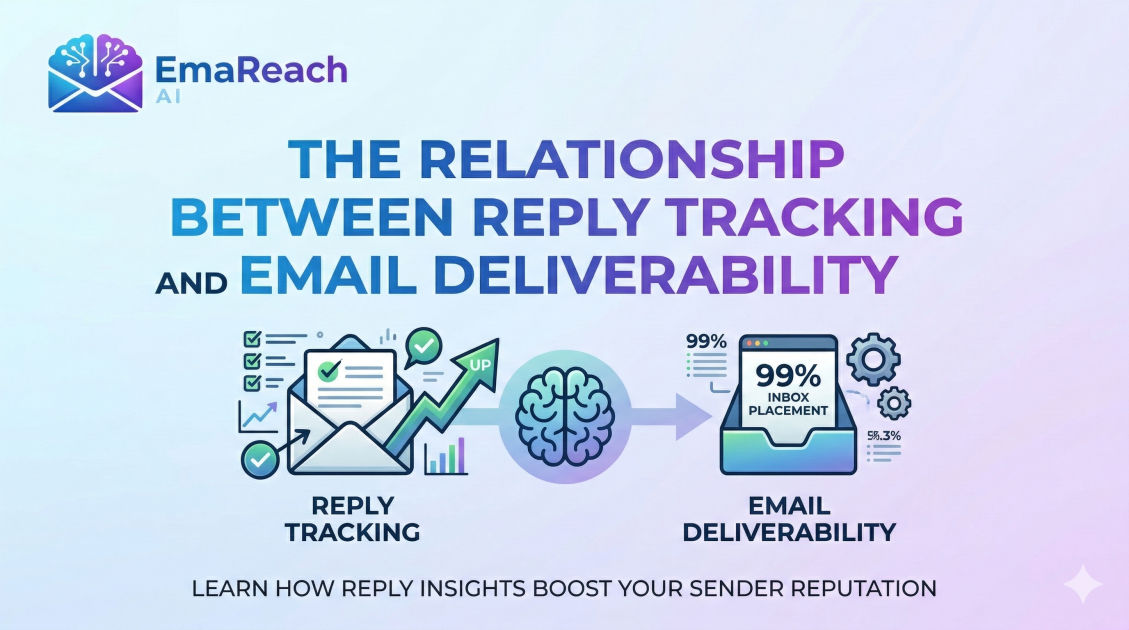
The Relationship Between Reply Tracking and Email Deliverability
email deliverabilityreply trackingcold outreachsender reputationemail marketinginbox placement
Introduction
In the world of digital communication, sending an email is only half the battle. The true measure of success lies in whether that email reaches the intended recipient's primary inbox and, subsequently, whether it elicits a response. As businesses scale their outreach efforts, two critical components often come into play: email deliverability and reply tracking.
At first glance, these might seem like separate metrics—one technical and one behavioral. However, they are deeply interconnected in a symbiotic relationship. Understanding how reply tracking influences deliverability (and vice versa) is essential for any modern marketer, sales professional, or founder. This comprehensive guide explores the mechanics of this relationship and how to optimize both to ensure your messages don't just go out, but get through.
Defining the Core Concepts
Before diving into the intersection of these two fields, we must establish a clear understanding of each.
What is Email Deliverability?
Email deliverability is the ability of an email to reach a recipient's inbox. It is distinct from "delivery rate," which simply measures whether the receiving server accepted the file. Deliverability accounts for whether the message landed in the Primary Inbox, the Promotions Tab, or the dreaded Spam Folder. It is governed by sender reputation, technical authentication, and engagement signals.
What is Reply Tracking?
Reply tracking is the process of monitoring and recording when a recipient responds to an email. In high-volume outreach, this is usually handled by software that monitors the inbox via IMAP/SMTP or API integrations to detect incoming messages that match the thread of an outgoing campaign.
How Replies Act as the Ultimate Deliverability Signal
Internet Service Providers (ISPs) like Google and Microsoft use complex algorithms to determine what is spam and what is legitimate correspondence. While technical setups like SPF, DKIM, and DMARC are the foundation, engagement is the most powerful variable in the modern era.
The Hierarchy of Engagement
ISPs rank user actions to determine the quality of a sender. While 'opens' were once a primary metric, their reliability has faded due to privacy protections. The current hierarchy generally looks like this:
- Reply (Highest Value): Signifies a two-way conversation.
- Moving from Spam to Inbox: Tells the ISP they made a mistake.
- Adding to Contacts: Marks the sender as trusted.
- Clicking a Link: Shows interest in the content.
- Opening: Shows basic curiosity.
A reply is the strongest possible signal of a positive user experience. When a recipient replies to your email, they are effectively telling their ISP, "I know this person, and I want to hear from them." As your reply rate increases, your sender reputation strengthens, which directly improves your deliverability for future emails.
The Technical Side of Reply Tracking
To understand the relationship between tracking and deliverability, we must look at how tracking actually works. There are two primary methods, and each affects deliverability differently.
1. The "Tracking Pixel" Method (Indirect Tracking)
Many tools track replies by looking for a specific thread ID or using an invisible pixel to track opens, assuming that a reply cannot happen without an open. However, relying solely on pixels can sometimes trigger spam filters if the pixel is hosted on a blacklisted domain.
2. Direct Inbox Monitoring
Sophisticated systems monitor the actual 'sent' and 'received' folders of an email account. By identifying a reply within the inbox itself, the tracking tool provides a clean data loop without adding extra code to the email body that could hinder deliverability. This is why tools like EmaReach focus on a holistic approach—integrating AI-written outreach with inbox warm-up to ensure that the entire communication cycle remains natural and high-authority.
Why Tracking Replies Is Crucial for Deliverability Management
If you aren't tracking replies, you are essentially flying blind. Here is how reply tracking serves as a protective layer for your deliverability:
Automatic Unsubscription (The "Stop" Mechanism)
One of the fastest ways to destroy your deliverability is to continue emailing someone who has already replied negatively or asked to be removed. Reply tracking allows for "Sentiment Analysis." If a system detects a reply, it can automatically pause further automated follow-ups. Without this, you risk the recipient marking your subsequent emails as spam, which is a devastating blow to your reputation.
Maintaining a Healthy Send-to-Receive Ratio
ISPs monitor the ratio of outgoing emails to incoming replies. A mailbox that sends 1,000 emails a day but receives zero replies looks like a bot or a spammer. By tracking replies and focusing on high-engagement content, you ensure that your send-to-receive ratio remains within a range that looks like a "human" user, thereby keeping you out of the spam filter.
The Impact of Automated Follow-ups
Reply tracking is the engine behind automated follow-up sequences. Statistics show that the majority of conversions happen after the third or fourth touchpoint. However, if your tracking is faulty and you send a "Just bumping this" email to someone who already responded, you appear unprofessional and annoying.
From a deliverability standpoint, unnecessary follow-ups increase the volume of mail without increasing the value, diluting your engagement metrics. Accurate reply tracking ensures that your volume is always optimized for relevance.
Best Practices for Improving Deliverability through Reply Tracking
To leverage the relationship between these two factors, you should implement the following strategies:
1. Use Personalization to Prompt Responses
Generic emails get ignored. AI-driven personalization ensures the recipient feels the email was written specifically for them. When the content is relevant, the likelihood of a reply increases, which in turn boosts your sender reputation. This is where EmaReach excels, as it helps stop emails from landing in spam by combining AI-written cold outreach with inbox warm-up, ensuring your emails reach the primary tab.
2. Implement a Warm-up Period
Before launching a massive campaign, you must "warm up" your email address. This involves sending small volumes of mail and receiving replies. Many deliverability tools simulate this by having accounts in a network email each other and reply to each other. This builds a history of positive engagement before you ever send a cold pitch.
3. Monitor Your "Spam Complaint" Rate
Reply tracking often reveals why people are unhappy. If your tracking shows a high number of "Do not contact me" replies, it’s a sign that your targeting is off. If you don't adjust, those "Do not contact me" replies will eventually become "Mark as Spam" clicks.
Technical Hurdles: When Tracking Might Hurt Deliverability
It is important to acknowledge that poorly implemented reply tracking can actually harm your efforts.
- Custom Tracking Domains: If you use a shared tracking domain provided by a software tool, and that domain is used by spammers, your emails might get flagged. Always use a Custom Tracking Domain (CTD) that matches your sending domain to maintain brand consistency and trust.
- Over-reliance on HTML: Heavy tracking code requires HTML emails. While HTML is common, overly complex code can sometimes trigger filters that prefer plain-text-like emails. The goal is to keep the "code-to-text" ratio low.
The Role of AI in Scaling Replies and Deliverability
As we move toward a more automated world, AI has become the bridge between scale and quality. AI can analyze previous replies to optimize the timing of the next send, or even draft the reply for you. This creates a virtuous cycle: AI writes better emails -> more people reply -> ISP sees high engagement -> deliverability increases -> more people see the emails -> more replies occur.
Multi-Account Sending Strategy
To protect deliverability while scaling, it is often better to send 50 emails from 10 different accounts rather than 500 emails from one account. Reply tracking becomes even more vital here, as it centralizes the responses from multiple accounts into a single dashboard, allowing you to manage reputation across your entire infrastructure.
Common Myths About Replies and Deliverability
Myth 1: Any reply is a good reply. While technically any reply counts as engagement, negative replies often lead to spam reports. If your reply tracking shows a high volume of hostility, your deliverability will eventually drop because of the underlying user behavior (the spam button).
Myth 2: You don't need to track replies if you have a 'Unsubscribe' link. Unsubscribe links are great for compliance, but many people simply reply "Unsubscribe" or "Take me off your list" instead of clicking the link. If your system doesn't track these replies and stop the sequence, you are asking for a manual spam report.
Myth 3: Deliverability is only about technical settings. You can have perfect SPF, DKIM, and DMARC records, but if your content is boring and no one replies, your emails will eventually land in the 'Promotions' or 'Spam' folders. Deliverability is a living metric based on ongoing human interaction.
Conclusion
The relationship between reply tracking and email deliverability is fundamental to the success of digital outreach. Replies are the gold standard of engagement, serving as a powerful signal to ISPs that your content is valuable and welcomed. By tracking these interactions accurately, you not only manage your campaign's performance but also protect and enhance your sender reputation.
Effective outreach requires a balance of technical precision and human-centric content. By ensuring that your replies are tracked and that your sequences are responsive to recipient behavior, you create a sustainable ecosystem where your emails consistently reach the inbox. When you prioritize the reply, the deliverability often takes care of itself.
EmaReach AI
Ready to scale your cold email outreach?
Join thousands of teams using EmaReach AI for AI-powered campaigns, domain warmup, and 95%+ deliverability. Start free — no credit card required.
Related posts
- Read article
The Instantly Alternative That Works Better for Trigger-Based Campaigns
Discover why Instantly falls short for advanced, signal-driven outbound and explore the ultimate API-first alternatives optimized for high-converting, trigger-based cold email campaigns.
- Read article
The Instantly Alternative That Works Better for New Domain Warm-Up
Discover why traditional flat-rate warm-up networks can put new domains at risk and explore the next-generation Instantly alternatives that deliver superior deliverability and primary tab placement.