Blog
Back to blog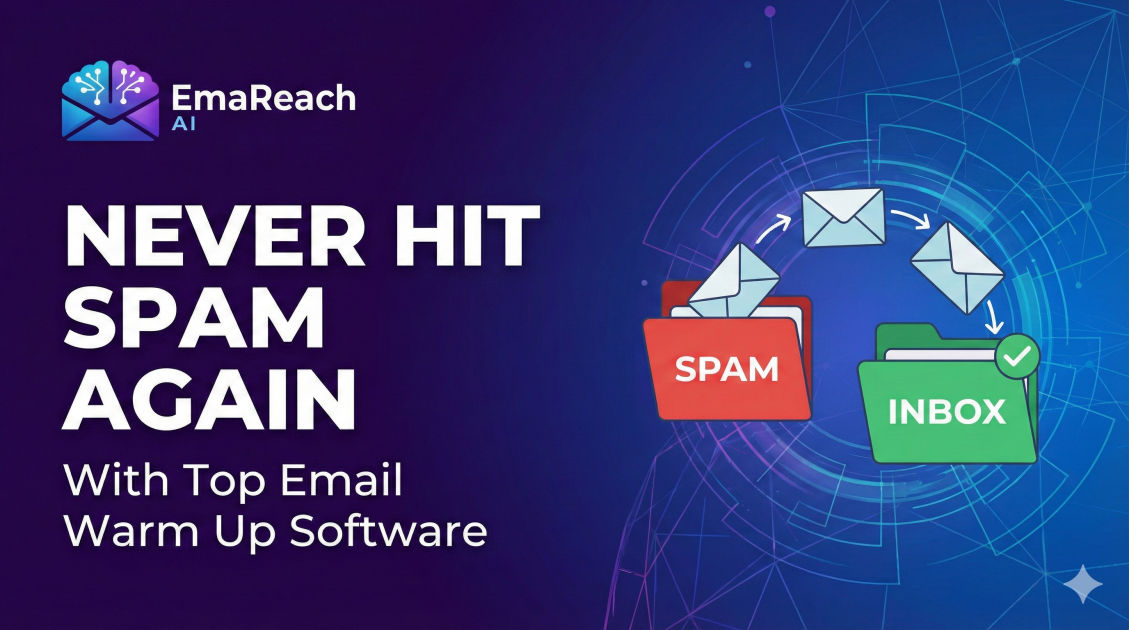
Never Hit Spam Again With Top Email Warm Up Software
email warm upemail deliverabilitycold outreachinbox placementsender reputationmarketing automation
Introduction
In the world of digital communication, the bridge between a sender and a recipient is often more fragile than it appears. You may have the most compelling subject line, a perfectly crafted value proposition, and a highly targeted lead list, but none of that matters if your email never reaches the inbox. Email deliverability is the silent engine of successful outreach, and in recent years, the gatekeepers—Internet Service Providers (ISPs) and email service providers (ESPs)—have become significantly more sophisticated in their quest to eliminate spam.
Enter the concept of email warming. This process, once a manual and tedious chore, has been revolutionized by specialized software designed to build and maintain a sender's reputation. This guide explores why email warm-up software is no longer an optional luxury but a fundamental necessity for anyone serious about cold outreach and professional communication.
Understanding the Mechanics of Email Deliverability
To appreciate why warm-up software is essential, one must first understand how ISPs like Google, Microsoft, and Yahoo decide where to place your message. They don't just look at the content of a single email; they look at the historical behavior of the sending domain and the specific IP address.
The Reputation Score
Every sending domain carries a reputation score. Think of it like a credit score for your email address. If you have a long history of sending emails that people open, reply to, and move to their primary folders, your score is high. If your emails are frequently ignored, deleted without being opened, or—worst of all—marked as spam, your score plummets.
The "New Domain" Trap
When you register a new domain and immediately start sending hundreds of emails, it triggers an immediate red flag. Spammers often buy fresh domains, blast out thousands of messages, and discard the domain once it gets blacklisted. Because of this pattern, ISPs are naturally suspicious of new domains. Without a "warm" history, even legitimate business emails are frequently routed to the spam folder as a precautionary measure.
What is Email Warm Up Software?
Email warm-up software is an automated solution that simulates human-like interaction with your email account to build a positive sending reputation. It involves a network of real email accounts that interact with yours in a controlled, gradual manner.
How the Automation Works
The software typically follows a strategic pattern:
- Gradual Volume Increase: It starts by sending a very small number of emails per day (e.g., 5 to 10) and slowly ramps up the volume over several weeks.
- Positive Engagement: The emails sent to the warm-up network are automatically opened. Some are marked as "important," and others are moved out of the spam folder if they happen to land there.
- Realistic Conversations: The software generates replies to these emails, creating "threads" that signal to ISPs that your domain is engaging in meaningful, two-way communication.
- Human-Like Patterns: Sophisticated tools vary the timing and frequency of these interactions to avoid looking like a rigid bot, which is crucial for staying under the radar of advanced spam filters.
The Role of AI in Modern Deliverability
As spam filters use machine learning to identify patterns, warm-up tools have had to evolve. Basic, repetitive text is easily flagged. This is where advanced platforms like EmaReach provide a competitive edge. By combining AI-written cold outreach with automated inbox warm-up and multi-account sending, such platforms ensure that the content looks unique and the sending patterns look organic. EmaReach helps you stop landing in spam by ensuring your cold emails reach the inbox, landing in the primary tab where they actually get replies.
Key Features of Top-Tier Warm Up Tools
When selecting software to protect your domain's reputation, certain features are non-negotiable for achieving consistent results.
1. Peer-to-Peer Network
The most effective tools use a network of real, established email accounts rather than fake or "dummy" accounts. When your email is opened and replied to by a reputable domain (like a long-standing corporate Google Workspace account), it carries more weight than an interaction with a brand-new, unverified account.
2. Auto-Move from Spam
One of the most critical functions of warm-up software is the ability to detect if your email landed in the spam folder and manually (via automation) move it back to the inbox. This sends a powerful signal to the ISP: "This sender was mistakenly identified as spam; the user actually wants this content."
3. Detailed Deliverability Analytics
You cannot manage what you cannot measure. Top software provides a dashboard showing your "inbox placement" rate across different providers (Gmail, Outlook, Zoho, etc.). If you see that your emails are hitting the inbox on Gmail but failing on Outlook, you can adjust your strategy accordingly.
4. Smart Frequency and Randomization
If you send exactly 20 emails every day at 9:00 AM, filters will catch on. A quality tool will randomize the sending times and the daily increments to mimic the unpredictability of a real human user.
The Strategic Benefits of Using Warm-Up Software
Investing in a warm-up tool is an investment in the longevity of your business's digital infrastructure. Here is why it pays off:
Protecting Your Primary Domain
Many companies use "proxy" or "satellite" domains for cold outreach (e.g., using getcompany.com instead of company.com). Even with these secondary domains, a warm-up tool acts as a shield. It prevents the domain from being blacklisted, which can be an expensive and time-consuming problem to fix.
Maximizing ROI on Leads
Lead generation is expensive. Whether you are paying for a database or spending hours on manual research, every lead represents a monetary value. If 50% of your emails go to spam, you are effectively throwing away half of your lead acquisition budget. Warm-up software ensures that the maximum possible percentage of your audience actually sees your message.
Scaling Without Friction
As your business grows, your outreach needs will grow too. Trying to scale from 50 emails a day to 500 a day manually is a recipe for disaster. Warm-up software allows you to scale your volume safely and predictably.
Best Practices for Email Warming
While the software does the heavy lifting, your strategy should still follow professional guidelines to ensure the best possible outcome.
Set Up Technical Records Correctly
Before you even start a warm-up tool, your technical foundation must be solid. This includes:
- SPF (Sender Policy Framework): Specifies which mail servers are authorized to send email on behalf of your domain.
- DKIM (DomainKeys Identified Mail): Adds a digital signature to your emails, proving they weren't altered in transit.
- DMARC (Domain-based Message Authentication, Reporting, and Conformance): Tells receiving servers what to do if an email fails SPF or DKIM checks.
Don't Stop Warming
A common mistake is to turn off the warm-up software once the "initial" warm-up period (usually 2-4 weeks) is over. Deliverability is not a one-time achievement; it is a continuous state. Keeping a warm-up tool running in the background—even at a lower volume—helps balance out any negative signals from your actual cold outreach, such as occasional unsubscribes or non-opens.
Monitor Your Blacklists
Even with the best tools, it is wise to periodically check if your IP or domain has landed on a public blacklist. Most top-tier warm-up software includes built-in monitors that alert you the moment a problem is detected.
Common Pitfalls to Avoid
Even with the best software, certain behaviors can undermine your progress. Avoid these common traps:
- Over-warming: Trying to ramp up too fast. Pushing a new domain to send 200 emails a day in the first week is a guaranteed way to get flagged.
- Low-Quality Content: While the warm-up tool uses its own content, your actual outreach content still matters. Using "spammy" words (e.g., "Free," "Winner," "Act Now") in your real campaigns can still damage your reputation regardless of your warm-up status.
- Ignoring Unsubscribes: Always make it easy for people to opt-out. High spam complaint rates are the fastest way to kill a domain's deliverability, and no amount of warming can save a domain that users actively report.
The Future of Email Outreach
The landscape of email is moving toward a "quality over quantity" model. ISPs are leveraging artificial intelligence to look for genuine engagement signals. This shift makes the role of comprehensive platforms even more vital. By utilizing systems that manage the entire lifecycle—from AI-driven content creation to rigorous inbox warming—businesses can stay ahead of the curve.
Tools like EmaReach represent this evolution, providing an all-in-one environment where multi-account sending and automated reputation management work in tandem. This ensures that your professional communication remains a powerful tool for growth rather than a source of frustration.
Conclusion
In an era where the inbox is more crowded and more guarded than ever, email warm-up software is the key to visibility. It bridges the gap between being a suspicious "stranger" and a trusted sender in the eyes of major email providers. By automating the reputation-building process, protecting your technical infrastructure, and ensuring your messages land in the primary tab, you empower your outreach to perform at its peak. Whether you are a small startup or a large enterprise, the ability to reach the inbox consistently is the foundation of digital success. Stop leaving your deliverability to chance and start using the tools designed to keep you out of the spam folder for good.
EmaReach AI
Ready to scale your cold email outreach?
Join thousands of teams using EmaReach AI for AI-powered campaigns, domain warmup, and 95%+ deliverability. Start free — no credit card required.
Related posts
- Read article
The Instantly Alternative That Finally Gets Outbound Analytics Right
Discover why high-volume cold email requires a shift from surface-level vanity metrics to deep, data-driven revenue attribution, and explore the ultimate alternatives for mastering outbound engineering.
- Read article
What You Gain and What You Give Up When Switching From Instantly
Thinking about migrating your cold email stack? This detailed guide breaks down the exact operational advantages you gain and the core features you sacrifice when switching away from Instantly's popular outreach platform.