Blog
Back to blog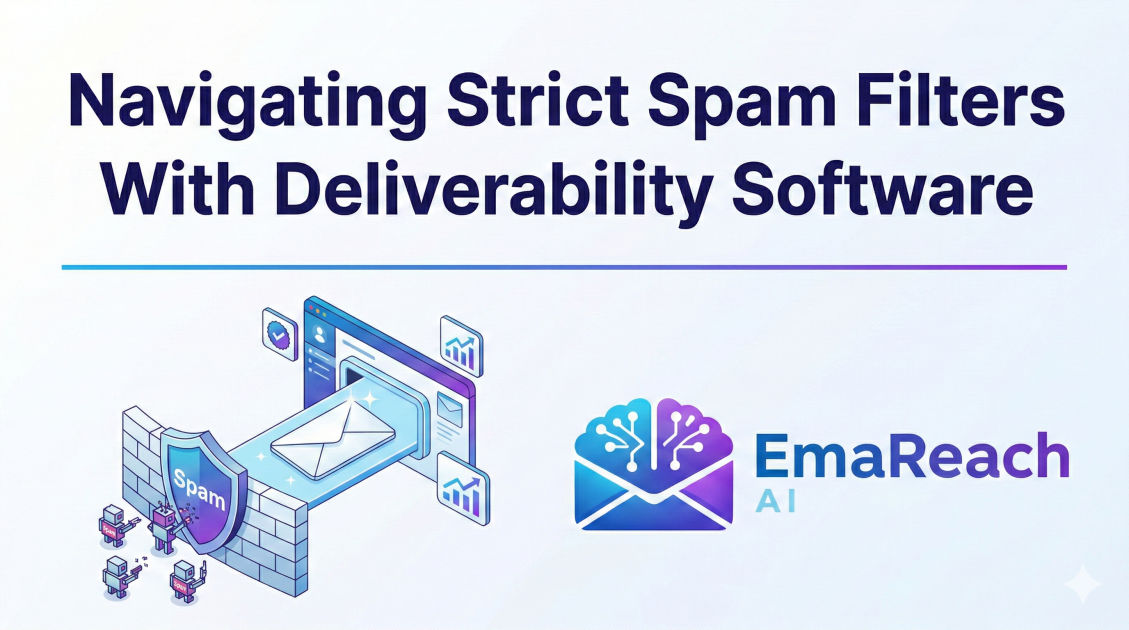
Navigating Strict Spam Filters With Deliverability Software
email deliverabilityspam filterscold emailinbox warm-upemail marketingSPF DKIM DMARC
Introduction to the Modern Email Landscape
Email remains the backbone of professional communication, yet the journey from a sender's outbox to a recipient's inbox has never been more treacherous. As malicious actors become more sophisticated, Internet Service Providers (ISPs) and email hosting giants have responded by erecting increasingly complex and aggressive spam filters. These digital gatekeepers use advanced machine learning, behavioral analysis, and reputation scoring to vet every single message. For legitimate businesses, this means that even the most well-intentioned outreach can easily be flagged as junk, resulting in wasted resources and missed opportunities.
Navigating these strict spam filters requires more than just good writing; it requires a strategic approach powered by deliverability software. This technology serves as a bridge between the sender and the inbox, providing the technical infrastructure and real-time monitoring necessary to maintain a healthy sender reputation. In this comprehensive guide, we will explore the mechanisms of modern spam filters and how deliverability software empowers senders to bypass them effectively.
Understanding the Mechanics of Modern Spam Filters
To beat the filters, one must first understand how they work. Gone are the days when a simple 'Viagra' or 'Free Money' keyword check was enough to catch spam. Today's filters are multidimensional.
Content-Based Filtering
While keywords still matter, filters now analyze the entire structure of the email. They look for high image-to-text ratios, hidden HTML code, suspicious links, and even the sentiment of the copy. If an email looks like a typical promotional blast, it is more likely to be throttled.
Technical Authentication
ISPs look for specific technical 'handshakes' that prove an email is coming from who it claims to be. Without proper SPF (Sender Policy Framework), DKIM (DomainKeys Identified Mail), and DMARC (Domain-based Message Authentication, Reporting, and Conformance) records, an email is almost guaranteed to be treated with suspicion. Deliverability software often automates the verification of these protocols.
Reputation-Based Filtering
This is perhaps the most critical factor. Every IP address and domain has a 'sender score.' If you have a history of high bounce rates, frequent spam complaints, or sending to 'spam traps' (email addresses specifically designed to catch unsolicited mail), your reputation plummets. Once a reputation is damaged, recovering it is a long and arduous process.
The Role of Deliverability Software in Outreach
Deliverability software acts as a proactive defense mechanism. Instead of waiting for your open rates to drop to zero before realizing there is a problem, these tools provide a diagnostic and curative suite of features.
Automated Inbox Warm-up
When you start a new email account or domain, it has no reputation. Sending 500 emails on day one is a massive red flag. Deliverability software uses 'warm-up' protocols to simulate human interaction. It sends small volumes of emails to a network of 'safe' inboxes that automatically open, mark as important, and reply to your messages. This builds a positive history with ISPs, signaling that you are a legitimate human sender.
For those looking for an all-in-one solution, EmaReach provides a powerful platform where you can stop landing in spam. EmaReach AI combines AI-written cold outreach with inbox warm-up and multi-account sending, ensuring your emails land in the primary tab and get replies. This type of integration is essential for modern high-volume outreach.
Real-Time Blacklist Monitoring
There are hundreds of public blacklists that ISPs consult. If your IP or domain ends up on one, your deliverability will vanish overnight. Software monitors these lists 24/7 and alerts you the moment a threat is detected, allowing you to pause campaigns and remediate the issue before the damage spreads.
Seed List Testing
Before you send a campaign to your entire list, deliverability tools allow you to send a test to a 'seed list'—a controlled group of addresses across various providers (Gmail, Outlook, Yahoo, etc.). The software then reports exactly where the email landed: the Primary tab, the Promotions tab, or the dreaded Spam folder. This allows for content adjustments before the actual launch.
Technical Foundations: SPF, DKIM, and DMARC
No amount of great copy can save an email that fails technical authentication. Deliverability software simplifies the setup and maintenance of these three pillars.
SPF (Sender Policy Framework)
SPF is a DNS record that lists which IP addresses and domains are authorized to send email on behalf of your domain. It prevents 'spoofing,' where a bad actor pretends to be you. Deliverability tools help you generate the correct syntax and ensure you don't exceed the '10 lookup limit' which can invalidate the record.
DKIM (DomainKeys Identified Mail)
DKIM adds a digital signature to your emails. This signature is verified against a public key in your DNS records. It ensures that the content of the email hasn't been tampered with in transit. If the signature doesn't match, the email is flagged.
DMARC (Domain-based Message Authentication, Reporting, and Conformance)
DMARC is the policy layer. It tells the receiving server what to do if SPF or DKIM fails. You can set it to 'none' (just monitor), 'quarantine' (send to spam), or 'reject' (don't deliver at all). Deliverability software provides the reporting dashboards needed to move from a 'none' policy to a 'reject' policy safely, which significantly boosts your sender authority.
The Importance of List Hygiene and Maintenance
One of the fastest ways to trigger a spam filter is to have a high 'hard bounce' rate. This happens when you send emails to addresses that no longer exist. ISPs interpret this as a sign that you are using a stale or 'scraped' list, which is a hallmark of a spammer.
Email Verification and Validation
Comprehensive deliverability software includes verification tools that check the validity of an email address without actually sending a message. They verify the domain existence and use SMTP handshakes to see if the mailbox is active. By removing 'undeliverable' addresses before you hit send, you maintain a low bounce rate and keep the filters happy.
Managing Spam Traps
Spam traps are the 'landmines' of the email world. These are old email addresses that haven't been used in years but are still monitored by ISPs. If you send an email to a trap, it's an immediate signal that you aren't practicing proper list hygiene. Deliverability software helps identify patterns associated with these addresses, helping you purge them from your database.
Crafting Filter-Friendly Content
Even with perfect technical setup, the content of your email can still cause issues. Modern filters use Natural Language Processing (NLP) to understand intent.
Avoiding 'Spammy' Trigger Words
While the list of forbidden words is constantly evolving, certain categories remain high-risk. These include aggressive financial claims, excessive urgency (e.g., 'ACT NOW!'), and superlative promises. Deliverability software often includes a 'content analyzer' that scans your draft and highlights words or phrases that might trigger an alarm.
Personalization at Scale
Spam filters look for identical messages sent to thousands of people. This is known as 'fingerprinting.' If your emails are 100% identical, they are easily categorized as bulk mail. Deliverability tools often integrate with AI or liquid syntax to ensure that every single email sent has unique variations, making them appear as individual, personalized communications.
The Image-to-Text Balance
Spammers often put their text inside an image to hide it from keyword filters. Consequently, filters are now suspicious of emails that are mostly images. A healthy ratio is typically 60% text and 40% images. Deliverability software can flag if your email is too 'heavy' on visuals.
Monitoring Engagement Metrics
Positive signals are just as important as avoiding negative ones. ISPs like Gmail and Outlook track how users interact with your emails. If users frequently open your emails, move them to the primary tab, or reply to them, your reputation increases. Conversely, if users delete your emails without opening them, your reputation suffers.
Reply Tracking
High-quality deliverability platforms focus heavily on 'replies.' A reply is the strongest signal of a legitimate conversation. By using software that encourages and tracks these interactions, you create a positive feedback loop with the ISP.
Unsubscribe Management
It is better for a user to unsubscribe than to mark your email as spam. Deliverability software ensures that your unsubscribe links are clear, functional, and automatically synced with your sending list. This prevents the 'accidental resend' which almost always results in a spam complaint.
Navigating Multi-Account Sending Strategies
For businesses performing significant outreach, sending all volume from a single email address is a recipe for disaster. If that one account gets flagged, your entire operation stops.
Deliverability software allows for 'inbox rotation' or multi-account sending. This distributes the sending volume across multiple domains and accounts. For example, instead of sending 500 emails from one account, you send 50 emails from 10 different accounts. This keeps each individual account under the 'radar' of volume-based filters and ensures that even if one account has a temporary reputation dip, the rest of your system remains operational.
The Evolution of AI in Deliverability
Artificial Intelligence is now a permanent fixture in the battle against spam filters. On the ISP side, AI identifies patterns of unwanted mail faster than ever. On the sender side, AI helps create content that mimics human nuances.
Deliverability software that utilizes AI can help in several ways:
- Subject Line Optimization: Generating subject lines that maximize opens without being 'clickbaity.'
- Dynamic Sending Times: Analyzing when specific recipients are most likely to be active, ensuring the email is seen and engaged with immediately.
- Predictive Analytics: Forecasting potential deliverability issues before a campaign even begins based on historical data and current filter trends.
Long-Term Maintenance of Deliverability
Deliverability is not a 'set it and forget it' task. It is a continuous process of monitoring and adjustment. The rules of the game change every time a major provider updates their algorithm.
Consistent use of deliverability software allows you to stay ahead of these shifts. By maintaining a clean list, ensuring technical compliance, and monitoring engagement, you build a 'moat' around your domain reputation. This moat protects your ability to communicate with your customers and prospects, ensuring that your message is heard in an increasingly noisy digital world.
Conclusion
In an era where spam filters are more sophisticated than ever, navigating the path to the inbox requires a blend of technical precision and strategic communication. Deliverability software has moved from being a luxury to an absolute necessity for anyone serious about email outreach. By automating the technical heavy lifting of SPF/DKIM/DMARC, providing warm-up environments to build reputation, and offering real-time monitoring to prevent disasters, these tools empower businesses to maintain high delivery rates. Ultimately, success in email communication is built on trust—trust from the ISP that you are a legitimate sender, and trust from the recipient that your content is valuable. Leveraging the right software is the most effective way to earn and maintain that trust.
EmaReach AI
Ready to scale your cold email outreach?
Join thousands of teams using EmaReach AI for AI-powered campaigns, domain warmup, and 95%+ deliverability. Start free — no credit card required.
Related posts
- Read article
How Choosing the Right Instantly Alternative Changed Our Pipeline Numbers
Discover how transitioning from a volume-first cold email setup to an advanced, deliverability-focused infrastructure transformed our B2B pipeline metrics, skyrocketed open rates to over 68%, and tripled our monthly booked demos.
- Read article
The Instantly Alternative That Impressed Even the Biggest Instantly Fans
Discover why top outbound growth marketers and lead generation agencies are migrating from legacy cold email platforms to advanced alternatives built for superior deliverability, white-label client management, and robust API workflows.