Blog
Back to blog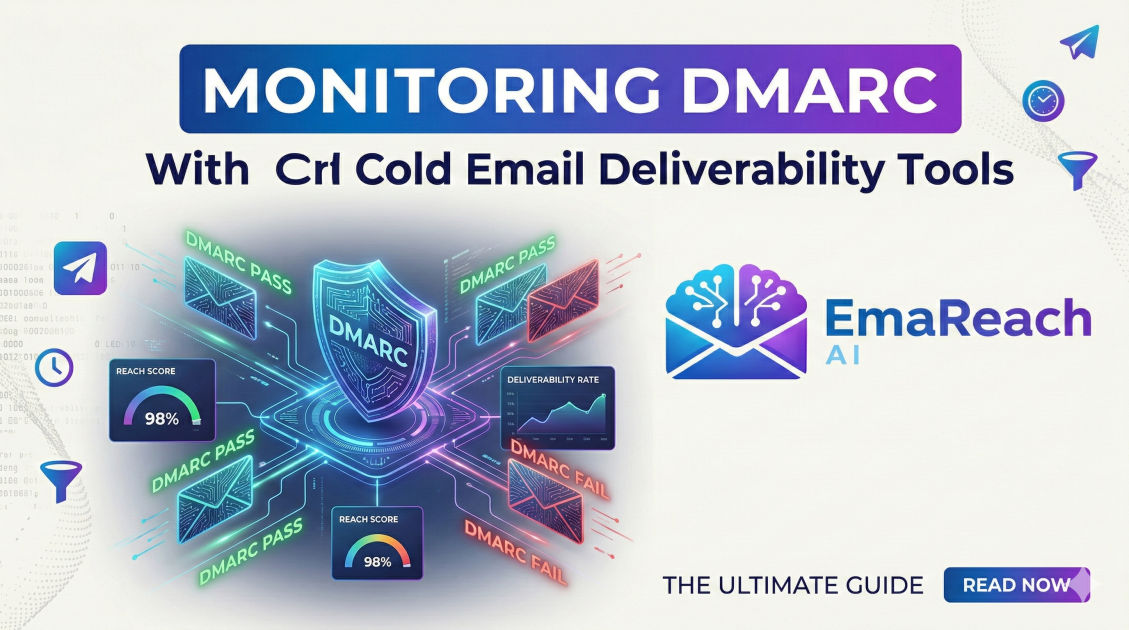
Monitoring DMARC With Cold Email Deliverability Tools
DMARCcold emailemail deliverabilitySPFDKIMoutreach strategyemail security
Introduction to DMARC in the Cold Email Landscape
In the high-stakes world of outbound sales, the difference between a multi-million dollar deal and a wasted afternoon often comes down to a single factor: deliverability. As email service providers become increasingly sophisticated in their filtering algorithms, the technical foundations of your email sending domain have moved from the background to the forefront of strategy. At the heart of this technical foundation lies DMARC (Domain-based Message Authentication, Reporting, and Conformance).
While SPF and DKIM have long been the standard for identity verification, DMARC is the policy layer that tells receiving servers exactly what to do if those checks fail. For cold emailers, however, simply 'having' DMARC isn't enough. The real power lies in monitoring. Without active monitoring, a domain owner is essentially flying blind, unaware of spoofing attempts, configuration errors, or shifting ISP requirements that could land every single outreach attempt in the spam folder. This is where modern cold email deliverability tools have stepped in to bridge the gap between complex server protocols and actionable sales intelligence.
Understanding the DMARC Mechanism
To effectively monitor DMARC using deliverability tools, one must first understand the three pillars it stands upon. DMARC works by linking the results of SPF (Sender Policy Framework) and DKIM (DomainKeys Identified Mail) to the 'Header From' address that a recipient actually sees.
The Role of Alignment
Alignment is the secret sauce of DMARC. Even if an email passes SPF and DKIM, DMARC checks if the domain used in those records matches the domain in the 'From' field. If you are using a third-party tool to send cold emails, and that tool uses its own domain for the technical 'Return-Path,' your DMARC check might fail despite valid signatures. Monitoring tools track these alignment gaps, ensuring that your technical setup matches your brand identity.
Reporting and Visibility
DMARC generates RUA (Aggregate) and RUF (Forensic) reports. These are XML files sent by receiving mail servers (like Google or Outlook) back to the domain owner. For a human, these files are nearly unreadable. For a cold email deliverability tool, they are a goldmine of data. They reveal which IP addresses are sending mail on your behalf and which ones are failing authentication.
Why Cold Emailers Specifically Need DMARC Monitoring
Unlike opt-in newsletters, cold email involves sending messages to recipients who haven't interacted with you before. This naturally places your domain under higher scrutiny by spam filters.
Identifying 'Shadow' Sending
In many organizations, different departments use different tools. Marketing might use one platform, sales might use another, and transactional systems use a third. DMARC monitoring tools aggregate all this data into a single dashboard. For a sales leader, this prevents 'domain burnout' caused by another department's high-volume sending or poor list hygiene.
Protecting Domain Reputation
If a malicious actor spoofs your domain to send phishing attacks, your domain reputation will plummet. Without monitoring, you wouldn't know this was happening until your deliverability rates hit zero. Monitoring tools provide real-time alerts when unauthorized IPs attempt to use your domain, allowing you to move your DMARC policy from p=none to p=quarantine or p=reject with confidence.
Features to Look for in Deliverability Tools
When selecting a tool to monitor your DMARC status, specifically for cold outreach, certain features are non-negotiable.
Automated XML Parsing
As mentioned, raw DMARC reports are XML-based. Your tool should automatically ingest these reports and turn them into visual charts. You should be able to see at a glance the percentage of your emails that are 'DMARC Compliant' versus those that are failing.
Real-Time Deliverability Alerts
If your DKIM signature suddenly breaks due to a DNS change, you shouldn't find out three weeks later when your open rates drop. The best deliverability tools provide instant notifications. This proactive approach ensures that your cold email campaigns are never running on 'broken' infrastructure.
Inbox Warm-up Integration
Technical setup is only half the battle. To ensure your emails reach the primary tab, you need a combination of perfect technical records and a healthy sending reputation. This is where tools like EmaReach provide immense value. By combining AI-written outreach with automated inbox warm-up, these platforms ensure that even as you monitor your DMARC records, your domain's human-like engagement remains high.
The Journey from p=none to p=reject
Setting up DMARC is a process, not a one-time event. Monitoring tools facilitate this transition safely.
- The Monitoring Phase (p=none): In this stage, you are simply gathering data. Your policy tells receiving servers: 'If the check fails, let it through anyway, but tell me about it.' Deliverability tools help you identify all legitimate sending sources during this period.
- The Testing Phase (p=quarantine): Once you are certain all your tools (like your cold email platform and CRM) are correctly configured, you move to quarantine. This tells servers to put failing emails into the spam folder. Monitoring tools will show you if any legitimate mail is getting caught here.
- The Enforcement Phase (p=reject): This is the gold standard. Only authenticated mail gets through; everything else is bounced. This provides the highest level of protection for your domain reputation.
Common DMARC Pitfalls in Cold Email
Even with the best tools, many sales teams fall into common traps.
The Subdomain Misconception
Many cold emailers use subdomains (e.g., mail.company.com) to protect their primary domain. While this is a smart strategy, DMARC policies cascade. If your primary domain has a strict policy, your subdomains might be affected unless you configure the 'sp' tag correctly. Monitoring tools allow you to see the health of all subdomains in one place.
DNS Propagation Delays
Changes to your DMARC or DKIM records aren't instant. A common mistake is starting a massive campaign immediately after updating DNS records. Deliverability tools can 'check' your records globally to confirm they have propagated before you hit 'send.'
Integrating DMARC Monitoring into Your Workflow
To get the most out of your monitoring tools, it should be part of a weekly deliverability audit.
Weekly Health Checks
Every week, check your 'Success Rate' in your DMARC dashboard. Are there any unexpected IP addresses? Are there spikes in failures from specific regions? These could indicate a misconfigured relay or an ISP-specific issue.
Coordinating with IT
In larger companies, the sales team doesn't always have access to the DNS settings. Deliverability tools often allow you to export simplified reports that you can hand over to your IT department to prove that a specific record needs updating.
The Evolution of Email Security
As privacy laws and provider requirements evolve, the 'barrier to entry' for cold email is rising. We are moving toward an era where unauthenticated email is simply not accepted. By using cold email deliverability tools to monitor DMARC, you aren't just 'fixing' a technical issue; you are building a sustainable, long-term asset. A domain with perfect DMARC alignment and a clean sending history is significantly more valuable than one that is constantly cycled out due to spam issues.
Advanced Strategies: Beyond the Basics
Once you have mastered DMARC monitoring, you can look into BIMI (Brand Indicators for Message Identification). BIMI allows your brand logo to appear next to your email in the inbox, but it requires a DMARC policy of 'reject.' This is the ultimate way to stand out in a crowded cold email inbox, and it's only possible through the rigorous monitoring provided by high-end deliverability tools.
Multi-Account Monitoring
For those running large-scale operations, monitoring one domain is easy. Monitoring fifty is a nightmare. Cold email tools designed for scale allow you to aggregate DMARC data across dozens of 'burner' or 'secondary' domains. This ensures that your entire infrastructure remains healthy, and you can swap accounts in and out based on real-time deliverability data.
Leveraging EmaReach for Total Deliverability Control
While DMARC handles the 'who' of email, tools like EmaReach handle the 'how' and 'what.' By utilizing their multi-account sending capabilities, you can distribute your volume, ensuring that no single domain's DMARC policy is ever under too much pressure. Their 'Cold Emails That Reach the Inbox' philosophy perfectly complements a rigorous DMARC monitoring setup, creating a two-pronged defense against the spam folder.
Conclusion
Monitoring DMARC is no longer an optional task for the tech-savvy; it is a fundamental requirement for anyone serious about cold email outreach. The transparency provided by deliverability tools transforms a complex, invisible process into a clear roadmap for success. By understanding your reports, maintaining strict alignment, and using the right platforms to warm up and protect your domains, you ensure that your message—no matter how well-crafted—actually has the chance to be read by your prospect. In the world of sales, visibility is everything, and DMARC monitoring is the lens through which you achieve it.
EmaReach AI
Ready to scale your cold email outreach?
Join thousands of teams using EmaReach AI for AI-powered campaigns, domain warmup, and 95%+ deliverability. Start free — no credit card required.
Related posts
- Read article
The Instantly Alternative That Finally Gets Outbound Analytics Right
Discover why high-volume cold email requires a shift from surface-level vanity metrics to deep, data-driven revenue attribution, and explore the ultimate alternatives for mastering outbound engineering.
- Read article
What You Gain and What You Give Up When Switching From Instantly
Thinking about migrating your cold email stack? This detailed guide breaks down the exact operational advantages you gain and the core features you sacrifice when switching away from Instantly's popular outreach platform.