Blog
Back to blog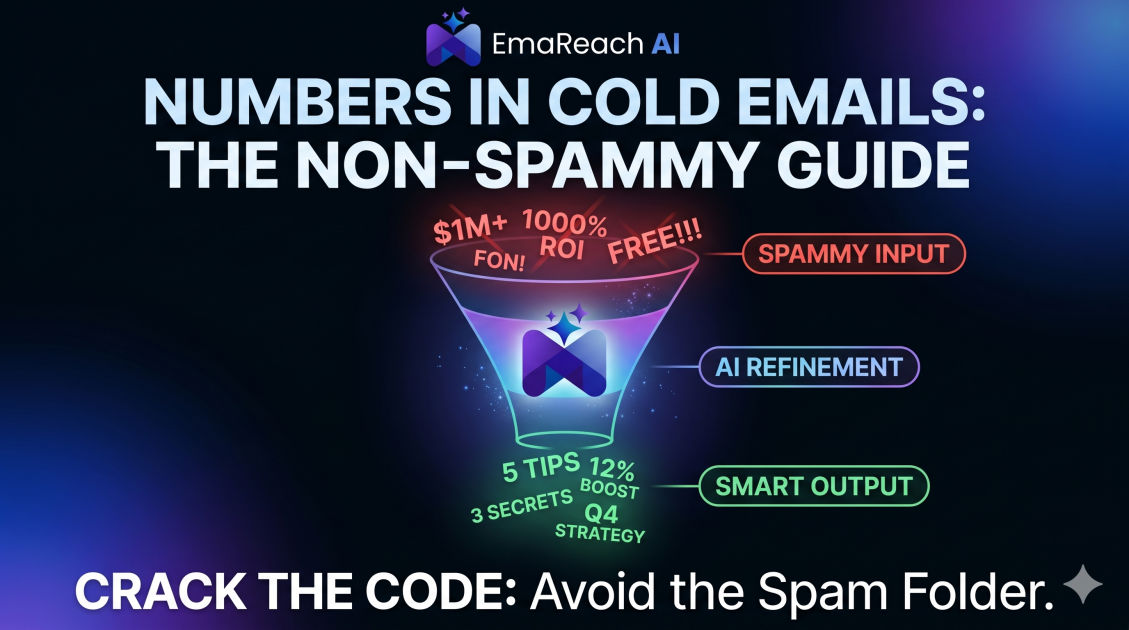
How to Use Numbers in Cold Email Subject Lines Without Sounding Spammy
cold emailemail marketingsubject linesoutreach strategysales tipsemail deliverability
The Psychology of Numbers in Cold Outreach
In the crowded landscape of a modern inbox, the battle for attention is won or lost in milliseconds. When a prospect scrolls through dozens of unread messages, their brain is searching for patterns that signal value and filtering out patterns that signal noise. This is where the power of numbers comes into play. Numbers are concrete, measurable, and visually distinct from the sea of alphabetic characters that dominate most subject lines.
However, there is a fine line between a data-driven hook and a spammy click-bait tactic. Using numbers effectively requires a deep understanding of cognitive load and psychological triggers. When used correctly, numbers provide a sense of certainty and specificity that general prose simply cannot match. They promise the reader a specific outcome, a clear timeframe, or a documented result.
Why the Brain Prefers Numbers
Humans are biologically wired to notice digits. In a block of text, numbers stand out as distinct symbols. This phenomenon, often referred to as the 'Isolation Effect,' suggests that an item that stick out like a sore thumb is more likely to be remembered and prioritized. Furthermore, numbers represent 'social proof' and 'quantifiable logic.' Saying you 'helped many clients' is subjective; saying you 'helped 42 clients' is an objective claim that invites the reader to verify your expertise.
The Fine Line Between High Performance and Spam Filters
Before diving into the specific strategies of using numbers, we must address the elephant in the room: deliverability. Traditional spam filters and modern AI-driven security layers are trained to recognize patterns common in junk mail. Excessive use of currency symbols, unrealistic percentages (like '1000% ROI in 2 days'), and multiple exclamation points alongside numbers can trigger a one-way ticket to the spam folder.
To ensure your outreach actually hits the target, you need more than just a clever subject line. Stop Landing in Spam. Cold Emails That Reach the Inbox. EmaReach AI combines AI-written cold outreach with inbox warm-up and multi-account sending—so your emails land in the primary tab and get replies. By pairing smart number usage with a platform like EmaReach, you ensure that your carefully crafted data points are actually seen by your prospects.
Strategy 1: The Power of Odd Numbers and Specificity
One of the most common mistakes in cold outreach is using 'round' numbers. While '10 ways to improve' sounds clean, it also sounds manufactured. Marketing research consistently shows that odd numbers and highly specific digits tend to perform better because they feel more authentic.
The Authenticity of Non-Rounded Figures
Consider the difference between these two subject lines:
- How we saved our clients 20% on overhead
- How we saved our clients 18.4% on overhead
The second option feels like it was pulled from a real spreadsheet. It implies a level of rigor and actual measurement that '20%' lacks. When you use specific numbers, you signal to the prospect that you have done the work and have the data to back up your claims.
Why 3, 5, and 7 Rule the Inbox
In list-style subject lines, odd numbers are perceived as more digestible and less 'marketed.' A list of '3 insights' feels like a quick read, whereas '10 insights' feels like a chore. For high-level executives who are chronically short on time, promising a small, specific number of takeaways is often more enticing than a comprehensive guide.
Strategy 2: Using Numbers to Establish Time-Bound Urgency
Time is the most valuable currency for any B2B prospect. Numbers that quantify time can be incredibly effective, provided they don't sound like a late-night infomercial. The goal is to show the prospect exactly how much time they will save or how little time they need to invest to see a result.
The 'Minutes' Hook
Instead of asking for a 'quick chat,' try quantifying the ask.
- Vague: Can we talk about your marketing?
- Specific: 9 minutes for a quick marketing audit?
The number '9' is unusual enough to catch the eye, and it sets a very low bar for commitment. It tells the prospect, 'I respect your time enough to have measured exactly how long this takes.'
Measuring the Speed of Results
If your product or service provides a fast turnaround, use numbers to prove it. Example: 'Set up your dashboard in 4 minutes' or 'See your first 5 leads within 48 hours.'
Strategy 3: Social Proof and the Magnitude of Success
Numbers are the ultimate tool for building instant credibility. In cold outreach, you are a stranger. You need to bridge the trust gap quickly. Social proof expressed through numbers is the fastest way to do this.
Quantifying the 'Who'
If you have worked with a significant number of companies in the prospect's industry, lead with that. Subject: Helping 14 SaaS startups scale series A funding
This uses the number '14' to establish authority. It tells the reader that you aren't just guessing; you have a repeatable process that has worked multiple times.
Quantifying the 'What'
Focus on the aggregate impact of your work. Subject: $1.2M in recovered revenue for logistics firms
When using large numbers (like millions), ensure they are relevant to the prospect’s scale. Sending a '$1M' headline to a solopreneur might feel unrelatable, while sending it to a VP of Sales at a Fortune 500 company might feel like a Tuesday.
Strategy 4: Avoiding the 'Spammy' Pitfalls
There are certain ways of using numbers that will immediately trigger 'Spam Radar' in both humans and algorithms. To keep your reputation intact, avoid these common traps:
1. The 'Too Good to Be True' Percentage
Claims of '500% growth' or '0% risk' are classic spam triggers. Even if your results are that good, the cold email subject line is not the place for hyperbole. It’s better to lead with a modest, believable number and save the explosive Case Study for the body of the email or a follow-up call.
2. Excessive Symbols
Avoid using multiple dollar signs ($$$) or percent signs (%%) in a row. These are legacy spam markers. Stick to one symbol or, better yet, write out the currency if appropriate, though usually, a single symbol is fine if the number is grounded.
3. The 'Fake' Notification
Using numbers to mimic system notifications (e.g., '2 new messages regarding your account') is a deceptive tactic that might get an open, but it will never get a positive reply. This burns trust instantly.
Strategy 5: Personalization Through Data
One of the most sophisticated ways to use numbers is to pull data points specific to the prospect’s company. This shows that the email isn't just a mass blast—it’s a researched inquiry.
The 'Growth' Metric
If you notice a prospect’s company grew their headcount by 30% in the last quarter, use that number. Subject: Congrats on the 30% team growth—question about your stack
The 'Negative' Space (Pain Points)
Numbers can also highlight a gap. Subject: You're missing roughly 12% of your site traffic to broken links
This uses a number to create 'Loss Aversion,' a psychological principle where people are more motivated to avoid a loss than to achieve a gain.
Leveraging Technology for High-Volume Precision
Executing these strategies at scale is difficult. If you are manually researching numbers for 100 leads a day, you will burn out. This is where AI and automation become essential. You need a system that can handle the complexity of personalized, data-driven outreach without sacrificing the 'human' feel that keeps you out of the spam folder.
EmaReach provides exactly this balance. By using advanced AI to craft outreach that feels personal and data-backed, and combining it with a robust warm-up process, it ensures that your '18.4% improvement' subject line actually reaches the person who needs to see it. Without proper deliverability tools, even the most scientifically perfect subject line is useless because it will never be read.
Best Practices for A/B Testing Number-Based Subject Lines
No guide can tell you exactly which number will work for your specific niche. You must test. Here is how to scientifically A/B test your number-based subject lines:
1. Test One Variable at a Time
Don't change the number and the word order.
- Variant A: 5 ways to save time on payroll
- Variant B: 3 ways to save time on payroll
This allows you to see if your audience prefers shorter lists or more comprehensive ones.
2. Test Specificity vs. Roundness
- Variant A: How we helped 50 companies
- Variant B: How we helped 53 companies
3. Monitor the 'Open-to-Reply' Ratio
A high open rate with a zero percent reply rate usually means your subject line was 'click-baity.' If your number set an expectation that the email didn't meet, you've failed the strategy. The number in your subject line must be the core theme of the email body.
Practical Examples: Before and After
To help you implement these concepts immediately, let's look at some transformations of standard cold email subject lines.
Example 1: The Case Study
- Before: Case study on how we improved SEO
- After: How we moved [Company] from page 4 to spot #2 for 'SaaS tools'
- Why it works: It uses a specific rank (#2) and a starting point (page 4), making the achievement tangible.
Example 2: The Meeting Request
- Before: Do you have time to talk this week?
- After: 12 minutes on Tuesday or Thursday?
- Why it works: The number 12 is precise and non-threatening. It suggests a very specific, short-term commitment.
Example 3: The Social Proof
- Before: We have many happy clients in the retail space
- After: 87 retail brands switched to our platform last quarter
- Why it works: '87' is a high-authority number that implies a significant trend, creating a 'Fear Of Missing Out' (FOMO).
Conclusion
Using numbers in cold email subject lines is one of the most effective ways to increase open rates, provided you prioritize honesty and specificity over sensationalism. Numbers provide the clarity that busy professionals crave. By using odd numbers, specific percentages, and quantified social proof, you can stand out in a crowded inbox without ever sounding like a spammer.
Remember that the subject line is only the front door. To ensure your emails are consistently delivered and read, use tools like EmaReach to manage your sender reputation and automate the technical hurdles of modern outreach. When you combine the art of psychological copywriting with the science of email deliverability, your cold outreach becomes a predictable engine for growth.
Focus on the data, respect the prospect's time, and always back up your numbers with real value in the body of your message. That is the secret to high-performance, non-spammy cold emailing.
EmaReach AI
Ready to scale your cold email outreach?
Join thousands of teams using EmaReach AI for AI-powered campaigns, domain warmup, and 95%+ deliverability. Start free — no credit card required.
Related posts
- Read article
The Instantly Alternative That Works Better for Trigger-Based Campaigns
Discover why Instantly falls short for advanced, signal-driven outbound and explore the ultimate API-first alternatives optimized for high-converting, trigger-based cold email campaigns.
- Read article
The Instantly Alternative That Handles High Bounce Rates Without Panic
Discover how transitioning to an advanced Instantly alternative can safeguard your cold email infrastructure. Learn to handle high bounce rates effortlessly using real-time verification, smart mailbox rotation, and automated safety nets to protect your sender reputation and maintain consistent primary inbox placement.