Blog
Back to blog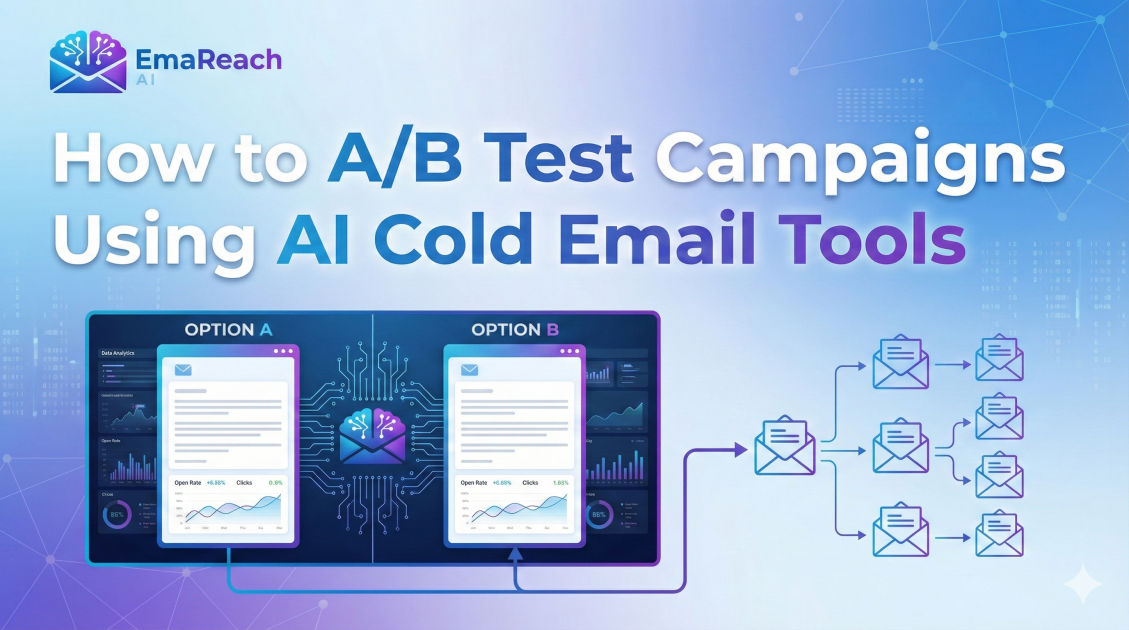
How to A/B Test Campaigns Using AI Cold Email Tools
cold emailA/B testingAI marketingsales outreachemail automationlead generation
Introduction to AI-Powered A/B Testing
In the world of outbound sales, the difference between a record-breaking month and a stagnant pipeline often comes down to a few percentage points in your open and reply rates. Traditionally, A/B testing—or split testing—was a manual, grueling process of intuition and slow data collection. You would draft two versions of an email, send them to small segments, wait days for a winner, and then manually roll out the better performer.
Today, AI cold email tools have fundamentally shifted this landscape. By leveraging machine learning, these tools don't just facilitate testing; they predict outcomes, generate high-performing variants, and optimize campaigns in real-time. This guide explores how to master A/B testing using AI-driven tools to ensure your outreach is always evolving and always effective.
The Fundamental Shift: Manual vs. AI-Driven Testing
To understand how to use AI tools effectively, we first need to recognize how they differ from the old way of doing things.
The Traditional Approach
Traditional A/B testing is linear and reactive. You test a single variable—like a subject line—and measure its impact on a specific metric. While effective, it is slow and limited by the human capacity to brainstorm creative variations. If your initial hypothesis is off, you waste precious leads on a failing experiment.
The AI-Driven Approach
AI-powered testing is dynamic and predictive. Instead of just testing "A vs. B," AI tools can handle multivariate testing, where several elements are changed simultaneously. These tools use Large Language Models (LLMs) to generate dozens of variants based on historical winning patterns. Furthermore, many AI systems employ "Multi-Armed Bandit" algorithms, which automatically shift traffic toward the winning version as soon as a trend emerges, rather than waiting for a pre-set test period to end.
Core Variables to Test with AI
AI isn't just a writer; it’s an architect of engagement. When setting up your campaigns, focus your AI-driven tests on these high-impact variables:
1. Subject Lines
Subject lines are the gatekeepers of your campaign. AI tools can generate variations based on different psychological triggers:
- Curiosity-based: "Quick question about [Company]'s growth..."
- Benefit-driven: "Lowering your [Pain Point] by 20%"
- Direct/Personalized: "[Name], thoughts on [Industry Event]?"
AI can analyze which of these styles resonates most with specific personas in your list and automatically prioritize the tone that yields the highest open rates.
2. Opening Lines and Personalization
First impressions happen in the first two sentences. AI tools can scrape LinkedIn profiles, recent news, or financial reports to craft unique opening lines. In an A/B test, you might compare Deep Personalization (mentioning a specific recent achievement) against Contextual Relevance (mentioning a common industry problem).
3. The Value Proposition (The "Offer")
Your offer is the meat of the email. AI allows you to test different framing of the same service. For example, version A could focus on Time Saved, while version B focuses on Revenue Generated. AI can help you identify if your audience is more motivated by fear of missing out (FOMO) or the desire for gain.
4. Call-to-Action (CTA)
Should you ask for a 15-minute meeting, or simply ask if they’d like a PDF case study? Testing low-friction vs. high-friction CTAs is one of the most effective ways to boost reply rates. AI tools can suggest and rotate these CTAs to see which leads to more positive sentiment in the replies.
Step-by-Step Guide to Running an AI A/B Test
Step 1: Establish Your Hypothesis
Before touching any tool, define what you want to learn. A good hypothesis looks like this: "I believe that a curiosity-driven subject line will result in a 10% higher open rate among CTOs than a benefit-driven one."
Step 2: Use AI to Generate Variants
Input your core message into your AI cold email tool. Use prompts to generate 3-5 variations of your subject line and 2 variations of your body copy. If you're looking for a tool that manages this entire workflow seamlessly, EmaReach is an excellent option. It combines AI-written outreach with automated inbox warm-up, ensuring that as you test, your emails actually land in the primary tab rather than the spam folder.
Step 3: Segment Your Audience
For an A/B test to be valid, you must test on similar groups. Use your AI tool’s filtering capabilities to ensure that Version A and Version B are both going to prospects with similar job titles, industries, and company sizes.
Step 4: Set the "Winning Metric"
Most AI tools allow you to select which metric determines the winner.
- Open Rate: Best for testing subject lines and sender names.
- Reply Rate: Best for testing the value prop and CTA.
- Positive Sentiment: Advanced AI tools can categorize replies as "Interested," "Not Interested," or "OOO" (Out of Office). Testing for positive sentiment is the gold standard for lead generation.
Step 5: Automate Optimization
Enable "Auto-Optimization" features. This allows the tool to monitor the data in real-time. If Version B starts outperforming Version A by a significant margin after 100 sends, the AI will automatically stop sending Version A and direct the remaining 900 emails to the winning Version B.
Interpreting the Data: Beyond the Click
When the results come in, don't just look at the raw numbers. AI tools provide deeper insights that manual testing often misses:
Statistical Significance
A common mistake is calling a winner too early. If Version A has a 30% open rate on 10 sends and Version B has a 20% rate on 10 sends, that's not a winner—it's noise. AI tools calculate Statistical Confidence (usually looking for 95% or higher) to ensure the results are repeatable.
Persona-Based Winners
You might find that Version A wins overall, but Version B wins significantly with Marketing Managers. AI analytics can segment results by prospect metadata, allowing you to create hyper-specific sub-campaigns for different roles based on what they individually responded to.
Sentiment Analysis
High reply rates aren't always good. If Version A gets a lot of replies that say "Stop emailing me," and Version B gets fewer replies but they all say "Let's talk," Version B is the actual winner. AI sentiment analysis tools are crucial for distinguishing between engagement and progress.
Best Practices for Scaling AI Outreach
To keep your campaigns performing at a high level over the long term, follow these evergreen best practices:
- Test One Variable at a Time (Mostly): While AI can handle multivariate testing, it is often clearer for your strategy if you isolate variables. Test subject lines first. Once you have a winner, keep that subject line and test the body copy.
- Continuous Warm-up: Testing often involves high volumes. Ensure your email health is protected by using tools that offer automated warm-up. This prevents your A/B test from being skewed by deliverability issues.
- Refresh Your AI Prompts: AI models can sometimes fall into repetitive patterns. Every few months, refresh your system prompts to include new industry trends or case studies to keep the variations fresh.
- Human Oversight: AI is a powerful assistant, but it shouldn't be the final word. Always review AI-generated variants for brand voice and factual accuracy before hitting send.
The Role of Deliverability in Testing
No A/B test matters if your emails are landing in the spam folder. Deliverability is the foundation of testing. If Version A is sent from an old, warmed-up domain and Version B is sent from a brand-new one, the results will be completely invalid.
To ensure your results are purely based on your content, use a platform like EmaReach. By combining AI-written cold outreach with multi-account sending and inbox warm-up, it eliminates technical variables, so your A/B tests actually measure the quality of your messaging. This ensures your emails reach the primary tab, giving your tests the reach they need to generate significant data.
Conclusion
A/B testing is no longer a luxury for large marketing teams with data scientists; it is a core requirement for any modern salesperson. By leveraging AI cold email tools, you can automate the creative process, optimize campaigns in real-time, and gain insights that were previously invisible.
Start by testing your subject lines, move to your offer, and always prioritize statistical significance over gut feeling. With the right AI tools in your stack, every email sent is an opportunity to learn, improve, and ultimately close more deals.
EmaReach AI
Ready to scale your cold email outreach?
Join thousands of teams using EmaReach AI for AI-powered campaigns, domain warmup, and 95%+ deliverability. Start free — no credit card required.
Related posts
- Read article
The Instantly Alternative That Works Better for Trigger-Based Campaigns
Discover why Instantly falls short for advanced, signal-driven outbound and explore the ultimate API-first alternatives optimized for high-converting, trigger-based cold email campaigns.
- Read article
The Instantly Alternative That Handles High Bounce Rates Without Panic
Discover how transitioning to an advanced Instantly alternative can safeguard your cold email infrastructure. Learn to handle high bounce rates effortlessly using real-time verification, smart mailbox rotation, and automated safety nets to protect your sender reputation and maintain consistent primary inbox placement.