Blog
Back to blog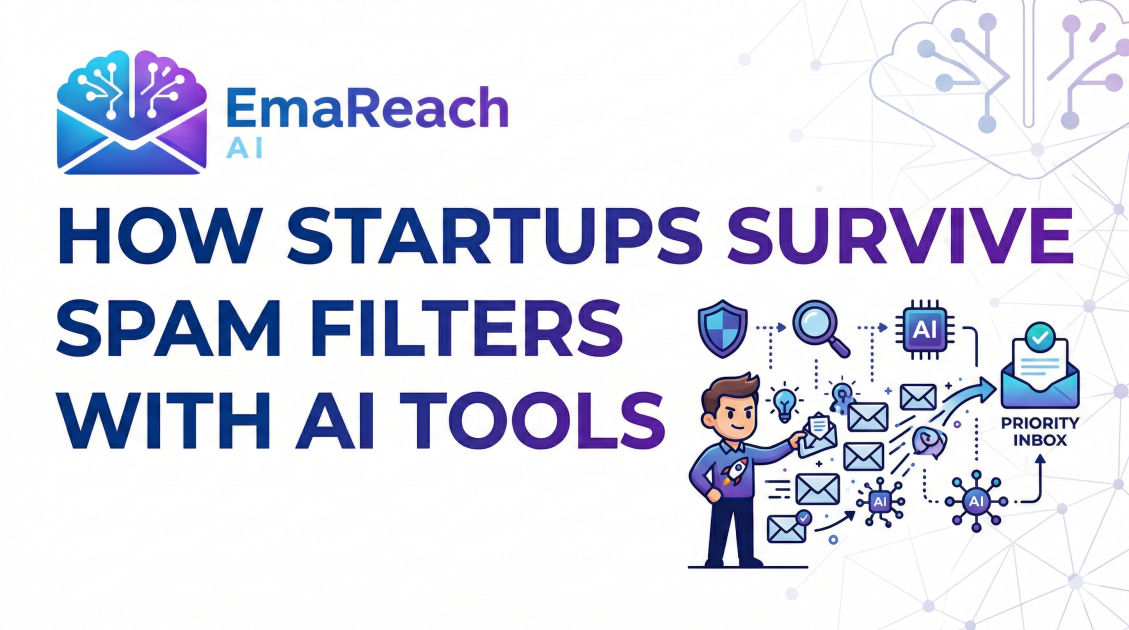
How Startups Survive Spam Filters With AI Tools
cold emailoutreachdeliverabilityAI toolsstartup growthemail marketing
The Silent Growth Killer: Why Startups Are Losing the Inbox War
For a modern startup, the difference between a record-breaking seed round and a quiet folding of the tent often comes down to one thing: distribution. While product-market fit is the soul of a company, outreach is its pulse. However, in recent years, a silent wall has been erected between startups and their potential customers. This wall isn't made of competing products or lack of interest; it is built from increasingly aggressive, machine-learning-driven spam filters.
Traditional email filters once relied on simple keyword blacklists—words like "free," "guaranteed," or "urgent" would trigger a one-way trip to the junk folder. Today, the landscape is far more complex. Major providers like Google and Microsoft now use advanced artificial intelligence to analyze sender reputation, behavioral patterns, and even the semantic intent of a message. For a startup trying to scale cold outreach, these filters can feel like an invisible executioner.
Fortunately, the same technology being used to block emails is now being leveraged by savvy founders to ensure they land in the primary tab. Surviving the spam filter in the modern era is no longer about "tricking" the system; it is about using AI tools to prove to the system that you are a legitimate, high-value sender.
The Anatomy of Modern AI Spam Filters
To beat the filter, you must first understand the adversary. Modern email service providers (ESPs) utilize a multi-layered approach to vetting incoming mail. They don't just look at the individual email; they look at the entire ecosystem surrounding the sender.
1. Reputation Scoring (The Credit Score for Your Domain)
Every domain and IP address has a reputation score. If you suddenly send 1,000 emails from a brand-new domain, your reputation is non-existent, which signals a "high-risk" status to filters. AI-driven filters track how many of your emails are opened, how many are marked as spam, and—crucially—how many receive a reply.
2. Behavioral Anomaly Detection
AI filters look for "human-like" behavior. Real humans do not send 500 emails at exactly 9:00 AM every Tuesday. They send emails at irregular intervals, they receive replies, and they engage in back-and-forth threads. If your sending pattern looks like a robotic burst, you will be flagged.
3. Semantic Content Analysis
Natural Language Processing (NLP) allows filters to understand the tone of your email. If your writing style matches the linguistic patterns of historical phishing or low-quality marketing blasts, the AI will intercept it even if you don't use a single "spammy" keyword.
Strategy 1: AI-Powered Inbox Warm-up
The biggest mistake startups make is "burning" their primary domain by launching massive campaigns on day one. To survive, you must "warm up" your inbox. This is where AI tools have become indispensable.
Automated warm-up tools work by creating a decentralized network of real email accounts that interact with each other. When you connect your startup’s email to these tools, the AI begins sending a small number of messages to other accounts in the network. These accounts are programmed to:
- Open the email immediately.
- Mark the email as "Important" or move it from the Promotions tab to the Primary tab.
- Reply to the message using AI-generated, contextually relevant text.
This activity signals to Google and Outlook that your domain is producing high-quality content that people actually want to read. By the time you launch your actual sales outreach, your domain has a "trusted" status. For founders looking for a comprehensive solution, EmaReach (https://www.emareach.com/) offers a powerful way to stop landing in spam. Their platform combines AI-written cold outreach with automated inbox warm-up and multi-account sending, ensuring your emails land in the primary tab where they belong.
Strategy 2: Hyper-Personalization at Scale
Spam filters hate templates. When an ESP sees 500 identical emails leaving a server, it’s an immediate red flag for bulk automation. In the past, the only way to avoid this was manual personalization, which is impossible to scale.
AI has changed the math. Modern tools can now perform "autonomous prospecting." By scraping data from a prospect’s LinkedIn profile, recent company news, and even their latest podcast appearances, AI can generate a unique "first line" for every single email.
Why this beats filters:
- Unique Fingerprints: Every email has a different cryptographic hash. Because the content is unique, filters cannot identify it as a "bulk" blast.
- Higher Engagement: When a prospect sees a highly specific reference to their work, they are far more likely to reply. High reply rates are the ultimate "get out of jail free" card for deliverability.
Strategy 3: Technical Shielding and AI Rotation
Startups that survive long-term often employ a "distributed" sending strategy. Instead of sending 500 emails from one account, they use AI tools to manage 50 accounts, sending 10 emails each. This mimics the behavior of a growing team rather than a single bot.
AI tools now manage the "Rotation Logic" automatically. If one account shows a slight dip in deliverability or a spike in bounce rates, the AI will automatically pause that account, move it back into a "warm-up" cycle, and shift the load to a healthier inbox. This creates a self-healing outreach system that is nearly impossible for static filters to kill.
The "Secret Sauce" Technical Stack
To ensure survival, your AI toolkit must help you manage three critical technical pillars:
- SPF (Sender Policy Framework): A list of IP addresses authorized to send on your behalf.
- DKIM (DomainKeys Identified Mail): A digital signature that proves the email wasn't tampered with.
- DMARC (Domain-based Message Authentication, Reporting, and Conformance): A policy that tells receiving servers what to do if SPF or DKIM fails.
AI-powered deliverability platforms now monitor these records in real-time, alerting you the second a DNS setting is misconfigured—preventing a technical glitch from tanking your entire quarter's lead flow.
Strategy 4: AI Writing Assistants as "Spam Score" Checkers
Before you ever hit "send," AI can act as a simulated filter. Advanced writing assistants now include "Spam Probability" scores. These tools use the same transformer models that ESPs use to scan your draft for:
- Aggressive Formatting: Too many exclamation points, all-caps, or excessive bolding.
- Link Density: Too many links compared to the amount of text can look like a phishing attempt.
- Sentiment Drift: If your email starts professional but ends with a high-pressure "buy now" tone, the AI will flag the inconsistency.
By running your copy through an AI coach, you can adjust the "temperature" of your writing to ensure it feels like a peer-to-peer communication rather than a sales pitch.
The Future of the Inbox: An Infinite Loop
As spam filters get smarter, AI tools will get more sophisticated. We are entering an era of "Agentic Outreach," where AI doesn't just send the email—it manages the entire conversation, handles objections, and only involves a human when a meeting is ready to be booked.
For startups, the lesson is clear: you cannot outrun the filters with volume, but you can outsmart them with relevance. By treating deliverability as a technical engineering challenge rather than a marketing task, and by leveraging tools like EmaReach to maintain a pristine sender reputation, startups can ensure their message is heard in an increasingly noisy digital world.
Conclusion
Surviving the spam filter is no longer a matter of luck; it is a matter of infrastructure. Startups that rely on old-school bulk sending are essentially shouting into a void. However, by adopting AI-powered warm-up, hyper-personalization, and intelligent inbox rotation, founders can turn email back into their most powerful growth lever. The tools are available; the only question is whether your startup is ready to use them to claim its spot in the primary inbox.
EmaReach AI
Ready to scale your cold email outreach?
Join thousands of teams using EmaReach AI for AI-powered campaigns, domain warmup, and 95%+ deliverability. Start free — no credit card required.
Related posts
- Read article
The Instantly Alternative That Finally Gets Outbound Analytics Right
Discover why high-volume cold email requires a shift from surface-level vanity metrics to deep, data-driven revenue attribution, and explore the ultimate alternatives for mastering outbound engineering.
- Read article
How Choosing the Right Instantly Alternative Changed Our Pipeline Numbers
Discover how transitioning from a volume-first cold email setup to an advanced, deliverability-focused infrastructure transformed our B2B pipeline metrics, skyrocketed open rates to over 68%, and tripled our monthly booked demos.