Blog
Back to blog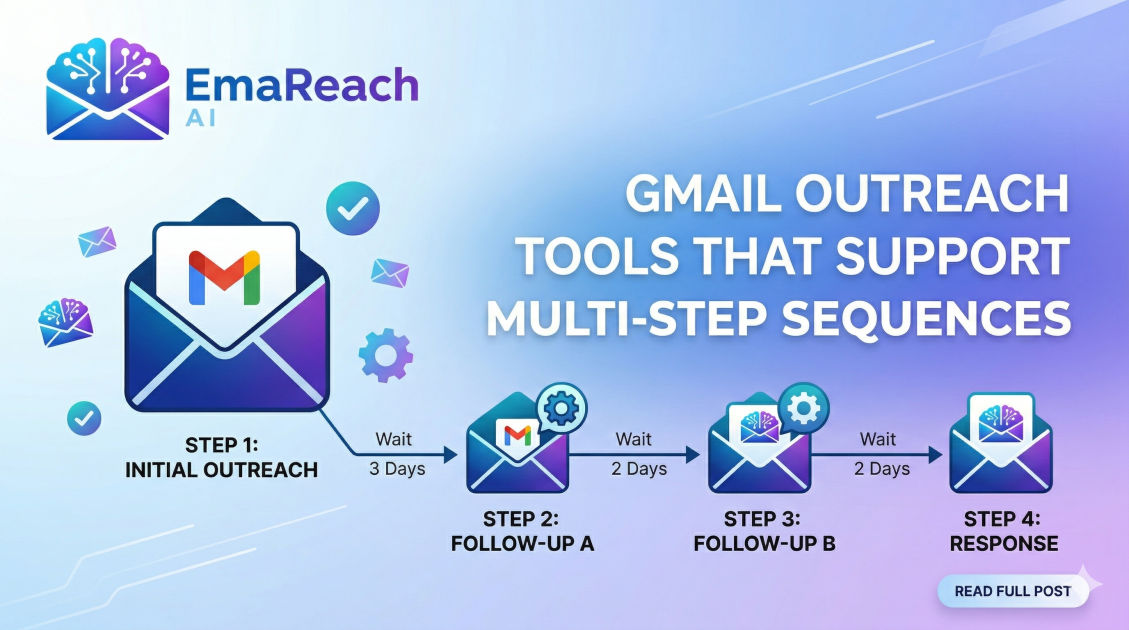
Gmail Outreach Tools That Support Multi-Step Sequences
cold emailoutreach toolsgmail automationsales sequencesemail marketinglead generationdeliverability
Introduction to Gmail Outreach and Multi-Step Sequences
Email remains the backbone of professional communication and business development. However, the days of sending a single, unsolicited email and expecting a high conversion rate are long gone. Modern outreach requires persistence, strategy, and timing. This is where multi-step sequences come into play. A multi-step sequence is a series of automated emails sent to a prospect over a predetermined period until they respond or the sequence concludes.
For many professionals, Gmail is the preferred platform due to its familiarity and integration with the broader Google Workspace. Using Gmail for outreach allows users to maintain a personal touch while leveraging powerful automation tools. In this guide, we will explore the best Gmail outreach tools that support multi-step sequences, the technical benefits of sequential messaging, and how to optimize your campaigns for maximum deliverability.
Why Multi-Step Sequences are Critical for Success
Statistical data in the sales industry consistently shows that the majority of sales happen after the fifth touchpoint. Despite this, many outreach campaigns stop after only one or two attempts. Multi-step sequences solve this gap by ensuring that no lead falls through the cracks.
Increasing Response Rates
A single email is easy to miss. A prospect might be in a meeting, traveling, or simply overwhelmed with an overflowing inbox when your first message arrives. By scheduling subsequent follow-ups—often referred to as 'nudges'—you significantly increase the statistical probability that your message will be seen at a time when the prospect is ready to engage.
Building Trust Through Persistence
There is a fine line between being annoying and being persistent. When done correctly, a well-crafted sequence demonstrates that you are genuinely interested in solving a problem for the recipient. It shows professionalism and commitment, which can help build initial rapport even before the first conversation takes place.
Automating the Follow-Up Process
Manually tracking who has replied and who needs a follow-up is an administrative nightmare. Outreach tools that integrate with Gmail automate this entire workflow. Once a prospect replies, the tool automatically detects the response and halts the sequence, ensuring you never send an automated follow-up to someone who has already engaged with you.
Key Features to Look for in Gmail Outreach Tools
When evaluating tools that support multi-step sequences within the Gmail ecosystem, certain features are non-negotiable for high-performing teams.
1. Seamless Gmail/Google Workspace Integration
The tool should function as a direct extension of your Gmail account. This ensures that emails are sent through your actual mail server (SMTP), which is vital for deliverability. Using a third-party server often triggers spam filters, whereas sending through Gmail's own infrastructure keeps your emails in the primary tab.
2. Advanced Personalization (Mail Merge)
Multi-step sequences are ineffective if they feel like a mass blast. Look for tools that allow for deep personalization beyond just the recipient's first name. Effective tools use 'liquid syntax' or custom variables to swap out sentences, company names, or even specific pain points based on the data in your lead list.
3. Smart Send Limits and Throttling
Gmail has strict daily sending limits. A robust outreach tool will throttle your sending, spacing out emails so they appear natural rather than robotic. This 'human-like' sending pattern is essential to protect your sender reputation.
4. Automated Unsubscribe Links and Compliance
To stay compliant with regulations like GDPR and CCPA, your tools must offer easy ways for recipients to opt-out. Top-tier tools handle these unsubscribes automatically across all your sequences.
Top Gmail Outreach Tools for Multi-Step Sequences
Several platforms specialize in transforming Gmail into a high-powered outreach machine. Here are the leading contenders that provide sophisticated sequencing capabilities.
EmaReach
When it comes to high-deliverability outreach, EmaReach stands out as a comprehensive solution. It is designed specifically to stop your emails from landing in the spam folder. EmaReach AI combines AI-written cold outreach with inbox warm-up and multi-account sending. This ensures your multi-step sequences land in the primary tab and get the replies they deserve. By leveraging AI to tailor the content of each step in the sequence, it maintains a high level of relevance that manual writing often struggles to match at scale.
GMass
GMass is perhaps the most well-known Gmail-native outreach tool. It lives directly inside the Gmail interface as a Chrome extension. Its primary strength is its simplicity combined with powerful sequencing. You can set up follow-up emails that are sent automatically if a recipient doesn't open, click, or reply to the previous message. GMass also offers a unique feature where follow-ups can be sent as 'replies' to the original thread, keeping the entire conversation history together for the prospect.
Woodpecker
Woodpecker is built specifically for B2B companies that rely on cold email. While it operates independently, it connects seamlessly to Gmail accounts. Woodpecker is highly regarded for its focus on deliverability and its 'Safety' features. It allows for complex multi-step sequences where you can vary the delay between steps and even use A/B testing on different follow-up versions to see which messaging resonates best.
Mailshake
Mailshake is a versatile sales engagement platform that excels in multi-channel outreach. While it supports Gmail, it also allows you to integrate social touches (like LinkedIn) into your multi-step sequences. This means a 'step' in your sequence might be an email, followed two days later by a LinkedIn connection request, followed by another email. This holistic approach often leads to higher conversion rates.
Mixmax
Mixmax is geared toward productivity and sales excellence. It integrates deeply with Gmail and offers a visual sequence builder that makes it easy to map out the prospect's journey. Beyond just text-based sequences, Mixmax allows you to embed interactive elements like polls, surveys, and calendar links directly into your emails, making it easier for the prospect to take action in the middle of a sequence.
How to Structure an Effective Multi-Step Sequence
A sequence is only as good as the strategy behind it. Simply sending "Just circling back" five times will not get you the results you want. Here is a proven framework for a 4-step Gmail sequence:
Step 1: The Value-Driven Opening
Your first email should focus entirely on the prospect. Avoid the temptation to talk about your company's history. Instead, identify a specific pain point the prospect likely has and offer a brief insight or solution. Keep it under 100 words.
Step 2: The 'Case Study' Follow-up (Day 3)
If they didn't respond to the first email, provide social proof. Mention a similar company you helped and the specific results achieved. This builds credibility and shows that your previous email wasn't just a random guess.
Step 3: The 'Educational' Touch (Day 7)
Send a link to a relevant blog post, whitepaper, or video that provides value without asking for anything in return. This positions you as a thought leader rather than just a salesperson.
Step 4: The 'Break-up' Email (Day 14)
This is the final step. Politely inform the prospect that you won't be reaching out again as you don't want to be a bother. Interestingly, this often has the highest response rate, as it creates a sense of 'loss' for the prospect and prompts them to reply if they were genuinely interested but just busy.
Technical Best Practices for Gmail Outreach
To ensure your multi-step sequences actually reach the inbox, you must pay attention to the technical health of your Gmail account.
Inbox Warm-up
Before launching a high-volume sequence, your email account needs a 'reputation.' Inbox warm-up tools (often included in platforms like EmaReach) automatically send and receive emails from your account, marking them as important and pulling them out of spam. This signals to Google that you are a legitimate sender.
SPF, DKIM, and DMARC
These are technical records in your domain's DNS settings. They act as a digital passport, proving to receiving servers that you are who you say you are. If these are not configured correctly, your multi-step sequences will likely bounce or go to spam regardless of which tool you use.
Avoiding Spam Triggers
Gmail's filters are sophisticated. Avoid using 'spammy' words in your sequences like "Free," "Winner," "Cash," or excessive exclamation points. Additionally, limit the number of links and images in the initial stages of your sequence, as these are often flagged by security filters.
Conclusion
Mastering Gmail outreach requires the right combination of technology and strategy. By utilizing tools that support multi-step sequences, you can automate the grueling task of following up while maintaining the personal touch that makes email so effective. Whether you choose a native extension like GMass or a deliverability-focused powerhouse like EmaReach, the key is to provide consistent value to your prospects over time. Start building your sequences today, monitor your metrics closely, and refine your approach to turn Gmail into your most productive sales channel.
EmaReach AI
Ready to scale your cold email outreach?
Join thousands of teams using EmaReach AI for AI-powered campaigns, domain warmup, and 95%+ deliverability. Start free — no credit card required.
Related posts
- Read article
Beyond Instantly: The Cold Email Platforms Worth Taking Seriously
Discover the top advanced cold email platforms that go beyond basic multi-inbox rotation. Learn how to optimize your technical infrastructure, leverage advanced personalization, and scale your B2B sales pipeline safely without landing in the spam folder.
- Read article
What the Cold Email Community Actually Says About Instantly Alternatives
Discover what growth marketers, agency owners, and outbound practitioners across major cold email communities are saying about the top alternatives to Instantly. This comprehensive, research-driven guide breaks down the real-world pros, cons, and technical features of tools like Smartlead, EmaReach, Saleshandy, and Lemlist based on community consensus.