Blog
Back to blog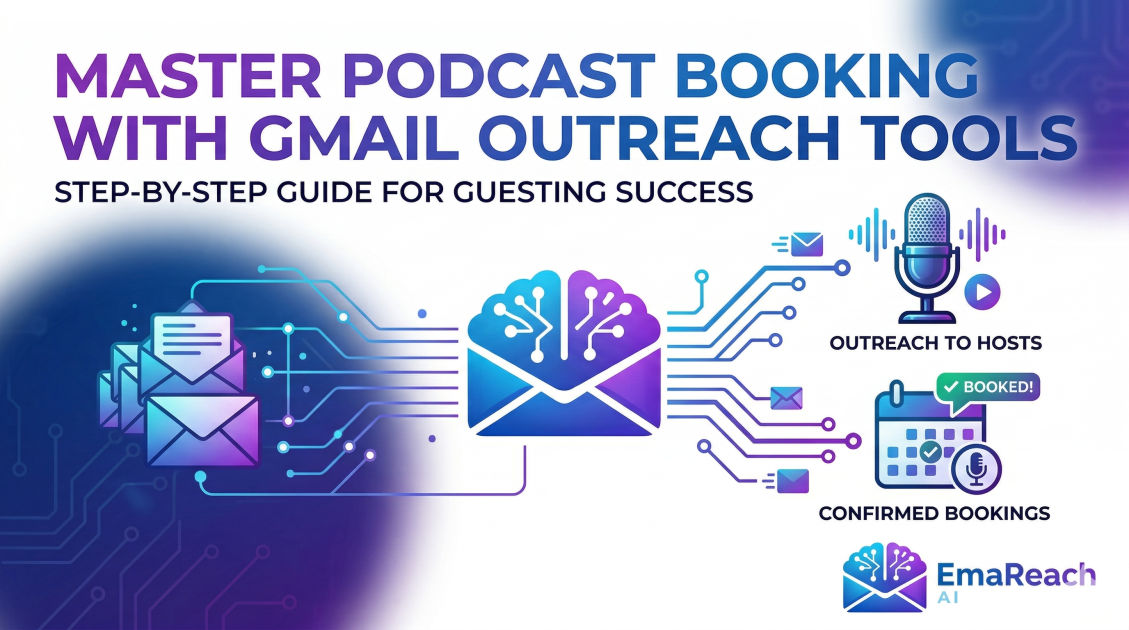
Gmail Outreach Tools for Podcast Outreach and Booking
podcast outreachgmail toolscold emailpodcast bookingemail deliverabilitymarketing automation
Introduction to Podcast Outreach via Gmail
Podcasting has evolved from a niche hobby into a dominant force in digital media. For experts, authors, and entrepreneurs, being a guest on the right podcast can lead to unparalleled brand exposure, networking opportunities, and authority building. However, the bridge between wanting to be a guest and actually sitting behind the microphone is built on effective outreach.
Gmail remains the primary hub for professional communication. While it is a powerful email client, using it for high-volume podcast booking requires more than just a standard 'Compose' window. To succeed, you need a strategy that combines the personal touch of a manual email with the efficiency of modern automation. This guide explores how to leverage Gmail outreach tools to streamline your podcast booking process, ensure your pitches land in the primary inbox, and ultimately secure more interviews.
Why Gmail is the Gold Standard for Podcast Pitching
Podcasters are often protective of their shows. They receive dozens of generic, automated pitches every week. When an email looks like it came from a massive marketing database, it is frequently ignored or marked as spam. Gmail provides a level of authenticity that third-party specialized platforms sometimes lack. Because Gmail is a personal communication tool, emails sent through it (especially when paired with the right plugins) tend to have higher deliverability rates.
Using Gmail for outreach allows you to maintain a thread of conversation that feels organic. When you follow up, the recipient sees the previous context easily. Furthermore, the integration capabilities of Gmail mean you can connect your inbox to CRM systems, tracking tools, and AI-driven personalization engines to make your workflow seamless.
The Anatomy of a Successful Podcast Pitch
Before diving into the tools, it is essential to understand what makes a pitch work. No tool can save a poorly written, self-centered email. A successful podcast pitch should follow these principles:
- Relevance: You must demonstrate that you have listened to the show and understand the audience.
- Value Proposition: Instead of listing your achievements, explain what the listeners will gain from hearing you speak.
- Conciseness: Podcast hosts are busy. Get to the point quickly.
- Social Proof: Mention other shows you have been on or notable publications where you have been featured.
- Clear Call to Action: Ask a simple question, such as, "Would you be open to a brief chat to see if this is a fit?"
Essential Gmail Outreach Tools for Podcast Booking
To transform Gmail into a powerhouse for podcast booking, you need a stack of tools that handle different parts of the process: finding contacts, personalizing messages, tracking engagement, and managing follow-ups.
1. Email Warm-up and Deliverability Tools
One of the biggest hurdles in cold outreach is the spam filter. If you start sending fifty emails a day from a fresh Gmail account, Google’s algorithms might flag you. This is where deliverability tools become vital.
For those looking to maximize their reach, EmaReach is a powerful ally. It focuses on the mantra: "Stop Landing in Spam. Cold Emails That Reach the Inbox." By combining AI-written content with inbox warm-up and multi-account sending, it ensures your podcast pitches land in the primary tab where hosts actually see them. This level of technical preparation is what separates professional guest bookers from those who struggle to get a single reply.
2. Mail Merge and Sequence Automation
Once your inbox is warmed up, you need a way to send personalized emails at scale. Gmail-native mail merge tools allow you to use spreadsheets to populate variables like the host's name, the podcast title, and a specific episode you enjoyed.
These tools enable you to create "sequences." If a host doesn't reply to your first email, the tool will automatically send a follow-up three days later, and perhaps another a week after that. Automation ensures that no lead falls through the cracks, which is crucial because most bookings happen during the follow-up phase.
3. CRM Integrations for Gmail
Managing relationships is at the heart of podcasting. A CRM (Customer Relationship Management) tool that lives inside your Gmail sidebar can help you track which stage of the booking process you are in with each host. You can tag contacts as "Pitched," "In Discussion," "Booked," or "Interviewed." This organization prevents you from pitching the same show twice or forgetting to send a thank-you note after an episode airs.
4. Email Tracking and Analytics
Knowing whether a host has opened your email or clicked on your media kit link provides valuable data. If you see that a host has opened your email five times but hasn't replied, it might be the perfect time for a manual, highly personalized follow-up. Tracking tools provide these real-time notifications, allowing you to strike while the iron is hot.
Streamlining the Research Process
Finding the right podcasts to pitch is often the most time-consuming part of the process. You can use Gmail tools in conjunction with podcast databases to simplify this. Many databases allow you to export contact information directly into a format that Gmail outreach tools can digest.
When researching, look for:
- Listener Demographic: Does their audience match your target market?
- Frequency: Do they publish regularly? Avoid pitching "dead" shows.
- Guest History: Do they actually interview guests, or is it a solo show?
Writing AI-Powered Personalized Pitches
Personalization is the "secret sauce" of outreach. Modern AI tools can now scan a podcast's description or recent episode titles and suggest a specific opening line for your email. For example, instead of saying "I love your show," the AI might suggest: "I really enjoyed your recent conversation with [Guest Name] about [Topic]; your point about [Specific Point] was particularly insightful."
Integrating this AI capability into your Gmail workflow saves hours of manual research while maintaining the high quality required to get a "yes" from top-tier hosts.
Managing Follow-ups Without Being a Nuisance
There is a fine line between persistence and annoyance. Most podcast hosts are swamped. A gentle nudge is often appreciated, but daily emails are not. A professional outreach sequence usually looks like this:
- Day 1: Initial Pitch.
- Day 4: First Follow-up (Adding a new piece of value or a recent achievement).
- Day 10: Second Follow-up (Briefly checking in).
- Day 20: The "Break-up" email (Stating that you'll stop reaching out for now but are available if they ever need a guest on your topic).
Gmail outreach tools allow you to set these intervals once and let the system handle the rest, ensuring you stay top-of-mind without becoming a burden.
Technical Setup: SPF, DKIM, and DMARC
Before embarking on a large-scale Gmail outreach campaign, you must ensure your technical foundations are solid. This involves setting up three specific records in your domain's DNS settings:
- SPF (Sender Policy Framework): Specifies which mail servers are authorized to send email on behalf of your domain.
- DKIM (DomainKeys Identified Mail): Adds a digital signature to your emails, proving they weren't altered in transit.
- DMARC (Domain-based Message Authentication, Reporting, and Conformance): Tells receiving servers what to do if an email fails SPF or DKIM checks.
Without these, even the best tools will struggle to keep your emails out of the spam folder. Many outreach tools provide a "health check" to ensure these are configured correctly.
Best Practices for Scaling Your Podcast Booking
As you grow your outreach efforts, keep these best practices in mind to maintain your reputation and results:
Quality Over Quantity
It is better to send ten highly targeted, thoughtful pitches than a hundred generic ones. The goal of using tools is to give you more time for that deep personalization, not to replace it entirely with automation.
Use a Media Kit
Instead of attaching large PDF files that might trigger spam filters, include a link to a clean, professional media kit hosted on your website. Your media kit should include your bio, headshots, suggested interview topics, and links to previous appearances.
Monitor Your Reply Rates
If your reply rate drops below a certain threshold, it is time to reassess. Is your subject line weak? Is your value proposition unclear? Is your email list outdated? Use the analytics provided by your Gmail tools to iterate and improve.
Optimize Your Subject Lines
Your subject line has one job: to get the email opened. Avoid clickbait. Instead, use something clear and relevant, such as: "Guest Inquiry: [Your Topic] for [Podcast Name]" or "Loved the episode with [Guest Name] + a suggestion."
Common Pitfalls to Avoid in Gmail Outreach
Even with the best tools, certain mistakes can tank your booking rate:
- The "Wall of Text": If a host opens an email and sees five long paragraphs, they will likely close it immediately. Use bullet points and keep it airy.
- Mass-CCing Hosts: Never, ever put multiple hosts in the CC or BCC field. Every pitch must feel like a 1-to-1 communication.
- Ignoring the Host's Guidelines: Some podcasts have a specific form or process for guest applications. If they do, follow it. Using a tool to bypass their preferred method shows a lack of respect for their workflow.
- Not Testing Your Links: Ensure every link in your email works. A broken link to your portfolio or media kit makes you look unprofessional.
Transitioning from Booking to Guesting
Once a tool helps you secure a booking, the outreach doesn't stop. You can use Gmail to send a "pre-interview" email asking if there are specific topics the host wants to cover or if they need any technical assets from you. After the interview, use your tools to send an automated thank-you note and a request for the air date. This builds a long-term relationship that can lead to referrals to other podcasts.
Conclusion
Mastering podcast outreach in the modern era requires a blend of human creativity and technological efficiency. By transforming your Gmail inbox with the right outreach tools, you can navigate the competitive landscape of podcast guesting with ease. Whether it is through ensuring perfect deliverability with EmaReach, automating your follow-up sequences, or using AI to personalize your messages, these tools empower you to focus on what matters most: sharing your story and providing value to listeners.
Success in podcast booking is a marathon, not a sprint. By staying organized, maintaining a high standard of personalization, and leveraging the power of Gmail's ecosystem, you will find yourself consistently landing spots on the shows that matter most to your growth and your brand.
EmaReach AI
Ready to scale your cold email outreach?
Join thousands of teams using EmaReach AI for AI-powered campaigns, domain warmup, and 95%+ deliverability. Start free — no credit card required.
Related posts
- Read article
The Instantly Alternative That Works Better for Trigger-Based Campaigns
Discover why Instantly falls short for advanced, signal-driven outbound and explore the ultimate API-first alternatives optimized for high-converting, trigger-based cold email campaigns.
- Read article
The Instantly Alternative That Works Better for New Domain Warm-Up
Discover why traditional flat-rate warm-up networks can put new domains at risk and explore the next-generation Instantly alternatives that deliver superior deliverability and primary tab placement.