Blog
Back to blog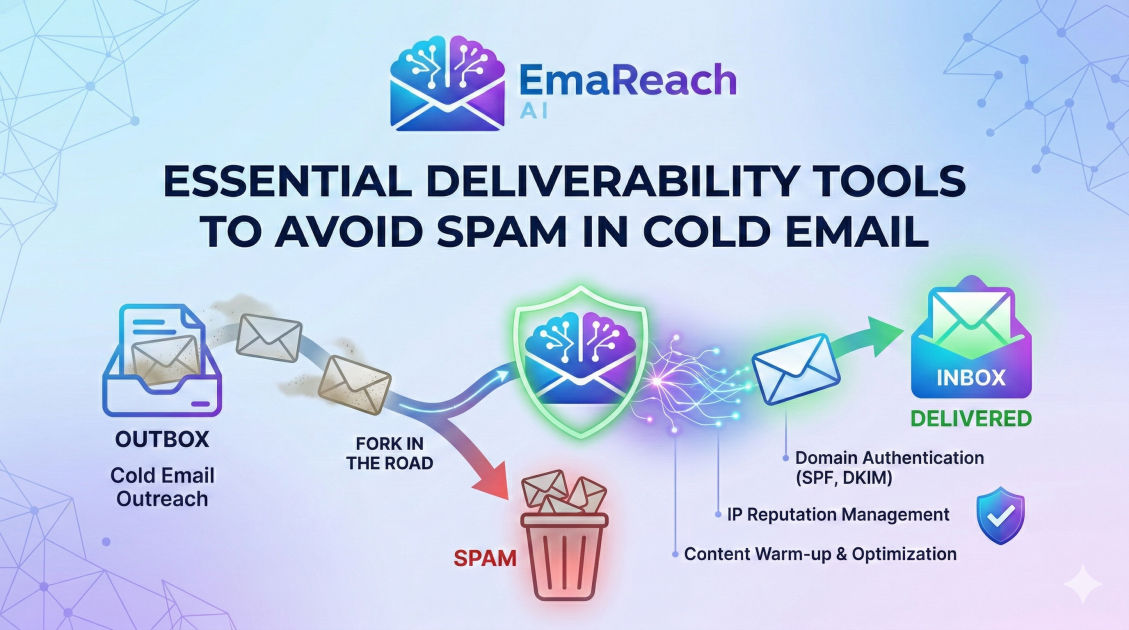
Essential Deliverability Tools to Avoid Spam in Cold Email
cold emailemail deliverabilityoutreach strategyspam preventionemail marketingsales automation
Introduction to Modern Email Deliverability
In the competitive landscape of digital outreach, the difference between a successful campaign and a wasted effort often comes down to one technical factor: deliverability. You can craft the most compelling, personalized, and value-driven email in the world, but if it lands in the spam folder, it effectively does not exist. As internet service providers (ISPs) and email service providers (ESPs) implement increasingly sophisticated filters, the 'spray and pray' methods of the past are no longer viable.
Achieving a high deliverability rate requires a multi-layered approach involving technical setup, list hygiene, content optimization, and reputation management. Fortunately, a specialized ecosystem of tools has emerged to help marketers and sales professionals navigate these hurdles. This guide explores the essential deliverability tools and strategies necessary to ensure your cold emails consistently reach the primary inbox.
The Foundation: Technical Setup and Authentication Tools
Before sending a single cold email, your infrastructure must be verified. Authentication acts as a digital passport, proving to receiving servers that you are who you say you are and that your message hasn't been tampered with.
SPF, DKIM, and DMARC Analyzers
Three pillars form the basis of email authentication:
- SPF (Sender Policy Framework): A DNS record that specifies which mail servers are authorized to send email on behalf of your domain.
- DKIM (DomainKeys Identified Mail): Adds a digital signature to your emails, allowing the receiver to verify that the email was indeed sent by the domain owner.
- DMARC (Domain-based Message Authentication, Reporting, and Conformance): A policy that tells receiving servers what to do if an email fails SPF or DKIM checks.
Tools like Mimecast, DMARCIAN, or free analyzers provided by various hosting platforms allow you to check if these records are correctly configured. A single syntax error in your SPF record can cause global delivery failures, making these diagnostic tools indispensable.
Custom Tracking Domains
Most cold email platforms use a shared tracking domain for open and click tracking. If another user on that platform sends spam, the shared tracking domain’s reputation suffers, dragging your emails down with it. Essential deliverability hygiene involves setting up a Custom Tracking Domain (CTD). This ensures that the links within your email are associated exclusively with your own domain's reputation rather than a generic, shared one.
Inbox Warm-up: Building a Positive Reputation
Sending a high volume of emails from a new domain or an inactive account is a major red flag for spam filters. To avoid being flagged, you must 'warm up' your email address by gradually increasing sending volume and generating positive engagement signals.
Automated Warm-up Services
Automated tools simulate human behavior by sending emails from your account to a network of other 'warm-up' accounts. These accounts automatically open the emails, mark them as 'not spam,' and reply to them. This tells ESPs like Google and Microsoft that your content is wanted and trustworthy.
For those looking for an all-in-one solution, EmaReach (https://www.emareach.com/) provides a powerful answer. EmaReach helps you stop landing in spam by ensuring cold emails reach the inbox through a combination of AI-written outreach and integrated inbox warm-up. By managing multi-account sending and engagement patterns, it helps your messages land in the primary tab where they actually get replies.
Email Verification and List Hygiene Tools
Your deliverability is heavily influenced by your bounce rate. If you consistently send emails to non-existent addresses, ISPs will view you as a low-quality sender or a 'spammer' scraping old lists.
Real-Time Verification
Tools such as NeverBounce, ZeroBounce, and Hunter.io are essential for cleaning your lists before you hit send. These tools perform several checks:
- Syntax Validation: Ensuring the email address is formatted correctly.
- Domain Check: Confirming the domain exists and is configured to receive email.
- SMTP Provider Ping: Checking if the specific mailbox actually exists on the server without sending an actual email.
Catch-All and Disposable Email Detection
Advanced verification tools can also identify 'catch-all' domains (which accept all mail regardless of the prefix) and disposable email addresses. While sending to a catch-all isn't as damaging as a hard bounce, it increases the risk of your message being ignored or manually flagged as spam by a generic 'info@' or 'admin@' inbox.
Content Analysis and Spam Trigger Detection
Even with perfect technical setup, the words you choose can trigger automated filters. Spam filters scan for 'trigger words' (e.g., 'free,' 'guaranteed,' 'make money') and suspicious formatting like excessive capitalization or too many links.
Spam Test Tools
Services like Mail-Tester or GlockApps allow you to send a test version of your email to a unique address. They then generate a comprehensive report on your 'spam score.' These reports typically analyze:
- Authentication status (SPF/DKIM/DMARC).
- Presence on major blacklists.
- The quality of your HTML code.
- The presence of spammy keywords.
- The ratio of images to text.
AI-Powered Content Optimization
Modern deliverability also hinges on personalization. Templates that are sent to thousands of people without variation are easily identified as bulk mail. Using AI to vary the structure and wording of your outreach ensures that each message appears unique to the filtering algorithms.
Blacklist Monitoring and Domain Health
If your domain or IP address ends up on a blacklist (such as Spamhaus or Barracuda), your deliverability will plummet instantly. Often, senders are unaware they have been blacklisted until their reply rates hit zero.
Monitoring Services
Tools like MXToolbox or HetrixTools provide automated blacklist monitoring. They scan hundreds of blacklists 24/7 and alert you the moment your domain is flagged. This allows you to investigate the cause—perhaps a compromised account or a particularly aggressive campaign—and start the delisting process before permanent damage is done.
Google Postmaster Tools
For those sending to Gmail users, Google Postmaster Tools is a mandatory resource. It provides direct data from Google regarding your IP reputation, domain reputation, spam complaint rate, and encryption success. It is the most accurate way to see how the world’s largest email provider views your sending habits.
Deliverability-Focused Outreach Platforms
Traditional marketing automation platforms are built for newsletters (opt-in lists). Cold email requires a different architecture. Choosing a platform specifically designed for outreach is a deliverability tool in itself.
Multi-Account Sending and Rotation
To scale cold email without burning your domain, you should distribute the volume across multiple sub-domains or distinct accounts. Advanced tools allow you to connect dozens of inboxes and 'rotate' them, so each individual inbox only sends 30-50 emails per day. This stays well within the limits of 'natural' human behavior and protects your primary business domain.
Smart Sending Intervals
Avoid sending 100 emails at exactly 9:00 AM. Use tools that allow for 'randomized' sending intervals. By mimicking human patterns—sending an email, waiting three minutes, sending another, waiting seven minutes—you bypass simple volume-based triggers that flag automated scripts.
Best Practices for Long-Term Inbox Placement
While tools are essential, they must be supported by a strategic mindset. No tool can save a domain that is being manually reported by hundreds of recipients every day.
- Targeting Over Volume: Spend more time on your lead list. A highly targeted list of 100 people will always result in better deliverability (and more revenue) than a generic list of 10,000.
- Easy Opt-Out: Always include a clear way for recipients to opt out. It is much better for a user to click an 'unsubscribe' link than for them to click the 'Report Spam' button. The latter directly damages your domain reputation; the former does not.
- Monitor Engagement: High open and reply rates act as a 'shield' for your deliverability. If users are engaging with your content, ESPs are more likely to give you the benefit of the doubt on future messages.
- Plain Text vs. HTML: For cold outreach, less is more. Heavy HTML, multiple images, and complex layouts are common hallmarks of marketing blasts. Simple, plain-text emails feel more personal and are less likely to be scrutinized by filters.
Conclusion
Mastering cold email deliverability is a continuous process of monitoring, adjusting, and verifying. By utilizing a robust stack of authentication analyzers, warm-up services, verification tools, and reputation monitors, you build a protective barrier around your sender reputation. Tools like EmaReach streamline this complex process by integrating AI-driven writing with the technical necessity of inbox warm-up, allowing you to focus on closing deals rather than troubleshooting DNS records. In the world of cold outreach, the inbox is the only destination that matters—make sure you have the right tools to get there.
EmaReach AI
Ready to scale your cold email outreach?
Join thousands of teams using EmaReach AI for AI-powered campaigns, domain warmup, and 95%+ deliverability. Start free — no credit card required.
Related posts
- Read article
The Instantly Alternative That Works Better for Trigger-Based Campaigns
Discover why Instantly falls short for advanced, signal-driven outbound and explore the ultimate API-first alternatives optimized for high-converting, trigger-based cold email campaigns.
- Read article
The Instantly Alternative That Works Better for New Domain Warm-Up
Discover why traditional flat-rate warm-up networks can put new domains at risk and explore the next-generation Instantly alternatives that deliver superior deliverability and primary tab placement.