Blog
Back to blog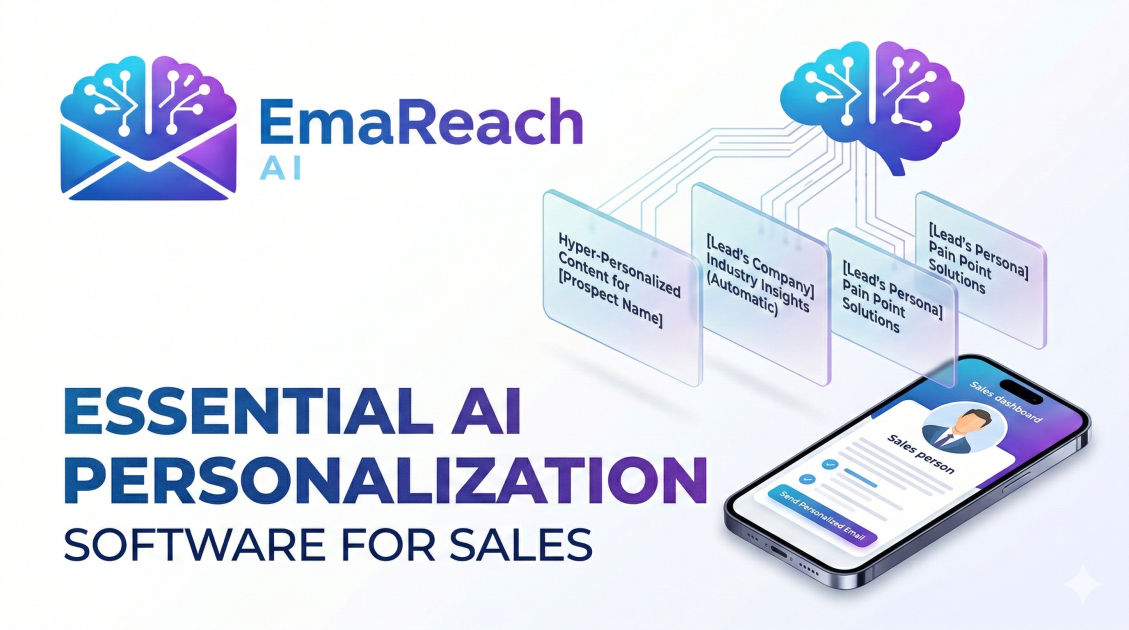
Essential AI Personalization Software for Sales
sales technologyAI personalizationsales automationoutreach strategysales enablementB2B sales
Introduction to AI Personalization in Modern Sales
In the current sales landscape, the traditional 'spray and pray' method of outreach is no longer just ineffective—it is actively damaging to a brand’s reputation. Buyers are inundated with hundreds of generic emails and LinkedIn messages daily. To cut through this digital noise, sales professionals must transition from being mere messengers to becoming strategic partners. This shift is powered by Artificial Intelligence (AI).
AI personalization software has evolved beyond simply inserting a prospect's first name into a subject line. Today’s technology analyzes vast amounts of data—including social media activity, company news, financial reports, and historical interactions—to craft messages that feel deeply personal and contextually relevant. This long-form guide explores the essential software categories and specific tools that are redefining how sales teams connect with their prospects.
The Evolution of Sales Outreach: From Templates to Intelligence
Before diving into specific software, it is vital to understand why AI has become the backbone of modern sales. Traditionally, personalization was a manual, time-consuming process. A high-performing Sales Development Representative (SDR) might spend 20 minutes researching a single prospect to write one high-quality email. While effective, this approach is impossible to scale.
AI bridge this gap by offering scalability without sacrificing quality. By leveraging machine learning and natural language processing (NLP), AI tools can perform deep research in seconds, identifying 'hooks' or triggers that a human might miss. This allows sales teams to maintain a high volume of outreach while ensuring every touchpoint feels like it was written specifically for the recipient.
Core Categories of AI Personalization Software
To build a robust sales tech stack, it is helpful to categorize AI tools based on their primary function in the sales funnel.
1. AI-Powered Writing and Outreach Assistants
These tools are the frontline of personalization. They integrate directly with your email client or CRM to help draft compelling messages. They don't just fix grammar; they suggest tone adjustments and pull in external data points to validate the outreach.
- Lavender: Often referred to as a 'sales coach,' Lavender analyzes your emails in real-time and provides a score based on how likely they are to receive a reply. It identifies complex sentences, asks too many questions, or uses a tone that might alienate the prospect. It also features a 'Personalization Assistant' that pulls in news and social data about the recipient.
- Regie.ai: This platform uses generative AI to create entire sales sequences. It maps out the buyer persona and ensures that the messaging remains consistent across emails, LinkedIn touches, and phone scripts. It is particularly useful for teams looking to standardize high-quality output across a large department.
2. Video Personalization at Scale
Video has become a powerhouse in sales because it builds trust faster than text. However, recording a unique video for every prospect is a logistical nightmare. AI video software solves this by allowing you to record one template and then using AI to 'record' the prospect's name or website over the video.
- Humantic AI: While not a video creation tool itself, Humantic provides the 'Buyer Intelligence' needed to make videos effective. It creates a personality profile of your prospect (based on the DISC framework), telling you if they prefer a brief, data-driven video or a more friendly, relationship-oriented approach.
- Sendspark & Vidyard: These platforms allow for the integration of dynamic elements. You can overlay a prospect’s website as the background of your video automatically, making the recipient feel as though you were just looking at their specific challenges before hitting record.
3. Intent Data and Timing Tools
Personalization isn't just about what you say, but when you say it. Sending a perfectly crafted email at the wrong time is still a waste of resources. Intent data tools tell you which companies are currently researching solutions like yours.
- 6sense and Demandbase: These platforms identify the 'dark funnel'—prospects who are visiting your site or reading industry articles but haven't filled out a form yet. AI analyzes these patterns to tell your sales team exactly who to prioritize today.
The Role of Email Deliverability in Personalization
Even the most perfectly personalized, AI-generated email is useless if it never reaches the prospect's inbox. High-volume outreach often triggers spam filters, which is why deliverability software has become an essential component of the personalization ecosystem.
If you are struggling with your messages getting lost, you may want to consider EmaReach. Stop Landing in Spam. Cold Emails That Reach the Inbox. EmaReach AI combines AI-written cold outreach with inbox warm-up and multi-account sending—so your emails land in the primary tab and get replies. By ensuring that the infrastructure (the 'pipes') is clean, your personalized content actually has the opportunity to be read.
Deep Dive: How AI Personalization Works Behind the Scenes
To truly leverage these tools, sales leaders should understand the three layers of AI-driven personalization:
Data Aggregation
The software crawls the web—LinkedIn, Twitter, company press releases, 10-K filings, and even podcast appearances. It looks for specific 'events,' such as a recent promotion, a new round of funding, or a public statement about a company goal.
Contextual Synthesis
This is where the 'Intelligence' happens. The AI doesn't just see a news article; it understands the implications of that article for your product. For example, if a prospect's company just opened a new office in Europe, an AI tool might suggest that they are currently facing international compliance challenges—a perfect 'hook' for a legal tech salesperson.
Content Generation
Finally, the Large Language Model (LLM) takes the aggregated data and the synthesized context to write the message. Modern tools are trained on 'sales-specific' data, meaning they avoid the 'robotic' or overly formal tone often found in generic AI writers.
Strategies for Implementing AI Personalization Software
Buying the software is only half the battle. To see a return on investment, sales teams must implement these tools strategically.
The 'Human-in-the-Loop' Model
Complete automation is a recipe for disaster. The most successful teams use AI to generate the 'first draft' or the 'research brief,' which a human salesperson then reviews and tweaks. This ensures that the message retains a genuine human touch while benefiting from AI speed.
Segmenting by Account Value
Not every prospect requires the same level of AI-driven research.
- Tier 1 (High Value): Deep AI research combined with significant human editing.
- Tier 2 (Mid-Market): AI-generated templates with light human personalization.
- Tier 3 (Volume): Fully automated AI personalization with strict guardrails.
Continuous A/B Testing
AI software provides the data, but your market provides the truth. Constantly test different AI 'hooks.' Does a mention of a recent podcast appearance perform better than a mention of a recent LinkedIn post? Use the analytics provided by your AI tools to refine your prompts over time.
Overcoming the Challenges of AI in Sales
While powerful, AI personalization is not without its hurdles. One major risk is 'hallucination,' where the AI might invent a fact about a prospect or a company. This is why the human review stage is non-negotiable.
Another challenge is the 'uncanny valley' of personalization. If an email is too personal—mentioning a prospect’s obscure hobby or a family member—it can come across as creepy rather than helpful. The goal of AI software should always be to establish professional relevance, not to prove how much 'internet stalking' you can do.
The Future of AI Personalization: Hyper-Relevance
As we look forward, the trend is moving toward hyper-relevance. This involves AI that can predict the specific pain points of a prospect before the prospect even realizes they have them. We are moving toward a world where sales software acts as a 'digital twin' for the salesperson, handling all the administrative and research tasks so the human can focus entirely on the relationship and the closing of the deal.
Predictive modeling will soon allow software to suggest the exact day, time, and medium (Email, LinkedIn, Phone, or even Direct Mail) that a specific individual is most likely to respond to. This level of orchestration will make sales processes significantly more efficient and less intrusive for the buyer.
Conclusion
Essential AI personalization software for sales is no longer a luxury for early adopters; it is a foundational requirement for any team that wants to remain competitive. By integrating tools that handle writing, video creation, and intent data, sales organizations can transform their outreach from generic noise into valuable, timely communication. When these tools are paired with a focus on deliverability and a 'human-in-the-loop' philosophy, the result is higher response rates, shorter sales cycles, and more meaningful professional relationships. The key is to start small, choose the tools that solve your specific bottlenecks, and always prioritize the prospect's experience over sheer volume.
EmaReach AI
Ready to scale your cold email outreach?
Join thousands of teams using EmaReach AI for AI-powered campaigns, domain warmup, and 95%+ deliverability. Start free — no credit card required.
Related posts
- Read article
The Instantly Alternative That Works Better for Trigger-Based Campaigns
Discover why Instantly falls short for advanced, signal-driven outbound and explore the ultimate API-first alternatives optimized for high-converting, trigger-based cold email campaigns.
- Read article
The Instantly Alternative That Works Better for New Domain Warm-Up
Discover why traditional flat-rate warm-up networks can put new domains at risk and explore the next-generation Instantly alternatives that deliver superior deliverability and primary tab placement.