Blog
Back to blog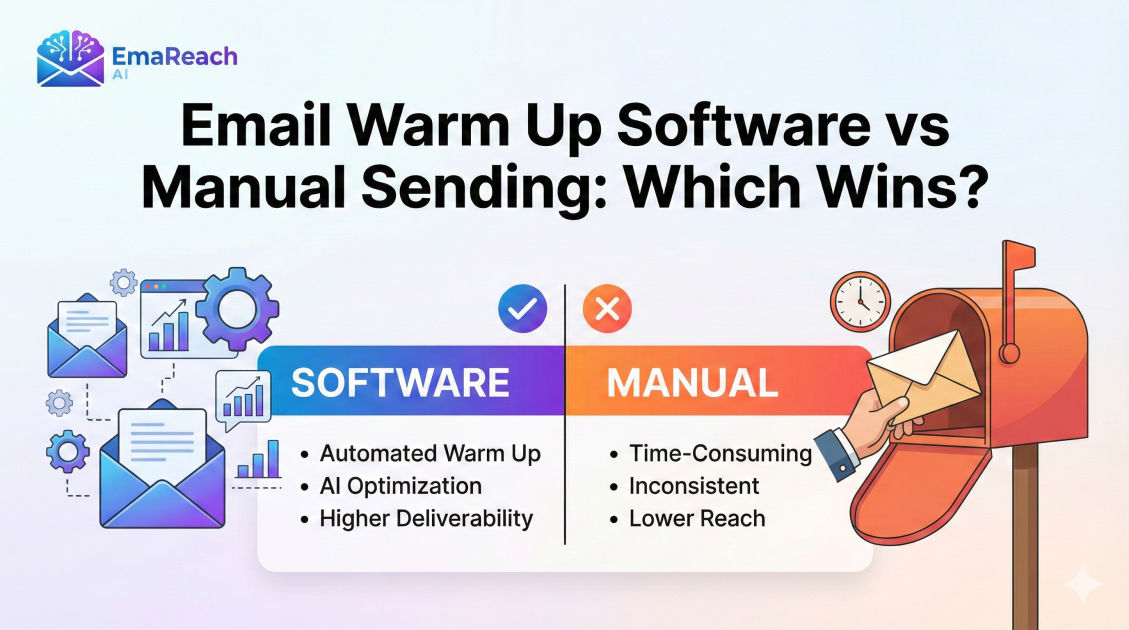
Email Warm Up Software vs Manual Sending: Which Wins?
email deliverabilitycold outreachemail marketingsales automationsender reputationlead generation
Introduction
In the high-stakes world of digital outreach, the difference between a successful campaign and a wasted budget often comes down to a single factor: deliverability. You can have the most persuasive copy, the most targeted lead list, and the most compelling offer, but if your emails land in the spam folder, they effectively do not exist. This is where the concept of 'email warming' becomes critical.
Email warming is the process of gradually increasing the volume of emails sent from a new or dormant email account to build a positive reputation with Internet Service Providers (ISPs) like Google and Microsoft. Without this phase, sudden spikes in outgoing volume trigger red flags, leading to blacklisting or the dreaded 'Promotions' and 'Spam' tabs. The debate, however, lies in the execution. Should you painstakingly warm up your inbox by hand, or should you leverage automated tools to do the heavy lifting? This guide explores the intricate details of email warm up software versus manual sending to determine which method truly wins for your business.
The Anatomy of Email Deliverability
Before diving into the methods, it is essential to understand why warming is necessary. ISPs use sophisticated algorithms to protect their users from spam. These algorithms monitor several key metrics:
- Sender Reputation: A score assigned to your IP and domain based on past behavior.
- Engagement Rates: How often recipients open, reply to, and archive your emails.
- Spam Complaints: The frequency with which users mark your messages as 'Spam.'
- Bounce Rates: The percentage of emails sent to invalid addresses.
When a new domain starts sending hundreds of emails daily, it lacks a historical record. To an ISP, this looks like a compromised account or a new spammer. Warming up mimics natural human behavior, signaling to the ISP that you are a legitimate sender engaged in meaningful communication.
The Manual Method: The Traditional Approach
Manual email warming involves a human operator—typically a founder, a sales representative, or a virtual assistant—sending individual emails to known contacts and engaging in authentic back-and-forth conversations.
How Manual Warming Works
The process starts slow. On day one, you might send five emails to colleagues or friends. You ask them to open the email, click any links, and, most importantly, reply. On day two, you might send ten. By week three, you might be at fifty. During this time, you must also ensure you are monitoring your inbox to respond to any incoming replies, as this interaction is the strongest signal of 'human' activity.
The Benefits of Manual Sending
- Authentic Interaction: Because the emails are written by a person to a person, the engagement is 100% genuine. There are no patterns that an AI or a bot might accidentally replicate.
- Zero Cost (Directly): You do not need to pay for a subscription to a dedicated tool. You simply use the time you already have.
- High-Quality Replies: The replies you receive are from real people with real accounts, which carries significant weight with ISPs.
The Drawbacks of Manual Sending
- Incredible Time Investment: To warm an account properly, you need to spend 30-60 minutes every day for several weeks. For a growing sales team with ten accounts, this becomes a full-time job.
- Scalability Issues: It is nearly impossible to manually warm dozens of accounts simultaneously without a massive team.
- Human Error: It is easy to forget a day or accidentally ramp up volume too quickly, which can set back your progress by weeks.
The Software Method: Automation and Efficiency
Email warm up software automates the entire process. These tools connect to your inbox via API or SMTP/IMAP and interact with a network of other 'warm' inboxes within the software's ecosystem.
How Software Warming Works
Once you connect your account, the software begins sending a controlled number of emails to other users in the pool. These emails are automatically opened, marked as important, and moved out of the spam folder if they land there. The software also generates automated replies to simulate a conversation. This continuous loop of positive engagement builds your sender reputation in the background while you focus on other tasks.
The Benefits of Using Software
- Set It and Forget It: Automation allows you to start the process and let it run. It removes the daily burden of manual sending.
- Unmatched Scalability: Whether you have one account or one hundred, the software handles them with the same level of precision.
- Advanced Analytics: Most tools provide detailed dashboards showing where your emails are landing (Inbox vs. Spam) across different providers.
- Spam Folder Extraction: This is a crucial feature. If a manual email goes to a friend's spam, they might not tell you. Software specifically looks for your emails in the spam folder and moves them to the inbox, which is a powerful signal to ISPs that the content is desired.
The Drawbacks of Using Software
- Cost: Quality warm-up tools require a monthly subscription.
- Pattern Detection: Some lower-tier tools use repetitive 'gibberish' text. Sophisticated ISPs can sometimes detect these bot-like patterns, though modern tools have largely solved this with AI-generated content.
EmaReach: The Modern Solution for Deliverability
When considering the software route, it is vital to choose a platform that understands the nuances of modern filtering. EmaReach (https://www.emareach.com/) is designed for precisely this purpose. It helps businesses Stop Landing in Spam by ensuring Cold Emails Reach the Inbox.
EmaReach AI combines AI-written cold outreach with an integrated inbox warm-up feature and multi-account sending capabilities. By using AI to generate the content, the interactions look and feel natural to ISP algorithms, ensuring your emails land in the primary tab and get actual replies. It bridges the gap between the authenticity of manual sending and the efficiency of automation.
Comparing the Two: Side-by-Side Analysis
| Feature | Manual Sending | Warm Up Software |
|---|---|---|
| Setup Time | High (Ongoing) | Low (One-time) |
| Scalability | Poor | Excellent |
| Reliability | Variable (Human dependent) | High (Algorithm dependent) |
| Cost | High (Opportunity cost) | Low to Medium (Subscription) |
| Engagement Quality | Excellent | Good to Great (with AI) |
| Monitoring | Difficult | Detailed Dashboards |
| Spam Removal | Rare/Manual | Automatic |
The Hidden Costs of Manual Warming
Many businesses choose manual warming because they believe it is "free." However, this overlooks the concept of opportunity cost. If an account executive earning a significant salary spends five hours a week manually sending warm-up emails, the business is effectively paying hundreds of dollars a month for that activity.
Furthermore, manual warming is often inconsistent. A busy week might lead to a pause in sending, which signals to ISPs that the account is erratic. Consistency is the foundation of a good sender reputation, and software never takes a day off.
Why Hybrid Models are Emerging
Some high-growth companies use a hybrid approach. They use software like EmaReach to maintain a baseline of high-volume engagement and reputation, while simultaneously sending a small number of manual emails to high-value partners. This creates a robust "reputation shield." The automated tool handles the heavy lifting of volume and spam-folder extraction, while the manual emails provide the specific, high-context signals that only humans can generate.
The Technical Risks of Poor Warming
If you choose neither—or if you perform manual warming poorly—the technical consequences are severe. Once a domain is blacklisted by major providers like Spamhaus or Barracuda, it is incredibly difficult to recover. You may be forced to purchase a new domain, wait for it to age, and start the entire process over. This can result in months of lost revenue and a complete halt to your outbound sales pipeline.
Key Features to Look for in Warm Up Software
If you decide that software is the winner for your workflow, do not settle for the cheapest option. Look for these specific features to ensure your domain safety:
- AI-Generated Content: Avoid tools that send "Lorem Ipsum" or random strings of characters. The content should look like real business communication.
- Peer-to-Peer Network: The tool should send emails to real, aged inboxes owned by other users, not just a bunch of "dummy" accounts on the same server.
- Adjustable Ramp-up: You should be able to control how quickly the volume increases to match your specific needs.
- Multi-Provider Support: Ensure the tool warms you up across Gmail, Outlook, Zoho, and other major providers.
- Deliverability Insights: A good tool tells you why you are landing in spam, not just that it’s happening.
The Verdict: Which Wins?
For a solo entrepreneur sending five emails a week to a very niche audience, manual sending might be a viable, personal way to start. It builds character and keeps you close to your first few customers.
However, for any business looking to scale, grow its sales pipeline, or maintain a consistent presence in the market, Email Warm Up Software is the clear winner.
The ability to automate the technical reputation-building process allows your team to focus on what actually moves the needle: closing deals and providing value to customers. With the advent of AI-driven platforms like EmaReach, the old argument that "software looks fake" is no longer valid. These tools now simulate human behavior so effectively that they provide a more reliable and consistent reputation boost than manual efforts ever could.
Conclusion
In the competition between manual sending and email warm up software, the winner is determined by your goals. If your goal is professional growth, scalability, and consistent inbox placement, automation is the only logical choice. By leveraging software, you protect your domain's most valuable asset—its reputation—while freeing your team from the mundane task of manual outreach. In the modern landscape of digital communication, don't just work harder; work smarter by using the right tools to ensure your voice is actually heard. Ensuring your cold emails reach the inbox is no longer a luxury; it is a fundamental requirement for business success.
By choosing a sophisticated solution that handles both the writing and the warming, you position your brand as a reliable sender in the eyes of ISPs and a professional partner in the eyes of your prospects.
EmaReach AI
Ready to scale your cold email outreach?
Join thousands of teams using EmaReach AI for AI-powered campaigns, domain warmup, and 95%+ deliverability. Start free — no credit card required.
Related posts
- Read article
The Instantly Alternative That Finally Gets Outbound Analytics Right
Discover why high-volume cold email requires a shift from surface-level vanity metrics to deep, data-driven revenue attribution, and explore the ultimate alternatives for mastering outbound engineering.
- Read article
What You Gain and What You Give Up When Switching From Instantly
Thinking about migrating your cold email stack? This detailed guide breaks down the exact operational advantages you gain and the core features you sacrifice when switching away from Instantly's popular outreach platform.