Blog
Back to blog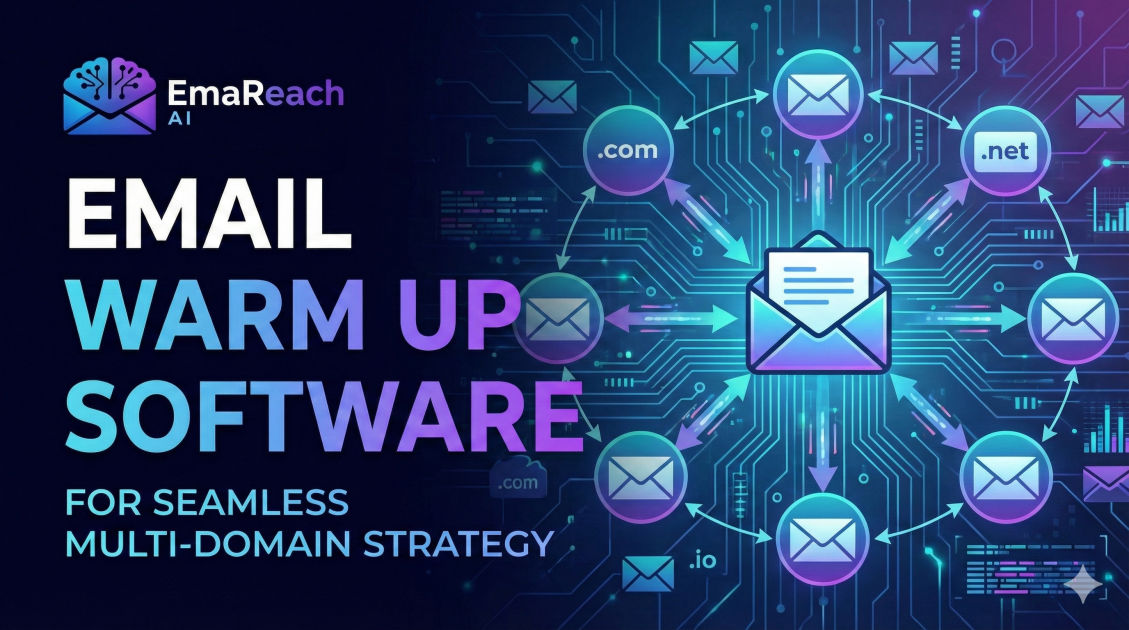
Email Warm Up Software for Seamless Multi-Domain Strategy
email deliverabilitycold outreachemail warm upmulti-domain strategylead generationsales automation
Introduction to Modern Email Deliverability
In the current landscape of digital communication, the success of an outbound sales or marketing campaign isn't measured just by the quality of the copy, but by whether that copy ever reaches the recipient's eyes. As internet service providers (ISPs) and email service providers (ESPs) implement increasingly sophisticated filtering algorithms, the concept of email deliverability has moved from a technical footnote to a core strategic pillar.
For businesses looking to scale their outreach, relying on a single domain is a high-risk strategy. A single spike in spam complaints or a temporary technical glitch can blacklist an entire corporate identity. This has led to the rise of the multi-domain strategy, where outreach is distributed across several secondary domains. However, launching a new domain and immediately sending hundreds of emails is a surefire way to get flagged. This is where email warm up software becomes the essential bridge between a new domain and a high-performance outreach machine.
Understanding the Multi-Domain Strategy
A multi-domain strategy involves purchasing several domains that are variations of your primary brand domain (e.g., using .co, .io, or .net extensions) specifically for outbound activities. This approach offers several layers of protection:
- Risk Mitigation: If one domain's reputation takes a hit, your primary business operations remain unaffected.
- Increased Volume: Sending limits are per-account and per-domain. More domains mean higher aggregate daily volume without over-leveraging a single IP.
- A/B Testing at Scale: Different domains can be used to test different niches or messaging styles without cross-contaminating data.
However, the challenge with this strategy is the "cold start" problem. A brand-new domain has no reputation. To an ISP like Google or Microsoft, a new domain sending 50 emails a day looks exactly like a bot. You must prove your legitimacy through a process of gradual engagement.
The Role of Email Warm Up Software
Email warm up software automates the process of building a positive sender reputation. It simulates human-like interaction by sending emails from your new accounts to a network of other accounts within the software's ecosystem.
These interactions aren't just one-way. The software ensures that the receiving accounts open the emails, mark them as important, and reply to them. If an email happens to land in a spam folder during this phase, the software automatically moves it to the primary inbox, signaling to the ISP that the sender is trustworthy.
For those looking for a comprehensive solution that handles both the technical hurdles and the creative demands of outreach, EmaReach (https://www.emareach.com/) provides an integrated platform. It ensures you stop landing in spam by combining AI-written cold outreach with automated inbox warm up and multi-account sending, allowing your emails to land in the primary tab where they get replies.
Why Manual Warm Up is No Longer Viable
In the early days of cold email, some practitioners attempted manual warm up—sending a few emails to friends and colleagues and asking for replies. While this technically works, it is impossible to scale for a multi-domain strategy.
- Volume Requirements: A proper warm up requires dozens of interactions daily across various ESPs (Gmail, Outlook, Zoho, etc.).
- Consistency: Reputation is built on consistent, long-term patterns. Missing a few days of manual emailing can reset your progress.
- Complexity of Interaction: ISPs look for more than just a "send." They look for reply threads, archival actions, and marking as "not spam."
Automated software handles these nuances 24/7, allowing the business owner to focus on closing deals rather than managing inbox logistics.
Key Features of High-End Warm Up Tools
When evaluating software for a multi-domain strategy, certain features are non-negotiable for ensuring long-term success:
1. Peer-to-Peer Network
Top-tier tools use a network of real, aged email accounts. Avoid tools that use "fake" or bot-generated addresses, as ISPs can often identify these clusters and penalize the accounts interacting with them.
2. Smart Frequency and Randomization
Human behavior is unpredictable. If an account sends exactly 5 emails every hour at the same minute, it triggers a red flag. Sophisticated software uses randomized sending schedules to mimic human patterns.
3. ESP Diversity
You want your warm up interactions to happen across different providers. If you only interact with Gmail accounts, your reputation with Outlook may remain low. A good tool provides a balanced mix of recipient servers.
4. Detailed Analytics
You need a dashboard that shows exactly where your emails are landing. If the software shows a sudden dip in the "Inboxed" percentage, you know there is a technical issue to address before you start your actual sales campaign.
Technical Foundations: Beyond the Software
While the software handles the engagement, the technical setup of your domains must be flawless. Email warm up software cannot fix a domain that is fundamentally misconfigured. Before starting the warm up process on your multiple domains, ensure the following records are set up:
- SPF (Sender Policy Framework): Specifies which mail servers are authorized to send email on behalf of your domain.
- DKIM (DomainKeys Identified Mail): Adds a digital signature to your emails, proving they weren't altered in transit.
- DMARC (Domain-based Message Authentication, Reporting, and Conformance): Tells receiving servers what to do if an email fails SPF or DKIM checks.
Once these are in place, the warm up software can effectively build on a solid foundation.
Crafting a Multi-Domain Schedule
A seamless strategy requires a staggered approach. You shouldn't buy ten domains and start them all on the same day. Instead, consider a rolling launch:
- Week 1: Set up Domain A and B. Start warm up at a very low volume (2-5 emails/day).
- Week 2: Increase Domain A and B to 10 emails/day. Setup Domain C and D.
- Week 3: Domain A and B reach 20 emails/day. Domain C and D move to 10 emails/day.
By the time you are ready to send your first actual outreach campaign from Domain A, it has a history of perfect deliverability. This "conveyor belt" approach ensures a steady stream of healthy accounts is always available for your sales team.
The Psychology of the Inbox: Content During Warm Up
Modern warm up software uses AI to generate realistic-looking email content. This is crucial because ISPs perform Deep Content Inspection. If a thousand warm up emails all have the same subject line like "Test 123," they will be flagged as a footprint.
Advanced tools generate varied, contextually relevant conversations. This not only builds reputation but also helps in "training" the spam filters to recognize your specific sending style as legitimate. This is another area where EmaReach excels, as it leverages AI to ensure that the content being sent—whether for warm up or actual outreach—is high-quality and avoids the common triggers that lead to the spam folder.
Managing Reputation in the Long Term
Warm up is not a one-time event; it is an ongoing process. Even after a domain is "ready" for outreach, you should keep the warm up software running in the background. This is known as "Maintenance Mode."
In a real-world scenario, you will occasionally receive a spam complaint from a grumpy prospect. These negative signals can damage your reputation. By keeping the warm up software active, you provide a constant stream of positive signals (opens and replies) that counteract the occasional negative signal. This creates a "buffer" that keeps your deliverability stable over months of heavy use.
Common Pitfalls to Avoid
Even with the best software, a multi-domain strategy can fail if these common mistakes are made:
- Over-sending: The most common mistake is impatience. Trying to send 100 emails a day from a two-week-old domain will almost always lead to a ban.
- Poor List Hygiene: If your actual outreach list has a high bounce rate (above 3%), it will destroy the reputation you spent weeks building with the warm up software. Always verify your leads.
- Ignoring the Primary Domain: Never use your primary company domain for cold outreach. If it gets blacklisted, your internal team won't be able to email each other, and your transactional emails (like password resets) will fail.
- Identical Tracking Links: If you use the same custom tracking domain across 20 different sending domains, you create a link between them that ISPs can follow. Use unique tracking domains or no tracking at all for the best results.
The ROI of Deliverability
Investing in email warm up software for a multi-domain strategy may seem like a high overhead, but the return on investment (ROI) is significant. Consider the math of a typical campaign:
- Without Warm Up: 1,000 emails sent. 20% land in spam. 800 reached. 2% reply rate = 16 leads.
- With Professional Warm Up: 1,000 emails sent. 98% land in the primary tab. 980 reached. 2% reply rate = 19.6 leads.
A nearly 25% increase in leads from the same amount of effort simply by ensuring the emails are seen. When scaled across multiple domains sending thousands of emails a month, the difference in revenue is staggering.
Future-Proofing Your Strategy
As AI continues to evolve, so will the filters used by ISPs. We are moving toward a world where "sender intent" is analyzed more deeply than ever before. This means that the quality of your interactions during the warm up phase matters more than the quantity.
Future-proof strategies will focus on deep integration—where the warm up tool, the lead finder, and the AI copywriter all talk to each other to ensure a cohesive, human-like presence across the web. Platforms that offer this unified approach allow businesses to remain agile as the rules of the game change.
Conclusion
Implementing an email warm up software within a multi-domain strategy is no longer a luxury for elite growth hackers; it is a fundamental requirement for any business that relies on digital outreach. By automating the reputation-building process, you remove the guesswork from deliverability and create a scalable, resilient system for generating growth.
Whether you are a solo founder or a large sales organization, the goal remains the same: ensuring your message reaches the human on the other side of the screen. By respecting the technical requirements of the inbox and using the right tools to navigate them, you turn email from a game of chance into a reliable science.
EmaReach AI
Ready to scale your cold email outreach?
Join thousands of teams using EmaReach AI for AI-powered campaigns, domain warmup, and 95%+ deliverability. Start free — no credit card required.
Related posts
- Read article
The Instantly Alternative That Finally Gets Outbound Analytics Right
Discover why high-volume cold email requires a shift from surface-level vanity metrics to deep, data-driven revenue attribution, and explore the ultimate alternatives for mastering outbound engineering.
- Read article
What You Gain and What You Give Up When Switching From Instantly
Thinking about migrating your cold email stack? This detailed guide breaks down the exact operational advantages you gain and the core features you sacrifice when switching away from Instantly's popular outreach platform.