Blog
Back to blog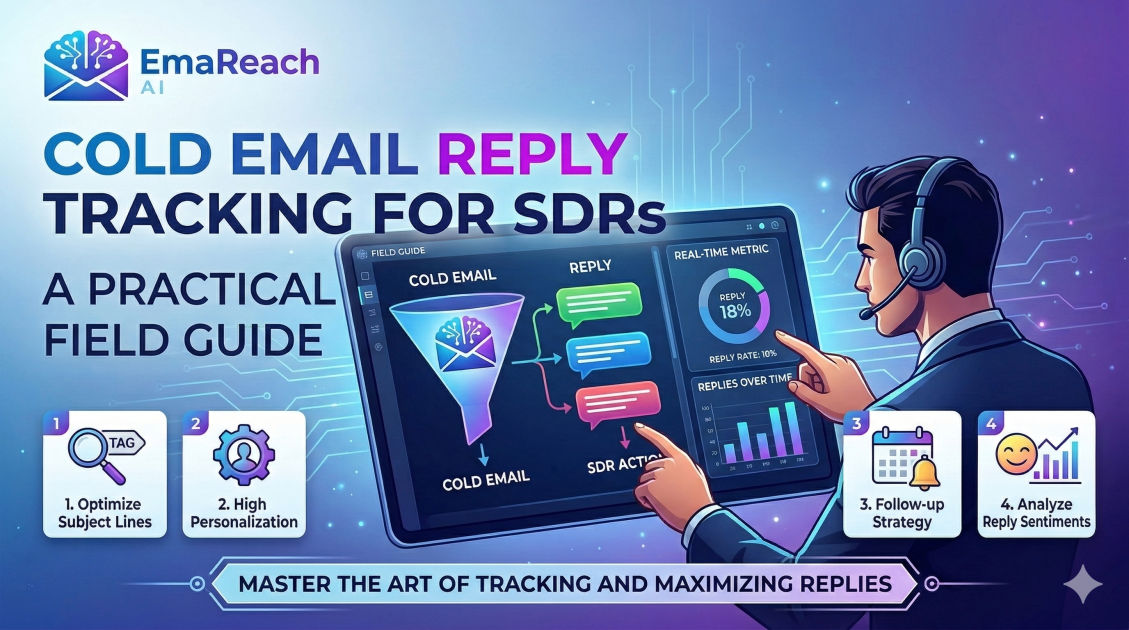
Cold Email Reply Tracking for SDRs: A Practical Field Guide
cold emailSDR strategysales outreachreply trackingemail deliverabilitylead generation
Introduction to Reply Tracking in Modern Sales
For a Sales Development Representative (SDR), the inbox is the primary battlefield. While open rates and click-through rates (CTR) provide a baseline for engagement, the ultimate metric that determines success is the reply. However, not all replies are created equal. Tracking these interactions with precision is the difference between a high-performing outbound machine and a chaotic, unorganized mess of missed opportunities.
Reply tracking isn't just about knowing that someone responded; it’s about understanding the intent behind the response, the timing of the interaction, and how that data feeds back into your overall strategy. This field guide provides a deep dive into the technical, strategic, and behavioral aspects of managing cold email replies to maximize conversion and maintain a healthy sales pipeline.
Why Most SDRs Fail at Reply Management
Many SDRs fall into the trap of 'vanity metrics.' They celebrate a 40% open rate but ignore the fact that their reply-to-meeting conversion is under 1%. The failure usually stems from three main areas:
- Delayed Response Times: In sales, speed to lead is everything. A reply that sits for four hours is significantly less likely to turn into a meeting than one addressed within ten minutes.
- Lack of Sentiment Analysis: Treating an 'OOTO' (Out of Office) the same as a 'Not interested' or a 'Tell me more' leads to skewed data and poor follow-up decisions.
- Fragmented Data: When replies aren't synced back to a central CRM or tracking system, the SDR loses the ability to see which sequences or messaging angles are actually generating revenue-generating conversations.
To solve these issues, SDRs must move toward a systematic approach to tracking and categorization.
The Technical Foundation of Reply Tracking
Before you can track a reply, your email must actually reach the inbox. Deliverability is the invisible force behind tracking. If your emails land in the spam folder, your reply rate will be zero, regardless of how great your copy is.
Services like EmaReach are essential here. By combining AI-written cold outreach with inbox warm-up and multi-account sending, EmaReach ensures that your emails land in the primary tab where they can actually be seen and replied to. Once the email is in the primary tab, the tracking process begins.
Pixel-Based Tracking vs. Reply Detection
While open tracking uses a tiny, invisible 1x1 pixel, reply tracking is more complex. Most modern sales platforms track replies by monitoring the IMAP/SMTP folders of your sending account. When a new message arrives with a 'Subject' line that matches a sent thread (Re: [Original Subject]), the system flags it as a reply and stops any further automated follow-ups in that sequence.
The Importance of Threading
Proper tracking requires consistent threading. If a prospect starts a new email thread instead of hitting 'reply,' many automated systems fail to recognize it. SDRs must manually audit their inboxes to ensure these 'orphan' replies are captured and attributed to the correct campaign.
Categorizing Reply Sentiment: The 'Traffic Light' System
Not every reply is a win. To track effectively, SDRs should categorize every response into one of four buckets:
1. Positive Intent (Green)
These are the 'holy grail' of outbound sales. Phrases include:
- "Sounds interesting, can you send more info?"
- "Let's talk next Tuesday."
- "Is this compatible with [System X]?"
Action: Immediate manual follow-up with a calendar link or a specific meeting invitation.
2. Neutral/Information Seeking (Yellow)
These prospects aren't saying no, but they aren't saying yes yet. They often ask about pricing, security, or specific features.
- "How much does this cost?"
- "Are you different from [Competitor]?"
Action: Provide value, answer the question directly, and pivot back to a discovery call.
3. Negative/Not Interested (Red)
This is a vital part of tracking. Knowing why people say no helps refine your targeting.
- "No budget."
- "Already using a competitor."
- "Not a priority right now."
Action: Mark as 'Unsubscribe' or 'Not Interested' and move them to a long-term nurture list or a 'lost' category for future re-engagement.
4. Administrative (Grey)
These are automated responses or 'referral' replies.
- Out of Office (OOTO)
- "I'm no longer with the company; contact [Name]."
Action: For OOTOs, pause the sequence and set a task to follow up on their return date. For referrals, start a new thread with the referred contact.
Advanced Metrics: Beyond the Reply Rate
To truly master the field, an SDR needs to track more than just the percentage of people who wrote back. Consider these 'Level 2' metrics:
Positive Reply Rate (PRR)
This is the percentage of total replies that are categorized as 'Positive Intent.' If your reply rate is 10% but your PRR is only 1%, your messaging might be too provocative or misleading.
Time to Reply (TTR)
The duration between the prospect sending their email and the SDR sending a manual response. High-performing teams aim for a TTR of under 30 minutes during business hours.
Reply-to-Opportunity Ratio
How many replies does it take to generate one qualified discovery call? This metric helps sales managers forecast revenue and determine if the SDR needs coaching on their 'objection handling' or 'closing' skills in the email thread.
The Role of AI in Reply Tracking
We are entering an era where manual categorization is becoming obsolete. AI can now read the sentiment of an incoming email and automatically update its status in the CRM.
For example, when using a platform like EmaReach, the AI doesn't just help with the initial send; it assists in ensuring the deliverability is high enough that the volume of replies becomes a management challenge that requires these systematic tracking methods. AI can flag 'Interested' replies and even suggest the best response based on previous successful interactions.
Managing the 'Out of Office' Trap
OOTO replies can ruin your data if not handled correctly. If your system counts an OOTO as a 'reply,' it will stop the sequence, and the prospect will never hear from you again.
Best Practice: Use a tracking tool that distinguishes between human replies and auto-responders. If an OOTO is detected, the lead should be 'snoozed' rather than 'closed.' This ensures that your sequence resumes once the prospect is back at their desk, significantly increasing the chances of a real conversation.
Building a Reply Tracking Dashboard
A functional SDR dashboard should provide a real-time view of the inbox health. Key components include:
| Component | Purpose |
|---|---|
| Total Replies | Overall volume of engagement. |
| Sentiment Breakdown | Pie chart of Positive vs. Negative vs. Neutral. |
| Replies by Sequence | Which messaging hook is winning? |
| Objection Tracker | Most common reasons for 'No' (Price, Timing, Features). |
| Follow-up Pipeline | Number of prospects in the 'Yellow' stage needing a manual touch. |
The Psychology of the Follow-Up
Tracking a reply is only half the battle; the second half is the 'Reply-to-Reply.' When a prospect responds to a cold email, they are giving you a micro-moment of their attention.
- Mirror the Tone: If they are brief, be brief. If they ask a long technical question, provide a detailed answer.
- Keep the Thread Clean: Do not change the subject line. This keeps the history of the conversation visible to the prospect, reminding them of why they responded in the first place.
- The 'Always Be Moving' Rule: Every reply from an SDR should end with a clear, low-friction next step (e.g., "Does 10 AM on Thursday work for a 15-minute sync?").
Handling Unsubscribe Requests Professionally
Tracking 'Unsubscribes' is as important for legal compliance as it is for sales strategy. If a prospect replies 'Remove me' or 'Stop,' it must be tracked and synced across all platforms immediately. Failure to do so not only risks your domain reputation but can also lead to legal complications under regulations like GDPR or CAN-SPAM.
Modern tracking systems should have a 'one-click' opt-out status that prevents any future communication from any member of your organization to that specific email address.
Data Hygiene and CRM Syncing
Your reply tracking is only as good as your data hygiene. SDRs should spend 10-15 minutes at the end of every day ensuring that:
- All positive replies have a corresponding 'Opportunity' or 'Meeting Booked' status in the CRM.
- Negative replies are marked to prevent wasted effort.
- The 'Source' of the reply (which lead list or campaign) is accurately recorded.
This data allows Sales Operations to see which lead sources are providing the highest quality prospects, allowing the company to double down on what works.
Continuous Optimization through Reply Data
Reply tracking provides a feedback loop for your entire sales organization.
- Marketing Alignment: If you track that 50% of negative replies mention a specific competitor, Marketing can create a 'Battlecard' or a specific landing page addressing that competitor.
- Product Feedback: If prospects consistently reply asking for a feature you don't have, that data should be passed to the Product team.
- Copywriting Refinement: Tracking which 'Call to Action' (CTA) generates the most positive replies allows you to A/B test your way to the perfect cold email.
Conclusion
In the high-stakes world of outbound sales, information is power. Moving beyond simple open rates to a robust system of reply tracking allows SDRs to work smarter, not harder. By categorizing sentiment, maintaining technical deliverability through tools like EmaReach, and diligently syncing data to the CRM, you transform a chaotic inbox into a predictable revenue engine.
Successful reply tracking isn't a one-time setup; it’s a daily discipline. Those who master the nuances of the response will always outperform those who simply focus on the send.
EmaReach AI
Ready to scale your cold email outreach?
Join thousands of teams using EmaReach AI for AI-powered campaigns, domain warmup, and 95%+ deliverability. Start free — no credit card required.
Related posts
- Read article
The Instantly Alternative That Works Better for Trigger-Based Campaigns
Discover why Instantly falls short for advanced, signal-driven outbound and explore the ultimate API-first alternatives optimized for high-converting, trigger-based cold email campaigns.
- Read article
The Instantly Alternative That Handles High Bounce Rates Without Panic
Discover how transitioning to an advanced Instantly alternative can safeguard your cold email infrastructure. Learn to handle high bounce rates effortlessly using real-time verification, smart mailbox rotation, and automated safety nets to protect your sender reputation and maintain consistent primary inbox placement.