Blog
Back to blog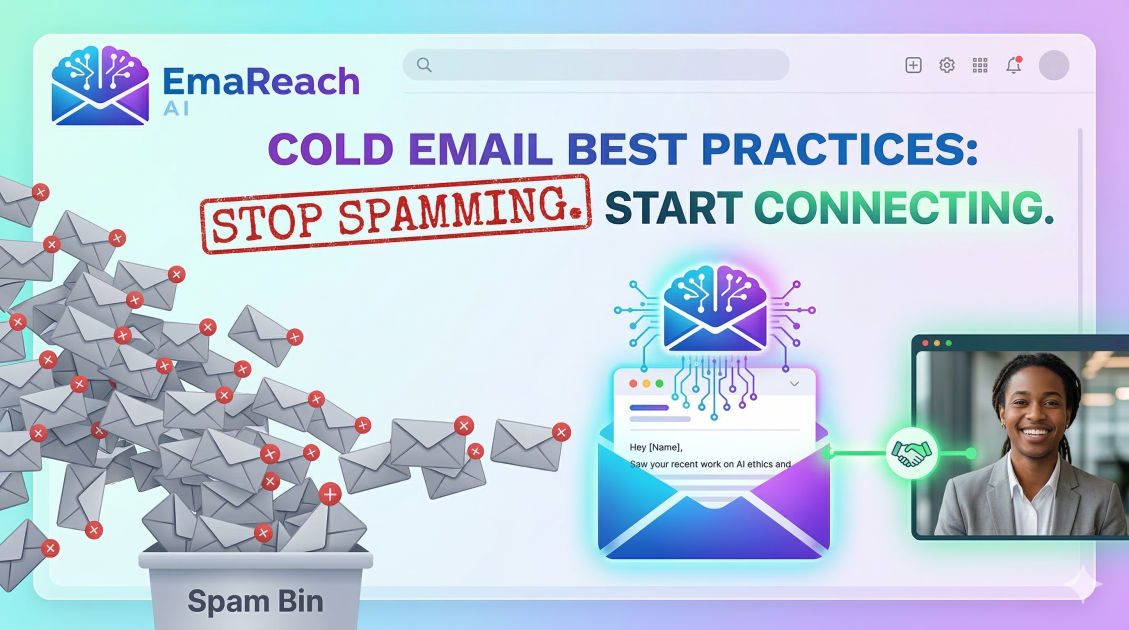
Cold Email Best Practices: Stop Spamming and Start Connecting
cold emailoutreach strategyemail marketingdeliverabilitylead generationsales tips
Introduction: The Evolution of Cold Outreach
For years, cold emailing has been unfairly maligned as a digital nuisance. To the uninitiated, it’s synonymous with spam—unsolicited, irrelevant, and annoying messages cluttering an already overflowing inbox. However, when executed with precision, empathy, and technical intelligence, cold email remains one of the most powerful levers for business growth.
The difference between a spammer and a successful connector lies in their philosophy. Spammers play a numbers game, hoping that a 0.1% conversion rate on a list of ten thousand will yield results. Strategic connectors play a relevance game, focusing on high-quality interactions that provide genuine value to the recipient.
In this guide, we will explore the comprehensive best practices that transform cold outreach from a shot in the dark into a predictable engine for relationship building and revenue generation.
The Psychology of the Inbox
To master cold email, you must first understand the environment you are entering. The modern professional’s inbox is a battlefield. Between internal communications, project updates, and automated notifications, the average executive receives over 100 emails per day.
When your email arrives, the recipient’s brain performs a lightning-fast triaging process. They are looking for reasons to delete your message, not reasons to read it. To survive this initial cull, your email must feel personal, urgent, and safe. If it looks like a marketing blast, it’s gone. If it feels like a manual, one-to-one note from a peer, you’ve won the first battle.
Technical Foundations: Ensuring Deliverability
Before you write a single word of copy, you must ensure your technical infrastructure is airtight. You could write the most compelling email in history, but it means nothing if it lands in the spam folder.
Authentication Protocols
There are three critical records you must configure in your DNS settings:
- SPF (Sender Policy Framework): This specifies which mail servers are authorized to send email on behalf of your domain.
- DKIM (DomainKeys Identified Mail): This adds a digital signature to your emails, proving they weren't altered in transit.
- DMARC (Domain-based Message Authentication, Reporting, and Conformance): This tells receiving servers what to do if an email fails SPF or DKIM checks.
Domain Reputation and Warm-up
Sending hundreds of emails from a brand-new domain is a guaranteed way to get blacklisted. You must gradually "warm up" your inbox by sending small volumes of mail and increasing the count over several weeks.
For those looking to streamline this process, EmaReach offers a sophisticated solution. Stop Landing in Spam. Cold Emails That Reach the Inbox. EmaReach AI combines AI-written cold outreach with inbox warm-up and multi-account sending—so your emails land in the primary tab and get replies. This ensures that your technical reputation remains pristine while you focus on strategy.
The Art of the Subject Line
Your subject line has one job: to get the email opened. It is not the place to pitch your product or use clickbait. The best subject lines are often short, informal, and pique curiosity without being deceptive.
Patterns of Successful Subject Lines
- The Specific Question: "Question about [Company Name]'s [Department] strategy?"
- The Mutual Connection: "[Mutual Connection] suggested we chat"
- The Observation: "Loved your recent post on [Topic]"
- The Minimalist approach: "Meeting?" or "Quick question"
Avoid all-caps, excessive punctuation (!!!), and "spammy" trigger words like "Free," "Guarantee," or "Urgent." These are red flags for both humans and spam filters.
Crafting the Perfect Opening Line
The opening line is the most important part of the email body. Most people waste this space by introducing themselves ("My name is John and I work for...").
Instead, use the opening line to prove you've done your homework. Mention a recent podcast the recipient appeared on, a specific milestone their company reached, or a challenge their industry is facing. This is called "hyper-personalization." It signals to the recipient that this email was written specifically for them, which immediately lowers their defenses.
The Value Proposition: Solving, Not Selling
Once you’ve established rapport, you need to transition to your "why." However, this is where many people fail by listing features. Prospects don't care about your features; they care about their problems.
Your value proposition should follow a simple formula: [Problem] + [Insight] + [Outcome].
Instead of saying, "We offer a cloud-based CRM," try: "I noticed your team is expanding rapidly, which often makes lead tracking difficult. We’ve helped similar companies reduce lead leakage by 30% through automated workflow synchronization."
The Call to Action (CTA): Lowering the Friction
The biggest mistake in cold email CTAs is asking for too much too soon. A 30-minute demo is a massive commitment for someone who doesn't know you.
Instead, aim for a "low-friction" CTA. Your goal is to get a reply, not a sale. Examples of low-friction CTAs include:
- "Is this something you’re currently prioritizing?"
- "Would it be okay if I sent over a short video explaining how this works?"
- "Are you the right person to speak with regarding [Topic]?"
By asking for a simple 'yes' or 'no' or offering to send more value, you make it easy for the prospect to engage.
The Power of the Follow-Up
Statistically, the majority of conversions happen between the 4th and 7th touchpoint. Most people stop after one or two emails, leaving a massive amount of opportunity on the table.
However, there is a fine line between persistent and pests. A good follow-up sequence should follow these rules:
- Add Value: Don't just "circle back" or "bump this to the top of your inbox." Send a relevant article, a case study, or a new insight in each follow-up.
- Space It Out: Use a sequence like Day 1, Day 3, Day 7, Day 14, and Day 30.
- The Break-up Email: Your final email should politely inform the prospect that you’ll stop reaching out. Interestingly, this often has the highest reply rate because it triggers a sense of loss or reminds the prospect they intended to reply.
List Building and Segmentation
A cold email campaign is only as good as the list it’s sent to. Buying generic lists is a recipe for high bounce rates and spam reports. Instead, build your lists based on specific triggers and personas.
Ideal Customer Profile (ICP)
Define exactly who you are looking for. What is their job title? What industry are they in? What size is their company? What technology are they currently using?
Once you have your ICP, segment your list into smaller micro-segments. An email sent to a "VP of Marketing at a SaaS startup" should look very different from an email sent to a "Marketing Director at a Fortune 500 manufacturing firm."
Compliance and Ethics
Staying compliant with regulations like GDPR (Europe), CAN-SPAM (USA), and CASL (Canada) is not just a legal requirement—it’s a best practice for maintaining a professional reputation.
- Include an Unsubscribe Option: Always provide a clear way for people to opt-out.
- Include Your Physical Address: Most regulations require a physical business address in the footer.
- Have a Legitimate Interest: Under GDPR, you must be able to prove that your outreach is relevant to the recipient's professional role.
Measuring Success Beyond Open Rates
While open rates and click-through rates (CTR) are common metrics, they can be misleading. High open rates might just mean you have a clickbait subject line. The only metrics that truly matter in cold outreach are:
- Positive Reply Rate: How many people responded with interest?
- Meeting Booked Rate: How many emails converted into actual conversations?
- Revenue Generated: What is the ROI of the campaign?
Common Pitfalls to Avoid
To ensure your outreach remains effective, avoid these common traps:
- Writing a Novel: Keep your emails under 150 words. Respect the recipient's time.
- Using Too Many Links: Multiple links can trigger spam filters and distract the reader. Stick to one link or none at all.
- The "Me, Me, Me" Syndrome: If your email contains more "I"s and "We"s than "You"s, rewrite it.
- Neglecting Mobile Users: Over 50% of emails are opened on mobile devices. Ensure your formatting is clean and your sentences are short for easy reading on small screens.
Conclusion: Building Bridges, Not Walls
At its core, cold emailing is about human connection. It is the digital equivalent of walking up to someone at a conference and introducing yourself. When you lead with value, respect the recipient's time, and maintain a high standard of technical excellence, cold email ceases to be spam and becomes a powerful bridge to new opportunities.
Success doesn't happen overnight. It requires constant testing of subject lines, refining of value propositions, and a relentless focus on the needs of your prospects. By shifting your mindset from "sending to a list" to "starting a conversation," you will find that the inbox is not a barrier, but a gateway to growth. Focus on being the person someone is glad they met in their inbox today.
EmaReach AI
Ready to scale your cold email outreach?
Join thousands of teams using EmaReach AI for AI-powered campaigns, domain warmup, and 95%+ deliverability. Start free — no credit card required.
Related posts
- Read article
The Instantly Alternative That Works Better for Trigger-Based Campaigns
Discover why Instantly falls short for advanced, signal-driven outbound and explore the ultimate API-first alternatives optimized for high-converting, trigger-based cold email campaigns.
- Read article
The Instantly Alternative That Handles High Bounce Rates Without Panic
Discover how transitioning to an advanced Instantly alternative can safeguard your cold email infrastructure. Learn to handle high bounce rates effortlessly using real-time verification, smart mailbox rotation, and automated safety nets to protect your sender reputation and maintain consistent primary inbox placement.