Blog
Back to blog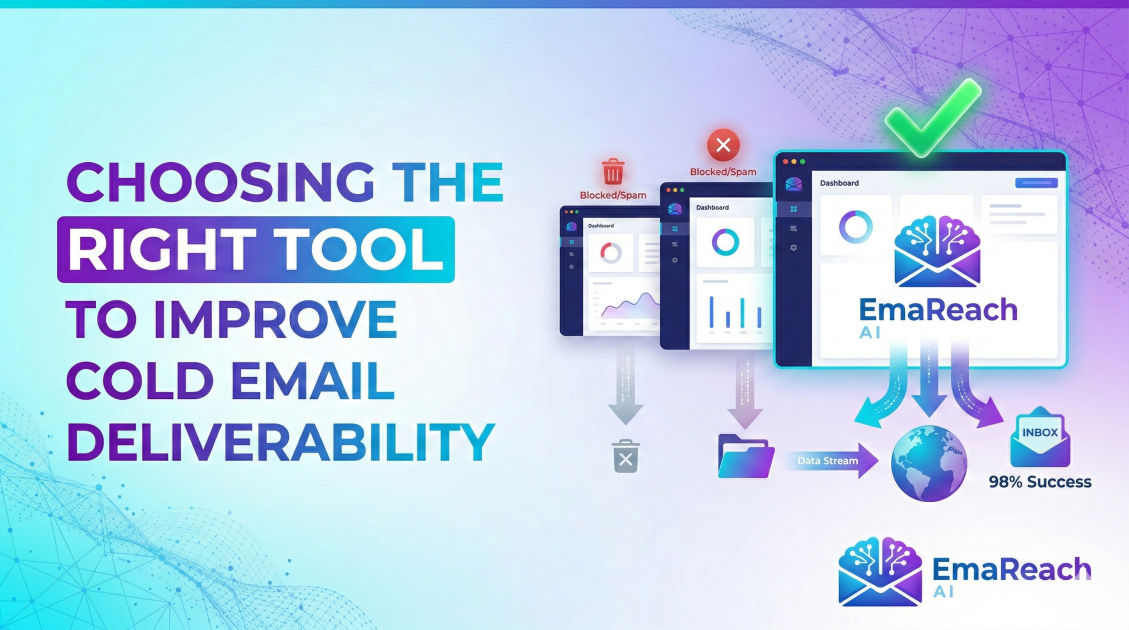
Choosing the Right Tool to Improve Cold Email Deliverability
cold emaildeliverabilityemail outreachsales automationinbox placementB2B sales
Introduction
In the competitive landscape of outbound sales and marketing, crafting the perfect pitch is only half the battle. The most persuasive, meticulously researched cold email is entirely useless if it never reaches the prospect's primary inbox. Email deliverability—the measure of an email's ability to successfully land in a recipient's inbox without being flagged as spam or blocked entirely—is the foundational pillar of any successful outreach campaign.
Many businesses pour vast resources into copywriting and prospect research, only to see dismal open rates. Often, the culprit is not the message itself, but a compromised sender reputation, improper technical configurations, or a lack of proper email warm-up. As email service providers continue to tighten their security protocols and spam filters become increasingly sophisticated, relying on manual best practices is no longer sufficient.
Navigating this complex environment requires robust technology. Choosing the right tool to improve cold email deliverability is a critical strategic decision that dictates the ROI of your entire outbound operation. This comprehensive guide explores the mechanics of email deliverability, the essential features to look for in a deliverability tool, and how to select the perfect platform to ensure your messages are consistently seen, opened, and answered.
Understanding the Mechanics of Cold Email Deliverability
Before evaluating software solutions, it is crucial to understand the underlying mechanics of how emails are processed, filtered, and delivered. Deliverability is not a simple toggle switch; it is a dynamic score calculated by email service providers based on dozens of variables.
Delivery Rate vs. Deliverability
These two terms are frequently confused but represent entirely different metrics. The delivery rate simply measures whether an email successfully reached the receiving server without bouncing. If you send an email and it does not result in a hard bounce, it is considered "delivered."
Deliverability, however, concerns inbox placement. An email can be successfully delivered to the receiving server but immediately routed to the spam folder, the promotional tab, or even a hidden quarantine folder. High delivery rates are easy to achieve; high deliverability requires constant vigilance and the right technological infrastructure.
The Role of Sender Reputation
Email service providers assign a reputation score to both your sending domain and your IP address. This score acts as a digital credit rating. If you have a high sender reputation, providers trust your messages and route them to the primary inbox. If your reputation is low, your emails are penalized.
Factors that positively influence your reputation include high open rates, frequent replies, and recipients explicitly marking your emails as "not spam." Conversely, factors that damage your reputation include high bounce rates, low engagement, recipients marking your emails as spam, and hitting spam traps.
Essential Technical Foundations for Inbox Placement
No deliverability tool can save a domain that lacks the proper technical foundations. The right software will either help you configure these settings or require them to be in place before you begin sending. These are the three pillars of email authentication:
SPF (Sender Policy Framework)
SPF is a DNS record that acts as a public guest list for your domain. It explicitly lists the IP addresses and mail servers that are authorized to send emails on behalf of your domain. When a receiving server gets an email from you, it checks your domain's SPF record. If the server sending the email is not on the list, the email is treated with high suspicion and likely flagged as spam.
DKIM (DomainKeys Identified Mail)
DKIM adds a cryptographic signature to your emails. This signature ensures that the email content has not been altered in transit between the sender and the receiver. It provides a layer of trust, verifying that the email genuinely originated from your domain and remains intact.
DMARC (Domain-based Message Authentication, Reporting, and Conformance)
DMARC ties SPF and DKIM together. It is a policy that tells receiving servers exactly what to do if an email fails SPF or DKIM checks. A strict DMARC policy prevents malicious actors from spoofing your domain, protecting your brand reputation and ensuring that email service providers trust your legitimate outreach.
Must-Have Features in a Deliverability Tool
When evaluating the market for deliverability solutions, certain features are non-negotiable for modern cold outreach. The best tools offer a holistic approach, addressing everything from technical setup to ongoing reputation management.
1. Automated Email Warm-Up Networks
When you purchase a new domain or create a new email address, it has a neutral reputation. Sending a high volume of cold emails from a fresh domain is the fastest way to trigger spam filters. The domain must be "warmed up" by gradually increasing the sending volume over several weeks while generating positive engagement.
Modern deliverability tools utilize automated peer-to-peer warm-up networks. These networks consist of thousands of real email accounts interacting with each other. The tool will automatically send emails from your account to others in the network, open them, mark them as important, remove them from the spam folder if necessary, and generate realistic replies. This artificial positive engagement signals to email service providers that your domain is trustworthy, rapidly building your sender reputation before you launch your actual campaigns.
2. Multi-Account Inbox Rotation
Sending hundreds of emails daily from a single inbox is a high-risk strategy. Email service providers strictly monitor sending velocity and volume. To scale outreach safely, professionals use a strategy called horizontal scaling, which involves spreading the sending volume across multiple domains and inboxes.
An effective deliverability tool must support seamless inbox rotation. Instead of sending 500 emails from one address, the tool should allow you to connect ten different inboxes and automatically distribute the load, sending 50 emails from each. This keeps your volume per inbox well below the radar of spam filters while allowing you to reach a large audience.
3. Integrated Email List Verification
High bounce rates are toxic to your sender reputation. If you repeatedly send emails to invalid or non-existent addresses, providers will assume you are a spammer using scraped, low-quality data.
A robust tool should include or integrate seamlessly with an email verification service. This feature checks the validity of every email address on your prospect list before a single message is sent. It checks for proper syntax, verifies domain existence, communicates with the receiving server to confirm the specific mailbox exists, and flags risky catch-all addresses or known spam traps.
4. Spam Testing and Inbox Placement Analytics
Before launching a massive campaign, you need to know where your emails will land. Top-tier tools offer spam testing features that allow you to send your exact email copy to a "seed list"—a curated list of test inboxes across major providers.
The tool then provides a detailed report showing exactly what percentage of your emails landed in the primary inbox, the promotional tab, or the spam folder. Furthermore, it analyzes your email copy and technical setup, flagging potential issues such as spam-trigger words, broken links, or missing DNS records.
5. Advanced Personalization and AI Integration
Spam filters are incredibly adept at identifying mass, untargeted blasts. If an algorithm detects that the exact same email is being sent to thousands of recipients, it will likely flag the campaign. High deliverability requires variability in your copy.
This is where advanced solutions excel. When building a comprehensive outreach strategy, having an integrated platform can make all the difference. For instance, EmaReach is designed to tackle these exact challenges. Their motto, "Stop Landing in Spam. Cold Emails That Reach the Inbox," highlights their core focus. EmaReach AI combines AI-written cold outreach with inbox warm-up and multi-account sending—so your emails land in the primary tab and get replies. Choosing a unified tool like this often streamlines the workflow compared to piecing together multiple disparate software solutions. By dynamically altering the structure, wording, and personalization of each message, these tools ensure that every email sent is unique, mimicking human behavior and bypassing strict content filters.
Evaluating Deliverability Tools: A Strategic Framework
With numerous options on the market, selecting the right tool requires matching software capabilities with your specific business needs. Consider the following strategic framework when making your choice.
Assess Your Sending Volume and Scalability Requirements
A solo consultant sending 50 highly targeted emails a week has vastly different needs than an enterprise sales team dispatching tens of thousands of messages monthly. Evaluate pricing structures carefully. Some tools charge per connected inbox, while others charge based on the volume of emails sent. If you plan to scale horizontally by using dozens of secondary domains, a per-inbox pricing model can quickly become prohibitively expensive. Look for platforms that offer unlimited inbox connections or scalable tiering that aligns with your growth projections.
Compatibility and Integration with Existing Workflows
Your deliverability tool should not exist in a vacuum. It must communicate seamlessly with your existing technology stack. Ensure the platform integrates natively with your preferred email service provider, whether you use Google Workspace, Microsoft Outlook, or private SMTP servers.
Furthermore, seamless CRM integration is vital. As replies come in, the tool should automatically update prospect statuses within your CRM, ensuring your sales team can jump into conversations without manually transferring data. Evaluate the availability of native integrations, API access, and third-party connector support.
User Interface and Analytics Depth
Deliverability optimization is an ongoing process of monitoring and adjusting. The right tool should provide a centralized dashboard that offers clear, actionable insights into your campaign health. Look for platforms that visualize open rates, reply rates, bounce rates, and warm-up progress intuitively.
Complex data should be presented in a way that allows non-technical sales leaders to quickly diagnose issues. If the tool detects a sudden drop in inbox placement, it should proactively alert you and suggest remedial actions, rather than requiring you to hunt through spreadsheets to find the problem.
Best Practices to Maximize Your Tool's Effectiveness
Even the most advanced deliverability software cannot compensate for fundamentally flawed outreach strategies. To get the maximum return on your investment, pair your chosen tool with unwavering adherence to cold email best practices.
Implement a Gradual Ramp-Up Strategy
Never shock your domains with sudden spikes in sending volume, even if they have been thoroughly warmed up. If an inbox typically sends 20 emails a day, do not suddenly increase that to 200 overnight. Email service providers monitor velocity, and sudden spikes look like a compromised account. Use your tool to set strict daily sending limits and gradually increase volume by a small percentage each week.
Monitor and Remove Bounces Immediately
While your verification tool should catch most invalid emails, a small percentage of bounces is inevitable as people change jobs or companies reorganize. Treat your bounce rate as a critical health metric. It should consistently remain under two percent. If an email bounces, ensure your software automatically pauses outreach to that address and flags it. Continuing to attempt delivery to dead addresses will swiftly ruin your sender reputation.
Optimize Email Content for Delivery
Keep your HTML to an absolute minimum. Heavy formatting, excessive images, and complex layouts trigger promotional and spam filters. A plain-text email, or an HTML email designed to look like plain text, performs significantly better in cold outreach.
Additionally, be cautious with link tracking. While tracking opens and clicks provides valuable data, wrapping links in tracking domains can sometimes hurt deliverability, especially if the tracking domain has a poor shared reputation. If you must use tracking, look for tools that offer custom tracking domains, allowing you to attach your tracking links to your own, warmed-up domain reputation rather than relying on a shared pool.
Craft Copy That Generates Replies
The ultimate deliverability hack is simply writing great emails. Email providers prioritize senders who generate engagement. A reply is the strongest possible signal that your email was wanted. Focus your copy on the prospect's pain points, ask insightful, low-friction questions, and prioritize starting a conversation over immediately pitching a meeting. When your tool helps you land in the inbox, your copy must do the heavy lifting to generate the replies that sustain your sender reputation over the long term.
Conclusion
Mastering cold email deliverability is a mandatory discipline for any organization relying on outbound channels for growth. As spam filters become more sophisticated and email service providers tighten their security measures, relying on hope and manual processes is a guaranteed path to the spam folder.
Choosing the right deliverability tool is about investing in the infrastructure that makes your entire sales engine function. By prioritizing essential features like automated warm-up networks, seamless inbox rotation, rigorous list verification, and AI-driven personalization, you protect your sender reputation and maximize your reach. When paired with sound technical configurations like SPF, DKIM, and DMARC, and combined with high-quality, engaging email copy, the right software transforms cold outreach from a game of chance into a predictable, scalable revenue channel. By carefully evaluating your volume needs, integration requirements, and the comprehensiveness of a platform's feature set, you can ensure that every crafted message successfully crosses the finish line and lands directly in front of your ideal prospects.
EmaReach AI
Ready to scale your cold email outreach?
Join thousands of teams using EmaReach AI for AI-powered campaigns, domain warmup, and 95%+ deliverability. Start free — no credit card required.
Related posts
- Read article
The Instantly Alternative That Finally Gets Outbound Analytics Right
Discover why high-volume cold email requires a shift from surface-level vanity metrics to deep, data-driven revenue attribution, and explore the ultimate alternatives for mastering outbound engineering.
- Read article
What You Gain and What You Give Up When Switching From Instantly
Thinking about migrating your cold email stack? This detailed guide breaks down the exact operational advantages you gain and the core features you sacrifice when switching away from Instantly's popular outreach platform.