Blog
Back to blog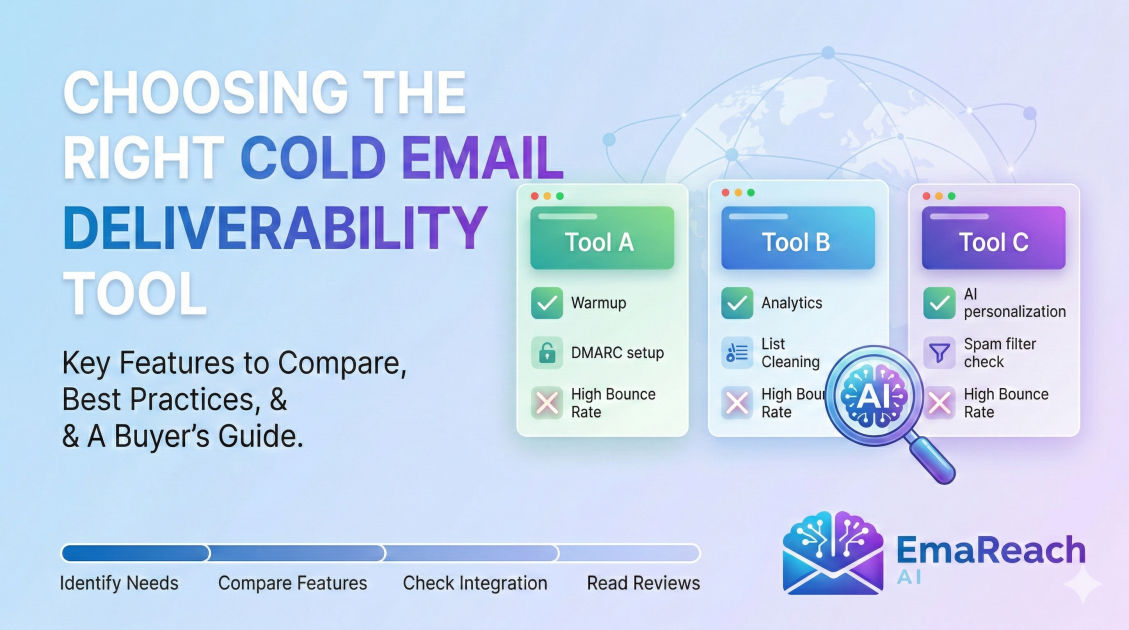
Choosing the Right Cold Email Deliverability Tool
cold emaildeliverabilityoutreach toolsemail marketingsales automationinbox placement
The Invisible Barrier to Outreach Success
You have crafted the perfect subject line. Your value proposition is ironclad. Your lead list is filled with high-intent prospects. But there is a silent killer lurking in the shadows of your outbound strategy: the spam folder.
In the modern landscape of digital communication, sending a cold email is only half the battle. Ensuring it actually lands in the primary inbox is the other, more technical half. This is where a cold email deliverability tool becomes non-negotiable. Without one, you are essentially whispering into a void.
Choosing the right tool is not just about finding the one with the flashiest interface; it is about infrastructure, reputation management, and automated intelligence. This guide explores the critical factors, features, and strategic considerations required to select a tool that ensures your voice is heard.
Why Deliverability is the Core of Cold Email
Deliverability is the measure of how successfully your emails reach the recipient's inbox without being bounced or filtered into spam. It is influenced by a complex web of factors, from your technical domain setup to the way recipients interact with your messages.
When deliverability drops, your ROI plummets. Even a 10% decrease in inbox placement can mean thousands of dollars in lost pipeline. A dedicated deliverability tool acts as a guardian for your sender reputation, providing the "warm-up" and monitoring necessary to stay in the good graces of major providers like Google and Microsoft.
Key Features to Look For in a Deliverability Tool
When evaluating software, you must look beyond simple email sequencing. High-performance outreach requires a specific set of deliverability-focused features.
1. Automated Inbox Warm-up
A new email account or domain is a red flag for spam filters. If you suddenly start sending 50 emails a day from a fresh address, you will be flagged. Automated warm-up mimics human behavior by sending a small volume of emails to a network of real accounts, which then open, click, and mark those emails as "not spam."
2. Technical Setup Verification
Your tool should provide a dashboard that checks your DNS records. Specifically, it should verify:
- SPF (Sender Policy Framework): Specifies which mail servers are authorized to send email on behalf of your domain.
- DKIM (DomainKeys Identified Mail): Adds a digital signature to your emails, proving they weren't tampered with in transit.
- DMARC (Domain-based Message Authentication, Reporting, and Conformance): Tells receiving servers what to do if an email fails SPF or DKIM checks.
3. Inbox Rotation and Multi-Account Support
Scaling your outreach by sending 500 emails from one account is a recipe for disaster. The best tools allow for inbox rotation, where you connect multiple email accounts and the software distributes the sending volume across them. This keeps the daily volume per inbox low and safe.
4. Real-Time Blacklist Monitoring
If your domain or IP address ends up on a blacklist (like Spamhaus or Barracuda), your deliverability will vanish overnight. A quality tool monitors these lists 24/7 and alerts you immediately if your reputation is at risk.
5. AI-Powered Content Analysis
Spam filters are increasingly sophisticated, using Natural Language Processing (NLP) to scan for "spammy" patterns. Modern tools use AI to analyze your email body and subject lines for trigger words or formatting issues that could land you in the promotions tab or spam folder.
The Role of AI in Modern Outreach
The integration of Artificial Intelligence has revolutionized deliverability. AI doesn't just help with writing; it manages the rhythm of your outreach.
For example, EmaReach (https://www.emareach.com/) exemplifies this shift. By combining AI-written cold outreach with specialized inbox warm-up and multi-account sending, it ensures that emails reach the primary tab. The goal is no longer just to send more mail, but to send smarter mail that generates replies.
AI-driven tools can also predict the optimal send time for each specific recipient based on historical engagement data, significantly increasing the likelihood of an open—which in turn boosts your sender reputation.
Shared vs. Dedicated IPs: Which Do You Need?
A common dilemma when choosing a tool is whether to use a shared or dedicated IP address. The choice depends entirely on your volume and expertise.
| Feature | Shared IP | Dedicated IP |
|---|---|---|
| Cost | Low / Included | High / Add-on |
| Control | None (Pooled reputation) | Total (You own the rep) |
| Warm-up | Pre-warmed by provider | Must be manually warmed |
| Volume | Ideal for < 100k/month | Ideal for > 250k/month |
| Risk | Others can hurt your rep | Your mistakes only hurt you |
For most cold emailers, a tool that uses high-quality shared pools or handles the rotation of individual inboxes (GWS/O365) is safer and more cost-effective than managing a dedicated IP.
A Step-by-Step Evaluation Framework
To choose the right tool, follow this five-step framework:
Step 1: Audit Your Current Volume
Determine how many emails you need to send per day to hit your sales targets. If you need to send 1,000 emails daily, you will need a tool that supports at least 20–30 connected inboxes to keep individual account volume safe.
Step 2: Check Integration Compatibility
Does the tool play nice with your current CRM? Seamless integration with Salesforce, HubSpot, or Pipedrive ensures that your sales team doesn't have to manually move data between platforms, reducing errors and saving time.
Step 3: Assess the Warm-up Network
Not all warm-up networks are created equal. Ask if the tool uses real, aged inboxes or cheap, "bot" inboxes. Spam filters can often detect bot-only networks, making the warm-up counterproductive.
Step 4: Evaluate the Analytics Dashboard
Data is your best friend. You need visibility into open rates, reply rates, bounce rates, and spam complaint rates. Crucially, the tool should show you which provider is blocking you—are you landing in the inbox for Outlook users but hitting spam for Gmail users?
Step 5: Test the Support and Onboarding
Deliverability is technical. When a domain gets flagged, you need a support team that understands the nuances of DNS, SMTP, and ESP policies. Choose a provider known for responsive, expert support.
Common Pitfalls to Avoid
- Chasing the Lowest Price: A cheap tool that results in your domain being blacklisted will cost you far more in the long run in lost revenue and recovery efforts.
- Ignoring Content Quality: No tool can save a poorly written, irrelevant email. High bounce rates from recipients manually marking your mail as spam will override any technical setup.
- Skipping the Warm-up Phase: Never skip the 2–4 week warm-up period for a new domain. Patience is the foundation of long-term deliverability.
Conclusion
Choosing the right cold email deliverability tool is an investment in your company’s growth. By prioritizing features like automated warm-up, technical verification, and multi-account rotation, you protect your most valuable asset: your reputation. Whether you are a solo founder or a scaling agency, the right infrastructure ensures that your outreach efforts result in conversations, not silence.
EmaReach AI
Ready to scale your cold email outreach?
Join thousands of teams using EmaReach AI for AI-powered campaigns, domain warmup, and 95%+ deliverability. Start free — no credit card required.
Related posts
- Read article
The Instantly Alternative That Finally Gets Outbound Analytics Right
Discover why high-volume cold email requires a shift from surface-level vanity metrics to deep, data-driven revenue attribution, and explore the ultimate alternatives for mastering outbound engineering.
- Read article
What You Gain and What You Give Up When Switching From Instantly
Thinking about migrating your cold email stack? This detailed guide breaks down the exact operational advantages you gain and the core features you sacrifice when switching away from Instantly's popular outreach platform.