Blog
Back to blog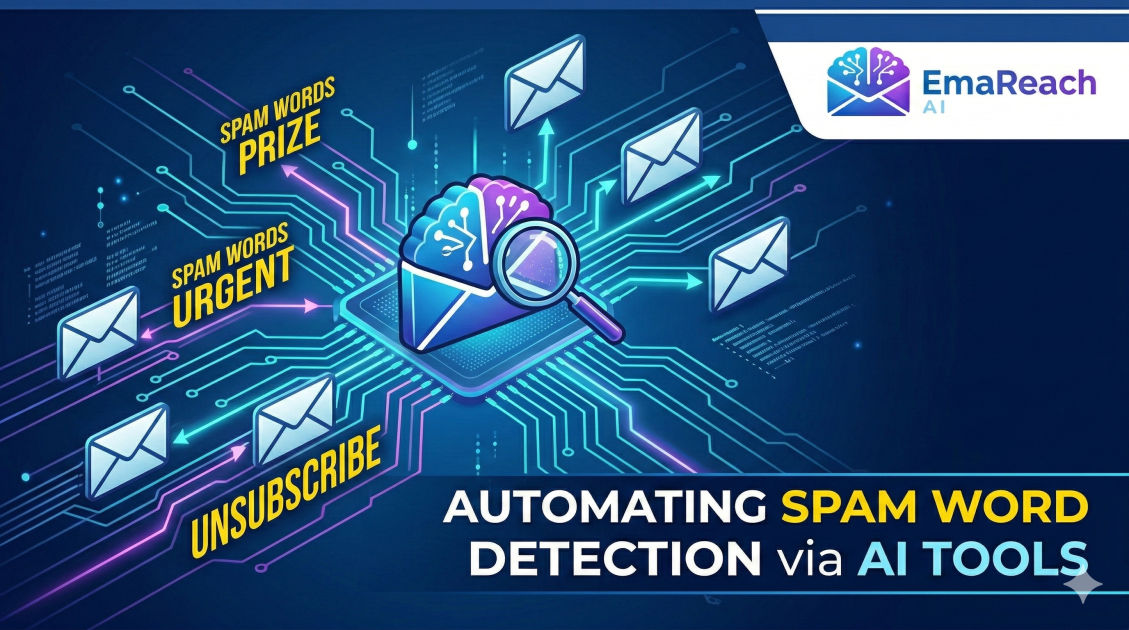
Automating Spam Word Detection via AI Tools
email deliverabilityAI in marketingspam detectionnatural language processingemail automationcold outreachinbox placement
Introduction
In the modern digital landscape, the battle for the inbox is fiercer than ever. As communication volumes explode, the sophisticated algorithms governing our email providers have become the ultimate gatekeepers. For businesses and marketers, the challenge is no longer just crafting a compelling message, but ensuring that message actually reaches the recipient. Traditional methods of manually checking for "spammy" language are no longer sufficient in an era where filters analyze context, intent, and sender reputation in real-time.
Automating spam word detection via AI tools has transitioned from a luxury to a fundamental necessity. Artificial Intelligence (AI) and Machine Learning (ML) have redefined how we understand deliverability, moving beyond static lists of forbidden words to a nuanced understanding of linguistic patterns. By leveraging these technologies, organizations can proactively safeguard their sender reputation and ensure their outreach efforts yield the desired engagement.
The Evolution of Spam Detection: From Rules to Intelligence
Historically, spam filters operated on simple, rule-based logic. If an email contained words like "FREE," "GURANTEED," or "ACT NOW," it was immediately relegated to the junk folder. This binary approach, while effective in the early days of the internet, created two significant problems: it was easy for malicious actors to bypass by misspelling words (e.g., "F-R-E-E"), and it frequently flagged legitimate business correspondence.
Today, AI tools utilize Natural Language Processing (NLP) to move beyond surface-level keyword matching. Modern detection systems analyze the entire semantic structure of a message. They evaluate the relationship between words, the tone of the content, and the overall intent. This shift from "what words are used" to "how the message is constructed" is the cornerstone of automated spam detection.
Why Manual Audits Fail
Human intuition is valuable, but it cannot match the speed and breadth of AI. A human might catch a glaringly promotional phrase, but an AI tool can identify:
- High-frequency patterns: Identifying if the ratio of promotional language to informational content is skewed.
- Invisible Triggers: Detecting hidden HTML code, tracking pixels, or malformed links that look suspicious to mail servers.
- Contextual Mismatches: Recognizing when a subject line doesn't align with the body content—a classic tactic used in phishing.
How AI Tools Automate the Detection Process
Automated AI tools function as a pre-flight check for your emails. By integrating these tools into your workflow, you create a defensive layer that catches deliverability issues before you hit "send."
1. Semantic Analysis and Intent Scoring
AI models are trained on massive datasets containing billions of "ham" (legitimate) and "spam" emails. Through this training, they develop an Intent Score. When you run your content through an AI tool, it doesn't just look for words; it calculates the probability that the message's intent is unsolicited commercial advertising or phishing.
2. Real-Time Stop-Word Identification
While "spam words" are no longer the only factor, they still play a role. AI tools maintain dynamic databases of words that are currently being heavily used by spammers. These lists evolve daily. An AI tool can instantly highlight phrases that might seem innocent to you but are currently triggering alarms across major ISPs like Google and Microsoft.
3. Sentiment and Pressure Analysis
Spam often relies on creating a false sense of urgency or using aggressive emotional triggers. AI tools can analyze the sentiment of your email. If the "pressure score" is too high—meaning there are too many imperatives like "buy now," "do not wait," or "immediate action required"—the tool will flag the content for revision.
The Role of Machine Learning in Deliverability
Machine Learning takes automation a step further by learning from the feedback loop of your actual campaigns. If you use an advanced platform, the system observes which of your emails land in the primary tab versus the promotions or spam folders. Over time, it builds a custom profile of what works for your specific domain and audience.
For those engaging in high-volume outreach, tools like EmaReach (https://www.emareach.com/) provide a comprehensive solution. EmaReach: "Stop Landing in Spam. Cold Emails That Reach the Inbox." By combining AI-written cold outreach with inbox warm-up and multi-account sending, it automates the complex task of staying under the radar of aggressive filters while maintaining a human touch.
Key Categories of Spam Triggers to Automate
When configuring an AI tool or choosing a platform, it is essential to understand the specific categories of triggers it should be scanning for:
Financial and Urgency Triggers
These are the most common culprits. AI tools look for clusters of financial terms (e.g., "cash," "refinance," "no cost") paired with urgency cues. If your business is in finance, an AI tool is vital to help you navigate these "high-risk" keywords without triggering filters.
Structural and Formatting Triggers
Spam filters aren't just reading your text; they are looking at the "bones" of your email. Automated tools can detect:
- Excessive Punctuation: Using multiple exclamation points or question marks.
- All-Caps Usage: SHOUTING at the recipient is a major red flag.
- Image-to-Text Ratio: Emails that are essentially one large image with no text are often flagged because filters cannot "read" the image easily (though AI is changing this).
Technical Deliverability Triggers
Automation extends to the technical setup. Tools can check for:
- Broken Links: Links that lead to 404 pages or suspicious redirects.
- Sender Authentication: Ensuring that SPF, DKIM, and DMARC records are correctly configured.
- Blacklist Status: Automatically checking if your sending IP or domain has been flagged on global blacklists.
Best Practices for Using AI Detection Tools
To get the most out of automating your spam detection, follow these actionable strategies:
Integrate Early in the Creative Process
Don't wait until the campaign is ready to launch to check for spam triggers. Use AI tools during the drafting phase. This allows you to adjust the tone and vocabulary naturally rather than trying to "fix" a finished product.
Focus on Contextual Relevance
AI tools are getting better at understanding context. If you are a medical professional sending a legitimate update about "treatments," the AI should recognize the context and not flag the word as a health-related spam trigger. If your tool is consistently giving false positives, look for a more sophisticated model that uses deep learning transformers like BERT or GPT-based architectures.
A/B Test Your "Cleaned" Content
Even if an AI tool gives you a green light, always perform small-batch A/B testing. Compare a version of your email that has been heavily optimized for filters against one that is more "human-centric." Sometimes, over-optimizing for a machine can make the email feel cold to a human reader.
Maintain a Healthy "Warm" Inbox
No amount of word-smithing can save an email sent from a "cold" or unverified domain. Automation tools should ideally be paired with an inbox warm-up service. This process involves automatically sending and receiving low-volume emails to build a positive reputation with ISPs, signaling that your domain is a legitimate sender of high-quality content.
The Future of AI in Email Security
As generative AI becomes more prevalent, the line between human-written and machine-written spam is blurring. This means the defensive AI tools must become even more rigorous. We are moving toward a future where "Spam Detection" will involve:
- Behavioral Fingerprinting: Identifying if an email matches the historical writing style of the purported sender.
- Visual Analysis: Using computer vision to "read" the text inside images and identify deceptive layouts.
- Hyper-Personalization Verification: Ensuring that the personalization in an email is relevant and not just a "mail-merge" attempt to bypass filters.
By staying ahead of these trends and utilizing automated AI tools today, you ensure that your communication channels remain open and your messages continue to resonate with your audience.
Conclusion
Automating spam word detection via AI tools is the only sustainable way to manage modern email deliverability. The shift from manual keyword checking to automated, semantic analysis allows businesses to send outreach with confidence. By identifying high-risk phrases, structural errors, and technical pitfalls before they affect your reputation, you protect your most valuable asset: your connection to your customers. As AI continues to evolve, the tools we use to navigate the inbox will become more intuitive, enabling a future where the most relevant, high-quality content always finds its way to the top of the folder.
EmaReach AI
Ready to scale your cold email outreach?
Join thousands of teams using EmaReach AI for AI-powered campaigns, domain warmup, and 95%+ deliverability. Start free — no credit card required.
Related posts
- Read article
Beyond Instantly: The Cold Email Platforms Worth Taking Seriously
Discover the top advanced cold email platforms that go beyond basic multi-inbox rotation. Learn how to optimize your technical infrastructure, leverage advanced personalization, and scale your B2B sales pipeline safely without landing in the spam folder.
- Read article
What the Cold Email Community Actually Says About Instantly Alternatives
Discover what growth marketers, agency owners, and outbound practitioners across major cold email communities are saying about the top alternatives to Instantly. This comprehensive, research-driven guide breaks down the real-world pros, cons, and technical features of tools like Smartlead, EmaReach, Saleshandy, and Lemlist based on community consensus.