Blog
Back to blog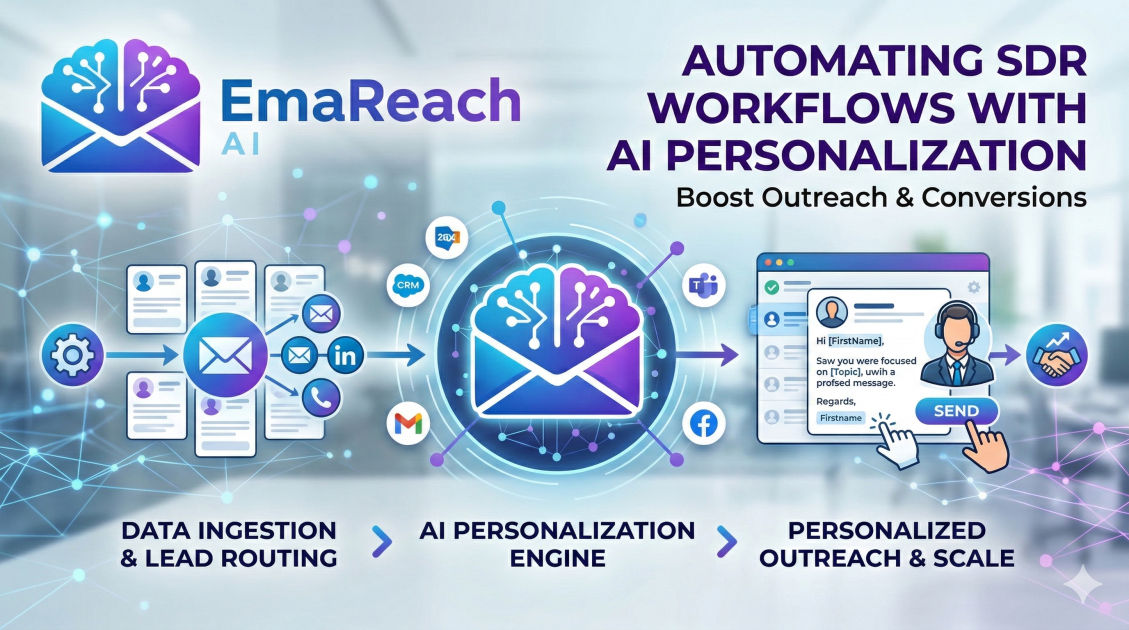
Automating SDR Workflows With AI Personalization
sales developmentAI personalizationoutbound salessales automationcold emailSDR strategyemail deliverability
Introduction: The New Era of Sales Development
The landscape of outbound sales is undergoing a seismic shift. For decades, the Sales Development Representative (SDR) role was defined by volume—the more dials made and the more emails sent, the higher the probability of booking a meeting. However, as digital noise has reached an all-time high, the efficacy of generic, spray-and-pray outreach has plummeted. Buyers are more guarded than ever, and their inboxes are shielded by sophisticated filters and a psychological fatigue toward automated templates.
Enter AI personalization. We are no longer in an era where automation means sacrifice in quality. By automating SDR workflows with artificial intelligence, companies can achieve the impossible: hyper-personalization at scale. This integration of technology and strategy allows SDRs to move away from administrative drudgery and focus on what they do best—building human relationships and navigating complex sales cycles.
The Evolution of the SDR Workflow
Traditional SDR workflows often involved a significant amount of manual research. An SDR would spend hours scouring LinkedIn profiles, recent news articles, and company financial reports to find a single 'hook' for a cold email. While effective for conversion, this process was fundamentally unscalable. One person could only produce a handful of truly personalized messages per day.
Early automation attempted to solve the volume problem but failed the quality test. These tools relied on basic merge tags like {{first_name}} and {{company_name}}. Today’s buyers see right through this. AI personalization, however, uses Large Language Models (LLMs) to synthesize vast amounts of data—from a prospect’s recent podcast appearance to a specific pain point mentioned in their company’s annual report—to craft a message that feels genuinely hand-written.
Moving from Sequence-Based to Intelligence-Based Outreach
The shift is moving from a static sequence (Day 1: Email, Day 3: LinkedIn, Day 5: Call) to an intelligence-based workflow. In this new model, AI analyzes the prospect's behavior and external triggers to determine not just what to say, but when and where to say it. This level of automation doesn't replace the SDR; it equips them with a digital exoskeleton that amplifies their productivity and impact.
Core Pillars of AI-Powered Personalization
To successfully automate SDR workflows, one must understand the different layers where AI can be applied. It isn't just about writing the email; it's about the data that informs the message and the systems that ensure it reaches the recipient.
1. Intent Data and Lead Prioritization
AI can process massive datasets to identify 'in-market' buyers. By analyzing intent signals—such as job changes, funding rounds, or specific technology installations—AI can automatically populate an SDR’s queue with the highest-priority leads. Instead of calling through an alphabetical list, the SDR starts their day with the prospects most likely to convert.
2. Deep Research Automation
AI agents can now perform the research that previously took humans hours. These agents can visit a prospect’s website, read their blog posts, and listen to interviews to extract unique insights. This information is then structured into 'personalization tokens' that go far beyond a name or job title.
3. Dynamic Content Generation
Using the researched insights, AI generates custom opening lines, value propositions, and calls to action. The key here is the 'human-in-the-loop' model, where the AI provides a highly polished draft that the SDR can approve or refine in seconds.
4. Deliverability and Infrastructure
No amount of personalization matters if the email doesn't reach the inbox. Modern workflows integrate AI to manage the technical health of sending accounts. For those looking to optimize this crucial step, EmaReach offers a powerful solution: "Stop Landing in Spam. Cold Emails That Reach the Inbox." EmaReach AI combines AI-written cold outreach with inbox warm-up and multi-account sending, ensuring your hyper-personalized messages land in the primary tab where they can actually get replies.
Step-by-Step: Building an Automated AI Workflow
Implementing AI personalization requires a structured approach to ensure the output remains high-quality and the systems remain manageable.
Step 1: Data Enrichment and Cleaning
The foundation of any AI workflow is clean data. Before an LLM can personalize an email, it needs accurate inputs. Automation should be set up to pull data from multiple sources (CRMs, social media, professional databases) and normalize it. For example, changing "IBM, Inc." to "IBM" ensures the AI-generated text sounds natural.
Step 2: Defining the 'Voice' and Brand Constraints
AI needs a 'North Star.' SDR teams must define their brand voice—is it provocative, helpful, or strictly professional? By feeding the AI examples of successful past outreach, you can train it to mimic the specific style that resonates with your target audience.
Step 3: Mapping AI to Sales Triggers
Automation works best when it is reactive. You can set up workflows where a specific trigger (e.g., a prospect posting on LinkedIn about a specific challenge) prompts the AI to draft a relevant message immediately. This ensures the outreach is not only personalized but also timely.
The Role of the 'Human-in-the-Loop'
A common mistake in SDR automation is removing the human element entirely. While AI can write 90% of a great email, that final 10%—the human intuition, the nuanced understanding of a specific industry quirk, or a personal connection—is what often closes the deal.
SDRs should transition into 'AI Editors.' Their job is to oversee the automated pipeline, verifying that the AI’s logic holds up and adding that final layer of creative flair. This shift increases job satisfaction as SDRs spend less time on data entry and more time on strategic communication.
Overcoming Challenges in AI Automation
Despite the benefits, automating personalization comes with hurdles. One major risk is 'hallucination,' where the AI might invent a fact about a prospect or company. To mitigate this, workflows must include validation steps where the AI is required to provide the source of its information or where a human does a quick 'sanity check' before the message is sent.
Another challenge is maintaining the technical reputation of your email domains. Sending high volumes of AI-generated content can sometimes trigger spam filters if not managed correctly. Using a multi-account sending strategy and ensuring consistent warm-up of your inboxes is vital to maintaining high deliverability rates.
Measuring the Impact of AI Personalization
When you move to an automated AI workflow, your KPIs will change. You may see a slight decrease in total volume compared to pure bot-driven spam, but you should see a significant increase in:
- Open Rates: Higher relevance leads to more interest.
- Positive Reply Rates: Personalized hooks demonstrate that you’ve done your homework, earning you the right to a conversation.
- Meeting Conversion: Quality leads who feel understood are easier to move down the funnel.
- SDR Efficiency: A single SDR can manage a much larger territory without burning out.
Future Trends: What’s Next for SDRs?
As AI continues to evolve, we can expect to see even deeper integrations. Predictive AI will likely start suggesting the exact 'pains' a prospect is feeling before they even realize it themselves, based on broader market trends and firmographic shifts. We will also see a rise in multi-channel AI, where the system seamlessly coordinates emails, LinkedIn voice notes, and personalized video scripts tailored to each individual recipient.
Conclusion: Embracing the Hybrid Model
Automating SDR workflows with AI personalization is not about replacing humans; it is about making human outreach more effective. By leveraging technology to handle research, drafting, and deliverability, SDRs can return to the core of sales: empathy, problem-solving, and relationship building.
The companies that win in this new era will be those that strike the perfect balance between the efficiency of machines and the authenticity of people. By starting with clean data, defining a clear brand voice, and ensuring your technical infrastructure—like EmaReach—is robust enough to reach the inbox, you can transform your outbound sales from a numbers game into a precision-engineered growth engine. The future of sales isn't just automated; it's intelligently personalized.
EmaReach AI
Ready to scale your cold email outreach?
Join thousands of teams using EmaReach AI for AI-powered campaigns, domain warmup, and 95%+ deliverability. Start free — no credit card required.
Related posts
- Read article
The Instantly Alternative That Works Better for Trigger-Based Campaigns
Discover why Instantly falls short for advanced, signal-driven outbound and explore the ultimate API-first alternatives optimized for high-converting, trigger-based cold email campaigns.
- Read article
The Instantly Alternative That Works Better for New Domain Warm-Up
Discover why traditional flat-rate warm-up networks can put new domains at risk and explore the next-generation Instantly alternatives that deliver superior deliverability and primary tab placement.