Blog
Back to blog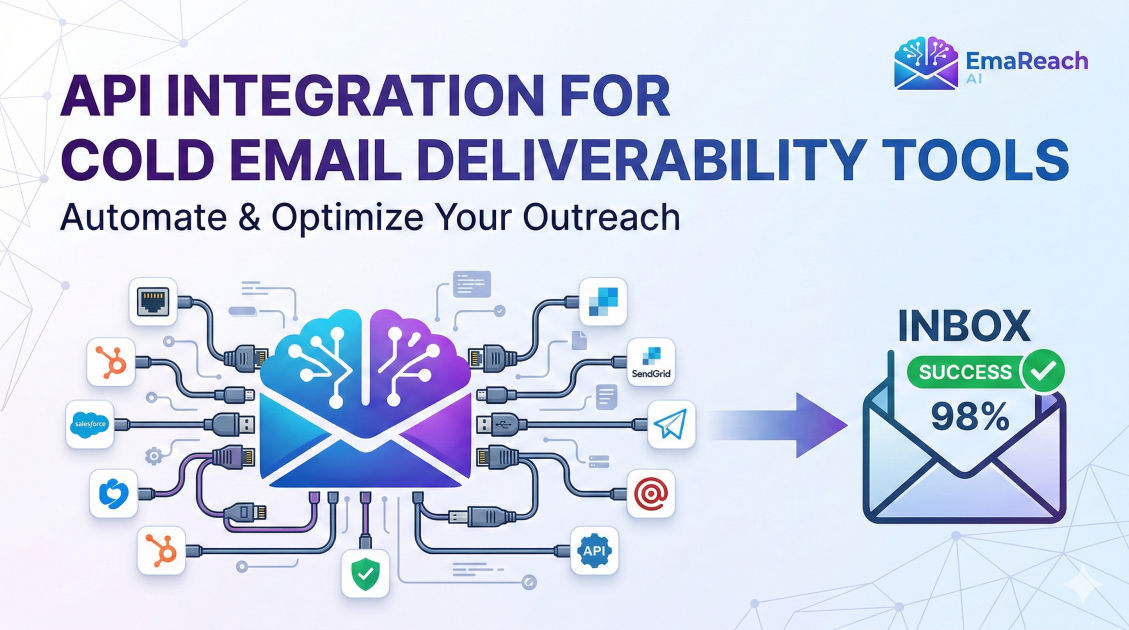
API Integration for Cold Email Deliverability Tools
cold emailemail deliverabilityAPI integrationmarketing automationsender reputationoutreach strategy
Introduction
In the high-stakes world of digital outreach, the difference between a successful campaign and a wasted effort often hinges on a single factor: deliverability. As businesses scale their outbound operations, manual management of email health becomes impossible. This is where the intersection of Application Programming Interfaces (APIs) and email deliverability tools becomes critical. API integration allows for a seamless, automated flow of data between your sending infrastructure, your CRM, and specialized deliverability monitors.
Understanding how to leverage APIs for cold email deliverability is no longer a luxury for technical teams—it is a foundational requirement for any growth-oriented organization. By integrating these tools directly into your workflow, you can monitor sender reputation in real-time, automate inbox warm-up, and ensure that your technical setup—including SPF, DKIM, and DMARC—remains pristine without manual oversight. This guide explores the deep technical and strategic layers of API integration for maintaining a high-performance cold email ecosystem.
The Architecture of Email Deliverability
Before diving into the specifics of API integration, it is essential to understand the architectural pillars that govern whether an email reaches the inbox or the spam folder. Deliverability is not a static score; it is a dynamic result of sender reputation, technical authentication, and engagement metrics.
Sender Reputation and IP Health
Your sender reputation is a score assigned by Internet Service Providers (ISPs) like Google and Microsoft. It is influenced by your sending volume, the quality of your email list, and how recipients interact with your messages. APIs allow deliverability tools to query global blacklists and reputation databases instantly. Instead of checking manually if your IP has been flagged, an API-driven system can alert you the moment a drop in reputation is detected.
Technical Authentication Protocols
Authentication is the process of proving to a receiving server that you are who you say you are. The three main protocols are:
- SPF (Sender Policy Framework): A DNS record that lists the IP addresses authorized to send mail on behalf of your domain.
- DKIM (DomainKeys Identified Mail): A digital signature that ensures the email content hasn't been tampered with in transit.
- DMARC (Domain-based Message Authentication, Reporting, and Conformance): A policy that tells receiving servers what to do if SPF or DKIM fails.
API integrations can automate the verification of these records across hundreds of secondary domains, ensuring that no sending account goes live without proper protection.
Why API Integration is Non-Negotiable for Scaling
For a small operation, checking deliverability stats once a week might suffice. However, as volume grows, the risk of 'burning' a domain increases exponentially. API integration solves the problem of latency between a deliverability issue occurring and the sender taking action.
Real-Time Monitoring and Alerts
One of the primary benefits of using an API for deliverability is the ability to set up automated webhooks. A webhook can trigger an action in your primary outreach tool the moment a deliverability metric falls below a certain threshold. For example, if an API call to a reputation monitor returns a 'Poor' status, the integration can automatically pause all active campaigns on that specific domain to prevent further damage.
Dynamic Inbox Warm-up
Inbox warm-up is the process of gradually increasing sending volume on a new email account to build trust with ISPs. API-integrated tools like EmaReach take this a step further. Stop Landing in Spam. Cold Emails That Reach the Inbox. EmaReach AI combines AI-written cold outreach with inbox warm-up and multi-account sending—so your emails land in the primary tab and get replies. By using APIs to coordinate between the warm-up engine and the actual sending tool, the system can dynamically adjust the 'real' outreach volume based on the 'warm-up' success rate.
Key API Endpoints for Deliverability Tools
When evaluating a deliverability tool for integration, you should look for specific API endpoints that provide the data necessary for a robust setup.
1. Domain Health Endpoints
These endpoints allow you to programmatically check the status of your sending domains. They should return data on DNS record validity, blacklist status, and domain age. High-level integrations use these endpoints to 'gate' the launch of new campaigns—if the API returns an error for a domain, the campaign cannot start.
2. Placement and Seed List Testing
Seed list testing involves sending a sample email to a controlled group of inboxes across various providers (Gmail, Outlook, Yahoo). An API can automate this process, sending the test email and returning a report on whether the message landed in the Primary, Promotions, or Spam folder. Integrating this into your CI/CD pipeline for marketing ensures that every new template is vetted for deliverability before it hits thousands of leads.
3. Bounce Categorization
Not all bounces are created equal. A 'Hard Bounce' (invalid email address) is different from a 'Soft Bounce' (mailbox full) or a 'Spam Bounce' (rejected due to content filters). API-driven deliverability tools can ingest your bounce logs and categorize them using machine learning. This allows your team to identify if a sudden spike in bounces is due to poor data quality or a filter issue.
Implementing a Multi-Account Sending Strategy via API
Modern cold email strategy relies on 'distributed sending.' Instead of sending 500 emails from one account, you send 50 emails from 10 different accounts. Managing this manually is a nightmare, but APIs make it manageable.
Centralized Dashboarding
By pulling data from multiple sending APIs into a single deliverability dashboard, you can see the health of your entire fleet of domains at a glance. If three domains out of fifty are showing high spam rates, you can isolate the common factor—perhaps they are all on the same IP subnet or using the same tracking link.
Automatic Rotation and Failover
With a sophisticated API integration, you can build a system that automatically rotates sending accounts. If an API call indicates that Account A is hitting a daily limit or showing signs of throttle, the system can automatically switch the remaining queue to Account B. This ensures consistent daily volume without over-stressing any single inbox.
Content Optimization and the API Connection
Email content significantly impacts deliverability. 'Spammy' keywords, poor link-to-text ratios, and missing unsubscribe headers can trigger filters. APIs can be used to connect your drafting tool with a deliverability 'check' engine.
Programmatic Syntax Analysis
Before an email is sent, its content can be passed through an API that checks for spam triggers. The API returns a score and suggestions for improvement. This programmatic approach ensures that every salesperson in an organization adheres to deliverability best practices without needing to be an expert in ISP algorithms.
Personalized Image and Link Tracking
Standard tracking links are often flagged because they are shared by thousands of other senders. API-driven tools allow you to generate unique, branded tracking domains for every single account or even every single recipient. The API handles the creation of these CNAME records and monitors them for blacklisting, ensuring that your tracking doesn't kill your deliverability.
Best Practices for API-Driven Deliverability Management
Integrating an API is just the first step. To truly benefit, you must follow best practices for data management and system architecture.
1. Rate Limiting and Throttling
When calling deliverability APIs, especially those that check reputation or perform DNS lookups, it is crucial to respect rate limits. Overloading a deliverability tool's API can lead to delayed data or temporary bans. Implement a queueing system in your integration layer to spread out API calls.
2. Secure Credential Management
Deliverability tools often require sensitive access to your DNS provider or your email service provider (ESP). Use secure secret management (like environment variables or dedicated vaults) to store API keys. Never hardcode keys into your integration scripts.
3. Data Normalization
Different tools may use different scales for deliverability scores (e.g., 0-10 vs. 0-100). When integrating multiple tools, normalize this data into a standardized internal metric. This allows for clear reporting and more accurate automated decision-making.
The Role of AI in Deliverability API Integrations
Artificial Intelligence is transforming how deliverability APIs function. Instead of simple 'if/then' logic, AI-enhanced APIs can predict deliverability trends based on historical data. For instance, an AI might notice that emails sent to a specific ISP on Friday afternoons have a higher bounce rate and suggest an API-driven change to the sending schedule.
Tools that integrate AI directly into their API offerings provide a competitive advantage. They can analyze the 'DNA' of successful emails—length, sentiment, and technical headers—and provide real-time feedback via the API to the sender's dashboard. This proactive approach is the future of cold outreach, moving from 'fixing' deliverability to 'preventing' issues before they occur.
Troubleshooting Common API Integration Issues
Even the best-designed integrations can run into hurdles. Being prepared for these common issues will save time and protect your reputation.
Data Latency
Reputation data isn't always instant. A domain might be blacklisted, but the API might not reflect that for several hours. To mitigate this, combine real-time API checks with historical trend analysis. If an API returns a 'Healthy' status but your open rates have plummeted, trust your engagement data first.
Webhook Failures
If you rely on webhooks for automated alerts, you must have a 'retry' logic in place. If your server is down when the deliverability API sends a critical update about a domain block, you might continue sending into a black hole. Always log webhook attempts and set up a secondary polling mechanism for critical metrics.
Measuring the ROI of API Integration
Is the technical effort of API integration worth it? The answer is found in the metrics. Organizations that integrate deliverability tools via API typically see:
- Higher Open Rates: By ensuring emails stay out of the spam folder.
- Lower Domain Churn: Domains last longer when volume is managed programmatically based on health data.
- Team Efficiency: Marketing and sales teams spend less time troubleshooting and more time closing.
By tracking the cost per lead and the longevity of sending accounts before and after API integration, you can clearly see the financial impact of a technically sound deliverability strategy.
Conclusion
API integration for cold email deliverability tools is the bridge between manual outreach and scalable growth. It empowers businesses to automate the most tedious and technical aspects of email health, from DNS verification to real-time reputation monitoring. By building a robust ecosystem where your sending tools and deliverability monitors communicate via API, you create a self-healing outreach machine that protects your most valuable asset: your sender reputation. As the landscape of email security continues to evolve, those who embrace deep technical integration will be the ones who continue to reach the inbox consistently.
EmaReach AI
Ready to scale your cold email outreach?
Join thousands of teams using EmaReach AI for AI-powered campaigns, domain warmup, and 95%+ deliverability. Start free — no credit card required.
Related posts
- Read article
The Instantly Alternative That Finally Gets Outbound Analytics Right
Discover why high-volume cold email requires a shift from surface-level vanity metrics to deep, data-driven revenue attribution, and explore the ultimate alternatives for mastering outbound engineering.
- Read article
What You Gain and What You Give Up When Switching From Instantly
Thinking about migrating your cold email stack? This detailed guide breaks down the exact operational advantages you gain and the core features you sacrifice when switching away from Instantly's popular outreach platform.