Blog
Back to blog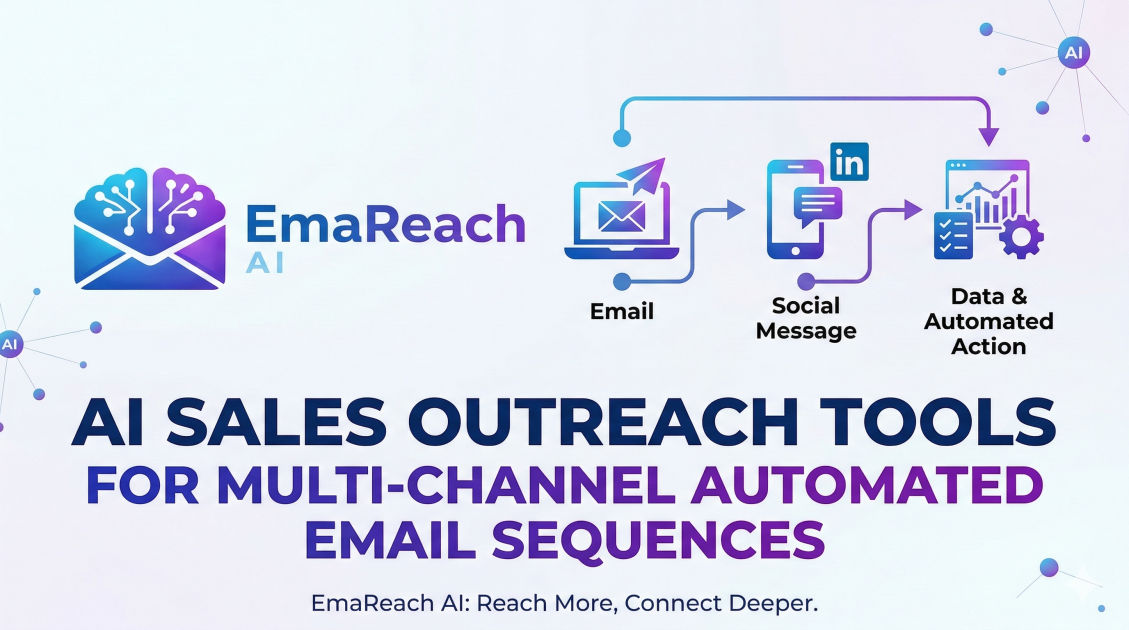
AI Sales Outreach Tools for Multi-Channel Automated Email Sequences
AI Sales ToolsEmail AutomationMulti-Channel OutreachCold EmailSales TechnologyLead GenerationEmail Deliverability
Introduction to AI-Driven Multi-Channel Outreach
The landscape of B2B sales has shifted from simple volume-based tactics to highly personalized, data-driven strategies. In the past, a sales representative might spend hours manually scouring LinkedIn profiles, drafting individual emails, and setting calendar reminders for follow-ups. Today, the emergence of AI sales outreach tools has transformed this process into a streamlined, multi-channel engine.
Multi-channel automated email sequences are no longer just about sending a series of messages; they are about creating a cohesive journey for the prospect across various touchpoints. By integrating Artificial Intelligence into these workflows, businesses can achieve a level of personalization and timing that was previously impossible at scale. This guide explores the mechanics of AI outreach tools, the importance of multi-channel synchronization, and how to build a high-converting automated system.
The Evolution of Sales Outreach: From Manual to Autonomous
Sales outreach has evolved through several distinct phases. Originally, 'cold calling' and direct mail were the primary drivers. With the advent of the internet, email became the dominant medium, eventually leading to basic automation tools that allowed for 'mail merges.' However, these early automated sequences often felt robotic and lacked the nuance required to build genuine rapport.
Artificial Intelligence has introduced a 'brain' to the automation engine. Modern tools can now analyze a prospect's public data, recent company news, and even their writing style to generate outreach that feels personal. When combined with multi-channel capabilities—incorporating LinkedIn, SMS, and even automated direct mail—AI ensures that your brand stays top-of-mind without becoming a nuisance.
Core Components of AI Sales Outreach Tools
To understand how to leverage these tools effectively, it is essential to break down the core components that make them powerful:
1. Intent Data and Lead Intelligence
Before an email is ever sent, AI tools work behind the scenes to identify the right targets. By analyzing 'intent signals'—such as a company raising a new round of funding, hiring for specific roles, or tech stack changes—AI helps sales teams prioritize leads who are actually in a buying window. This prevents the 'spray and pray' approach and ensures that your automated sequences are reaching fertile ground.
2. Generative Personalization
Generative AI has solved the biggest bottleneck in sales: the first line. Tools can now scan a prospect's latest LinkedIn post or a recent interview they gave and craft a unique introductory sentence. This level of detail signals to the recipient that the email isn't a mass-produced template, significantly increasing open and reply rates.
3. Multi-Channel Sequencing
A sequence is no longer just a string of five emails. A modern AI-driven sequence might look like this:
- Day 1: LinkedIn profile visit and connection request with a personalized note.
- Day 3: First email sent, referencing a specific pain point found in their industry.
- Day 5: LinkedIn message following up on the email content.
- Day 7: Second email providing a relevant case study.
- Day 10: Soft touch on Twitter/X or a voice drop.
4. Deliverability and Warm-up
No matter how good the AI-written content is, it is useless if it lands in the spam folder. High-end tools include features for 'inbox warm-up,' which simulate human-like interactions to build sender reputation. For those looking to master this aspect, EmaReach is a prime example. It allows you to 'Stop Landing in Spam' by providing cold emails that reach the inbox through a combination of AI-written outreach, inbox warm-up, and multi-account sending. This ensures your emails land in the primary tab where they belong.
How AI Enhances Multi-Channel Strategies
Multi-channel outreach is inherently complex. Managing different platforms manually leads to data silos and fragmented conversations. AI acts as the glue between these channels.
Unified Prospect View
AI tools provide a single dashboard where every interaction is logged. If a prospect replies on LinkedIn, the AI can automatically pause the email sequence, preventing the embarrassment of sending an automated 'Why haven't you replied?' email to someone who just booked a meeting with you on another platform.
Optimal Timing and Frequency
When is the best time to send a LinkedIn message versus an email? AI analyzes historical data across thousands of campaigns to determine the optimal 'cadence.' It might find that your specific industry responds better to emails on Tuesday mornings but is more active on LinkedIn on Thursday afternoons. The automation engine adjusts its delivery schedule accordingly.
Sentiment Analysis
Not all replies are positive. AI can categorize incoming responses based on sentiment. If a prospect replies with 'Not interested right now, check back in six months,' the AI can automatically tag the lead and schedule a follow-up task for the future. If the sentiment is 'Tell me more,' it can escalate the lead to a human representative immediately.
Building an Automated Multi-Channel Sequence
Creating an effective sequence requires a blend of strategy and technology. Here is a step-by-step breakdown of how to build one:
Step 1: Define Your Ideal Customer Profile (ICP)
AI is only as good as the data you feed it. Clearly define the industries, job titles, and company sizes you are targeting. Use AI-driven lead sourcing tools to build a list that matches these criteria perfectly.
Step 2: Crafting the Value Proposition
Your message shouldn't be about your product; it should be about their problem. Use AI to brainstorm different angles for your value proposition. For example, if you sell software that improves productivity, have the AI generate three different versions of your pitch: one focused on cost-saving, one on time-saving, and one on employee satisfaction.
Step 3: Setting Up the Workflow
Map out the touchpoints. A robust multi-channel workflow usually involves 7 to 12 touchpoints over a 21-day period.
- Emails: Should be concise and focused on a single call to action.
- LinkedIn: Should be used for building rapport and 'soft' touches.
- Secondary Channels: Use SMS or even personalized video links for high-value prospects.
Step 4: Implementing AI Personalization
Enable the AI features that pull in dynamic data. This could be as simple as {first_name} or as complex as a custom paragraph based on the prospect's recent company blog post. The goal is to make the automation invisible.
The Critical Role of Email Deliverability
As you scale your outreach, you will face the challenge of email filters. Internet Service Providers (ISPs) are becoming increasingly sophisticated at blocking automated mail. This is where specialized tools become essential.
By using a platform like EmaReach, you can manage multi-account sending. Instead of sending 200 emails from one account (which triggers spam filters), you can send 20 emails from 10 different accounts. This distributed sending model, combined with AI-driven content that avoids 'spammy' keywords, is the secret to maintaining high deliverability. EmaReach combines AI-written cold outreach with inbox warm-up, ensuring that your multi-channel efforts actually result in eyes on your message.
Measuring Success in the AI Era
Traditional metrics like 'Open Rate' are becoming less reliable due to privacy changes in email clients. Instead, focus on these AI-enhanced metrics:
- Positive Reply Rate: The percentage of replies that the AI categorizes as interested or curious.
- Meeting Conversion Rate: How many automated sequences actually lead to a booked call.
- Channel Contribution: Which channel (LinkedIn, Email, etc.) is responsible for the first point of contact for closed deals.
- Account Penetration: In account-based marketing (ABM), how many different stakeholders within a single company have engaged with your multi-channel sequence.
Overcoming Common Challenges
Even with the best AI tools, there are hurdles to overcome:
Avoiding the 'Uncanny Valley'
Sometimes AI-generated text can feel 'too' perfect or slightly off-key. It is important to have a human review the templates and 'seed' the AI with your brand’s specific voice and tone. If your brand is casual and witty, ensure the AI doesn't produce overly formal corporate speak.
Data Privacy and Compliance
With regulations like GDPR and CCPA, it is vital to ensure your AI outreach tools are compliant. This includes providing easy opt-out options and ensuring that the data used for personalization is gathered through legal and ethical means.
Technical Set-up
Setting up SPF, DKIM, and DMARC records is non-negotiable for email outreach. Many AI sales tools now offer automated checks to ensure your technical foundations are solid before you begin a multi-channel campaign.
The Future of AI in Sales Outreach
We are moving toward a future of 'Autonomous Sales Representatives.' Soon, AI won't just send the emails; it will handle the initial discovery calls through high-fidelity voice synthesis and manage the entire top-of-funnel process. For now, the winning strategy is a 'Cyborg' approach: using AI to handle the heavy lifting of data, personalization, and multi-channel synchronization, while humans provide the strategic oversight and the final 'human touch' needed to close the deal.
Integrating AI into your sales process is no longer an optional luxury—it is a competitive necessity. By choosing the right tools, focusing on multi-channel consistency, and prioritizing deliverability, you can build an outreach engine that works 24/7 to fill your pipeline with qualified opportunities.
Conclusion
AI sales outreach tools have fundamentally changed how we approach business development. By automating the complexities of multi-channel sequences, these tools allow sales teams to focus on what they do best: building relationships and closing deals. From the initial spark of lead intelligence to the final follow-up, AI ensures that every touchpoint is relevant, timely, and impactful.
Remember that technology is a multiplier. If your message is weak, AI will just help you send a weak message to more people. But if you combine a strong value proposition with the power of AI-driven personalization and multi-channel automation—supported by a solid deliverability strategy—the results can be transformative for your business growth.
EmaReach AI
Ready to scale your cold email outreach?
Join thousands of teams using EmaReach AI for AI-powered campaigns, domain warmup, and 95%+ deliverability. Start free — no credit card required.
Related posts
- Read article
The Instantly Alternative That Handles High Bounce Rates Without Panic
Discover how transitioning to an advanced Instantly alternative can safeguard your cold email infrastructure. Learn to handle high bounce rates effortlessly using real-time verification, smart mailbox rotation, and automated safety nets to protect your sender reputation and maintain consistent primary inbox placement.
- Read article
Beyond Instantly: The Cold Email Platforms Worth Taking Seriously
Discover the top advanced cold email platforms that go beyond basic multi-inbox rotation. Learn how to optimize your technical infrastructure, leverage advanced personalization, and scale your B2B sales pipeline safely without landing in the spam folder.