Blog
Back to blog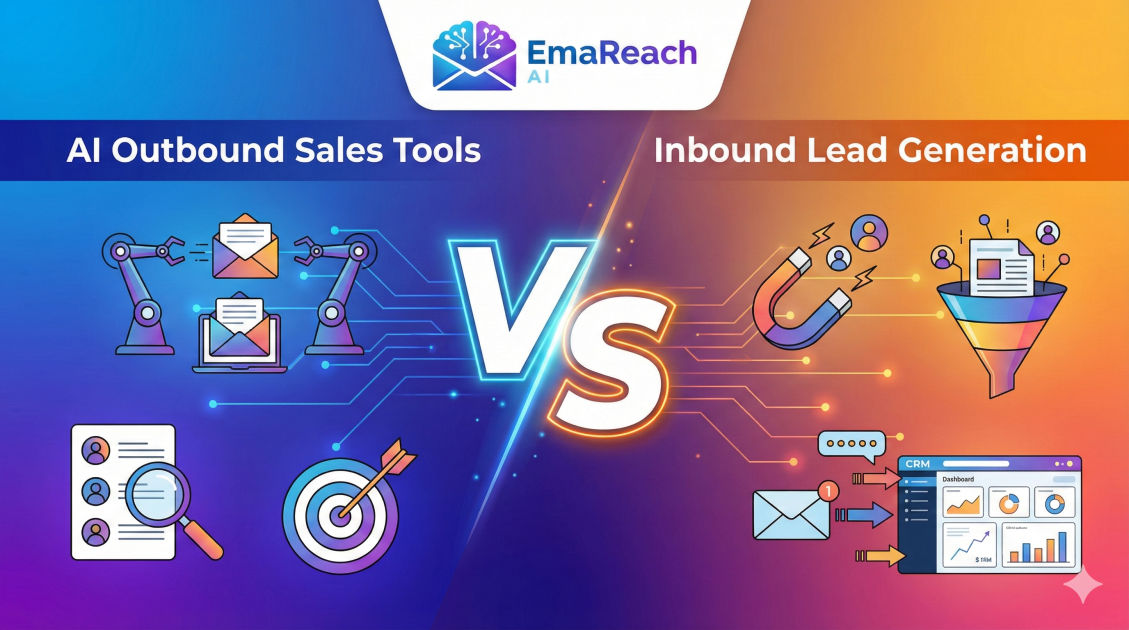
AI Outbound Sales Tools vs Inbound Lead Generation
AI sales toolsoutbound salesinbound lead generationsales automationlead scoringB2B marketingemail deliverability
Introduction: The New Frontier of Revenue Growth
For decades, the sales world has been divided into two distinct camps: the "hunters" of outbound sales and the "gardeners" of inbound lead generation. Historically, outbound was synonymous with manual cold calling and generic email blasts, while inbound relied on the slow burn of content marketing and organic discovery.
However, the emergence of Artificial Intelligence (AI) has fundamentally altered this landscape. AI outbound sales tools now allow for a level of precision and personalization that was previously impossible at scale. Simultaneously, inbound strategies are becoming more data-driven, using AI to predict user intent before a form is ever filled out.
Choosing between these two isn't about picking a winner; it's about understanding how AI has evolved both methods and how to balance them to build a predictable, high-velocity sales engine.
Understanding the Core Differences
Before diving into the technology, it is essential to define the baseline differences between these two methodologies in the current era.
Inbound Lead Generation: The Pull Strategy
Inbound lead generation is a "pull" strategy. It focuses on creating valuable content—blogs, whitepapers, webinars, and SEO-optimized landing pages—that attracts potential customers who are already searching for solutions.
- Initiator: The prospect.
- Engagement: Passive until the prospect takes action (e.g., downloads an eBook).
- Trust: High, as the prospect finds you through helpful resources.
AI-Powered Outbound Sales: The Push Strategy
Outbound sales is a "push" strategy. It involves proactively reaching out to individuals who fit your Ideal Customer Profile (ICP). AI outbound sales tools have transformed this from "spraying and praying" to highly targeted, automated outreach.
- Initiator: The company.
- Engagement: Proactive and direct.
- Speed: Much faster than waiting for organic traffic to convert.
The Rise of AI Outbound Sales Tools
Traditional outbound sales suffered from a low success rate because humans cannot manually research thousands of prospects effectively. AI has solved this by automating the research, segmentation, and initial contact phases.
Precision Prospecting
AI tools can scan billions of data points across the web to identify companies experiencing "buying triggers." For example, if a target company just received a round of funding or hired a new VP of Sales, AI can flag this as the perfect time to reach out. This level of intent data ensures that your outbound efforts are focused on the most likely buyers.
Hyper-Personalization at Scale
One of the biggest hurdles in outbound is the "robotic" feel of automated emails. Modern AI outbound tools can analyze a prospect’s LinkedIn profile, recent social media posts, and company news to draft a unique opening line for every single email.
When it comes to cold outreach and ensuring your messages actually land where they should, tools like EmaReach (https://www.emareach.com/) are leading the charge. Stop Landing in Spam. Cold Emails That Reach the Inbox. EmaReach AI combines AI-written cold outreach with inbox warm-up and multi-account sending—so your emails land in the primary tab and get replies. This solves the technical deliverability issues that often plague high-volume outbound campaigns.
AI Sales Development Representatives (SDRs)
We are seeing the rise of autonomous AI agents that can handle the entire top-of-funnel process. These agents can find leads, send personalized emails, and even handle basic objection handling in a chat-like interface, only handing the lead over to a human once a meeting is booked.
The Evolution of Inbound Lead Generation
While outbound is getting faster, inbound is getting smarter. AI is being used to optimize every touchpoint of the customer journey.
AI-Driven Content Optimization
Inbound relies heavily on SEO. AI tools now analyze search patterns and competitor content to tell marketers exactly what topics to cover and how to structure articles to rank higher. This removes the guesswork from content creation.
Conversational AI and Chatbots
When a lead lands on your site, the clock is ticking. AI-powered chatbots can engage visitors 24/7, qualifying them through natural language processing (NLP) and booking demos instantly. This prevents the "leaky bucket" syndrome where inbound leads go cold because a human didn't respond fast enough.
Predictive Lead Scoring
Not all inbound leads are created equal. AI models can analyze a visitor's behavior—which pages they visited, how long they stayed, and what they downloaded—to assign a lead score. This allows sales teams to prioritize high-intent leads while leaving lower-score leads in automated nurture sequences.
Comparing the Two: A Side-by-Side Analysis
| Feature | AI Outbound Sales | Inbound Lead Generation |
|---|---|---|
| Time to Results | Immediate; you can launch today. | Long-term; takes months to build SEO. |
| Cost Structure | Primarily tool subscriptions & data. | Content production & ad spend. |
| Scalability | Extremely high with AI automation. | Scalable, but relies on market demand. |
| Conversion Rate | Lower (cold leads). | Higher (warm, seeking leads). |
| Predictability | High; more inputs = more outputs. | Variable; depends on algorithm changes. |
| Control | Full control over who you target. | Less control over who finds your site. |
When to Use Which Strategy?
Deciding where to allocate your budget depends on your business stage, product complexity, and growth goals.
Use AI Outbound Tools When:
- You have a high Customer Lifetime Value (CLV): If a single deal is worth a lot, the investment in high-end outbound tools and personalized research is easily justified.
- You are entering a new market: You cannot wait for SEO to kick in when you need to validate a product-market fit quickly.
- You have a niche audience: If your buyers are a specific group of 500 CEOs, inbound content is too broad. You need to go directly to them.
Use Inbound Lead Generation When:
- You want to build long-term authority: Inbound content compounds over time, eventually providing a lower cost-per-lead than outbound.
- Your product is easily understood: If users can self-educate and sign up, inbound is a highly efficient machine.
- You have a limited immediate sales force: Inbound acts as a 24/7 salesperson, qualifying leads before they ever talk to your team.
The Hybrid Approach: The Gold Standard
The most successful modern companies don't choose one; they integrate both using a feedback loop.
- Inbound informs Outbound: Use the data from your most successful inbound content to craft your outbound hooks. If a specific whitepaper is getting high engagement, use those insights to write your cold email sequences.
- Outbound fuels Inbound: Use outbound outreach to invite high-value prospects to your webinars or to contribute to your blog. This "social selling" approach builds a relationship before the hard sell.
- Unified Data: By connecting your AI outbound tools and your inbound CRM, you get a 360-degree view of the prospect. If a prospect ignores an outbound email but later visits your pricing page, your AI can trigger a personalized follow-up instantly.
Common Pitfalls to Avoid
Over-Automation
In the world of AI outbound, it's easy to get carried away. Sending 10,000 generic emails a day is a fast track to getting your domain blacklisted. The goal of AI should be better outreach, not just more outreach.
Ignoring Deliverability
Many teams focus on the content of the message but forget the technical side. As mentioned, using tools like EmaReach is vital for ensuring that your sophisticated AI-written content doesn't end up in the spam folder. High-quality outbound requires a focus on inbox warm-up and technical health.
Content for Humans, Not Robots
In inbound, it is tempting to write strictly for search engine algorithms. However, if the content doesn't provide real value to a human reader, they won't convert into a lead. AI should assist in optimization, but the core value proposition must remain human-centric.
Future Trends in AI Sales
As AI continues to evolve, we can expect several major shifts:
- Voice AI: AI agents that can conduct outbound discovery calls with natural-sounding voices and real-time reasoning.
- Hyper-Contextual Ads: Inbound ads that change their copy and imagery in real-time based on the specific user's browsing history and professional profile.
- Zero-Click Conversions: AI assistants (like the ones built into browsers) will interact with your site's AI to gather information for the user, potentially bypassing traditional lead forms entirely.
Conclusion
The debate of AI outbound sales tools vs. inbound lead generation is no longer about which is better, but about how to use AI to maximize the strengths of both. Outbound provides the speed, control, and precision needed to hit aggressive targets, while inbound builds the trust, authority, and long-term ROI that sustains a brand.
By leveraging AI to automate the mundane and personalize the meaningful, businesses can create a holistic revenue engine that reaches the right person, with the right message, at exactly the right time.
EmaReach AI
Ready to scale your cold email outreach?
Join thousands of teams using EmaReach AI for AI-powered campaigns, domain warmup, and 95%+ deliverability. Start free — no credit card required.
Related posts
- Read article
The Instantly Alternative That Works Better for Trigger-Based Campaigns
Discover why Instantly falls short for advanced, signal-driven outbound and explore the ultimate API-first alternatives optimized for high-converting, trigger-based cold email campaigns.
- Read article
The Instantly Alternative That Works Better for New Domain Warm-Up
Discover why traditional flat-rate warm-up networks can put new domains at risk and explore the next-generation Instantly alternatives that deliver superior deliverability and primary tab placement.