Blog
Back to blog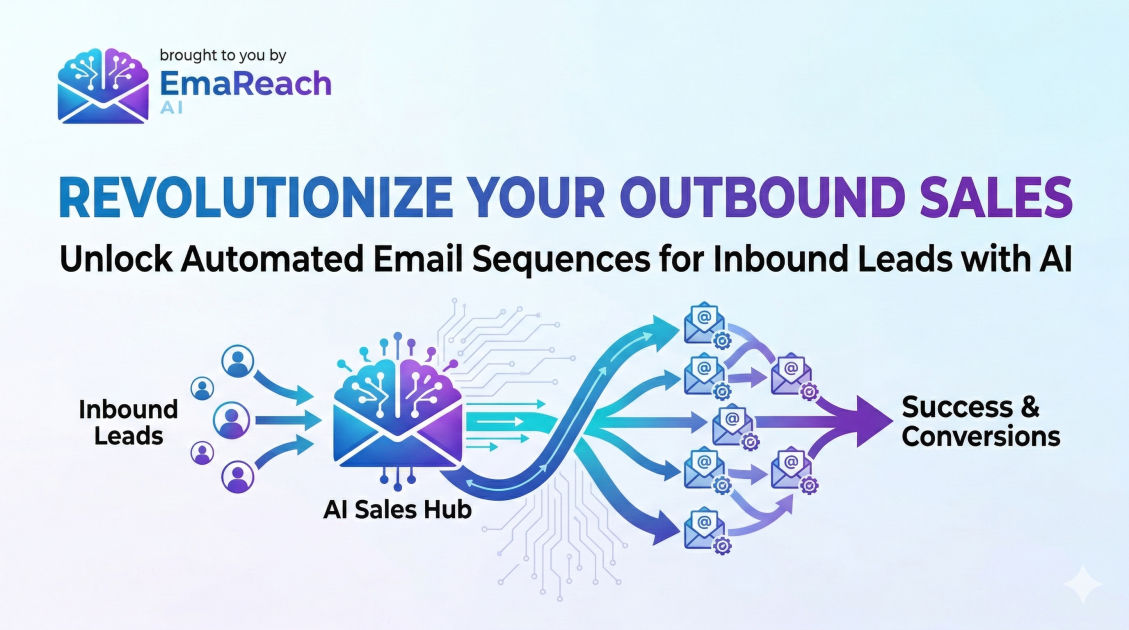
AI Outbound Sales Tools for Inbound Lead Automated Email Sequences
AI sales toolsoutbound salesinbound leadsemail automationsales sequenceslead nurturingemail deliverability
The Convergence of Outbound Power and Inbound Intent
In the modern sales landscape, the traditional divide between outbound and inbound methodologies is rapidly dissolving. Historically, inbound was the domain of marketing—attracting leads through content and waiting for them to raise their hand. Outbound was the realm of sales—hunting for prospects who may not yet know the brand. Today, the most successful organizations are using AI outbound sales tools to manage their inbound lead automated email sequences, creating a hybrid approach that maximizes speed, personalization, and conversion.
When an inbound lead enters your ecosystem, they are at their peak level of interest. However, many businesses fail to capitalize on this momentum due to slow response times or generic, uninspiring follow-up sequences. By leveraging sophisticated outbound tools—originally designed for the rigors of cold outreach—for inbound follow-ups, companies can treat every warm lead with the precision and persistence of a dedicated sales development representative (SDR).
Why Use Outbound Tools for Inbound Leads?
You might wonder why a tool designed for 'cold' outreach is necessary for 'warm' inbound leads. The answer lies in the technical capabilities of these platforms. Traditional Email Service Providers (ESPs) and Marketing Automation Platforms (MAPs) are often built for 'one-to-many' broadcasts. They are excellent for newsletters but frequently lack the granular, 'one-to-one' feel required for high-stakes sales conversations.
AI outbound tools bring several critical advantages to the inbound process:
- Superior Deliverability: Outbound tools focus heavily on technical setup, ensuring emails land in the primary inbox rather than the promotions tab.
- Hyper-Personalization at Scale: AI can scan a lead's LinkedIn profile, company website, or recent news to inject specific details into an inbound response automatically.
- Persistent Multi-Channel Sequences: These tools don't just send one email; they orchestrate a symphony of touchpoints across email, LinkedIn, and even SMS or voice.
- Behavioral Triggers: They can adjust the sequence based on how a lead interacts with previous messages, ensuring the conversation remains relevant.
For those looking to ensure their messages actually hit the mark, platforms like EmaReach are transformative. EmaReach AI combines AI-written cold outreach with inbox warm-up and multi-account sending—so your emails land in the primary tab and get replies, which is just as vital for inbound leads as it is for outbound prospects.
The Architecture of an AI-Driven Inbound Sequence
To build a truly effective automated sequence for inbound leads using AI outbound tools, you must understand the architecture of a high-converting workflow. It isn't just about sending emails; it's about creating a responsive system.
1. The Instant Gratification Trigger
The moment a lead fills out a form or downloads a whitepaper, the clock starts. Research consistently shows that the likelihood of conversion drops significantly after the first five minutes. An AI outbound tool can be integrated with your CRM to trigger a 'Day 0, Minute 0' email.
Unlike a standard marketing 'Thank You' email, the AI can analyze the lead's data instantly. If a lead from a Fortune 500 company signs up, the AI might trigger a more formal, high-touch sequence. If a startup founder signs up, the tone might be more agile and direct.
2. AI Enrichment and Contextualization
Before the second email goes out, the AI outbound tool performs 'enrichment.' It pulls data points that weren't on your lead form. Did they recently get promoted? Did their company just close a funding round? By the time the follow-up email is sent on Day 2, it feels like a manual, researched message from a human expert, not an automated bot.
3. The Multi-Channel Bridge
Inbound leads are often busy. They might miss an email, but they might see a LinkedIn connection request or a soft 'like' on their recent post. Modern outbound tools allow you to bake these actions into your inbound sequence. The AI can suggest a LinkedIn message based on the whitepaper the lead downloaded, creating a cohesive brand experience across platforms.
Key Features to Look for in AI Outbound Tools
When selecting a tool to manage your inbound automated sequences, not all AI is created equal. You need a platform that offers specific features to handle the nuances of lead nurturing.
Dynamic Content Generation
The tool should be able to do more than just insert a {first_name} tag. Look for 'Liquid Syntax' or advanced AI prompt capabilities. This allows the tool to change entire paragraphs based on the lead's industry or the specific problem they mentioned in a 'How can we help?' form field.
Automated Inbox Management
One of the biggest challenges with automated sequences is handling replies. If a lead replies 'I'm out of the office until Tuesday,' you don't want the next automated email to go out on Monday. High-end AI tools feature 'Sentiment Analysis' and 'Out-of-Office Detection.' They can automatically pause a sequence or categorize a reply as 'Interested,' 'Meeting Requested,' or 'Not Now,' notifying the sales team only when a human intervention is actually required.
Deliverability and Warm-up Engines
If your inbound leads don't see your emails, the best copy in the world won't matter. This is where outbound-focused tools shine. They often include 'Warm-up' features that maintain a healthy sender reputation by simulating natural email activity. This ensures that when you send that crucial follow-up to a hot lead, it doesn't end up in the spam folder.
Crafting the Perfect AI Prompt for Inbound Sequences
The secret sauce of AI outbound tools is the 'Prompt.' To get the most out of your automation, your prompts must be specific. Instead of telling the AI to 'write a follow-up email,' try a structured approach:
- Role: "Act as a senior sales consultant for a SaaS company."
- Context: "A lead just downloaded our guide on AI productivity. They are a Mid-level Manager in the healthcare sector."
- Goal: "Acknowledge their interest, offer one additional tip not found in the guide, and ask a low-friction question about their current workflow."
- Tone: "Professional yet conversational, avoiding 'marketing-speak.'"
By feeding these parameters into your outbound tool, the resulting sequence feels authentic and tailored, drastically increasing response rates compared to static templates.
Advanced Strategies: Segmenting by Intent
Not all inbound leads are created equal. Someone who requests a live demo has higher intent than someone who downloads a general industry report. AI outbound tools allow you to build 'branching logic' into your sequences based on these intent signals.
The High-Intent Fast Track
For 'Request a Demo' leads, the AI should be aggressive. The sequence might include three emails in the first 48 hours, coupled with an automated LinkedIn message. The AI can even include a personalized video link where it mentions the lead's company name on the thumbnail.
The Low-Intent Nurture
For 'Content Download' leads, the AI should play the long game. The sequence might be spread over 30 days, focusing on providing value and building authority. The AI can track which subsequent links the lead clicks and automatically move them into a high-intent sequence if their behavior changes.
The Role of Human-in-the-Loop
While AI can handle 90% of the heavy lifting, the most effective inbound sequences utilize a 'Human-in-the-Loop' model. This is where the AI outbound tool prepares the draft, but a human hits 'send' after a quick 10-second review. This is particularly effective for high-value accounts where a single mistake could be costly. The AI does the research and drafting, and the human provides the final 'sanity check' and personal touch.
Overcoming the 'Uncanny Valley' of AI Outreach
A common fear is that AI-generated emails will sound 'robotic.' To avoid the 'uncanny valley'—where a message is almost human but feels slightly 'off'—it is important to lean into the AI's ability to be brief. Humans are busy; they write short, direct emails. AI often defaults to long, flowery prose. By instructing your tools to keep messages under 100 words and focus on a single call to action, the automation becomes much more believable.
[Image showing a comparison between a long, generic marketing email and a short, AI-personalized sales email]
Integrating with Your Tech Stack
An AI outbound tool is only as good as the data it receives. For inbound sequences, seamless integration with your CRM (like Salesforce or HubSpot) and your website's form provider is non-negotiable.
The workflow should look like this:
- Lead Capture: A prospect fills out a form on your site.
- Data Enrichment: Tools like Clearbit or ZoomInfo automatically append company size, industry, and social profiles.
- Tool Assignment: Based on the data, the lead is pushed into a specific 'Inbound Sequence' within your AI outbound tool.
- AI Execution: The tool generates and sends personalized messages across multiple channels.
- CRM Update: Every open, click, and reply is synced back to the CRM for a single source of truth.
Measuring Success in the AI Era
When moving your inbound leads into AI outbound sequences, your KPIs should shift. While 'Open Rates' and 'Click Rates' are still relevant, the true North Star metrics are:
- Positive Reply Rate: How many leads are engaging in a constructive conversation?
- Lead-to-Meeting Ratio: Is the AI effectively moving people from 'interested' to 'on the calendar'?
- Time to First Response: How much have you reduced the gap between lead capture and first touch?
- Cost Per Acquisition (CPA): By automating the SDR function for inbound leads, are you lowering your overall sales costs?
Ethical Considerations and Best Practices
As AI becomes more powerful, the responsibility of the sender increases. Transparency and value should always be at the forefront.
- Never Mislead: Don't use AI to claim you've done something you haven't (like claiming you 'just finished a call with their boss').
- Provide Value: Every email in the sequence should provide value, even if the lead never buys from you.
- Easy Opt-out: Even for inbound leads, ensure it's easy for them to stop the sequence if they are no longer interested.
Conclusion
The use of AI outbound sales tools for inbound lead automated email sequences represents a paradigm shift in how companies approach growth. By applying the rigor, deliverability, and personalization of outbound technology to the high-intent world of inbound leads, businesses can create a seamless, high-velocity sales machine.
This approach doesn't just save time; it creates a better experience for the prospect. Instead of being ignored or bombarded with generic marketing fluff, they receive timely, relevant, and helpful communications that respect their needs and their time. As AI technology continues to evolve, the barrier between 'marketing' and 'sales' will continue to fade, leaving behind a unified, intelligent approach to customer acquisition.
EmaReach AI
Ready to scale your cold email outreach?
Join thousands of teams using EmaReach AI for AI-powered campaigns, domain warmup, and 95%+ deliverability. Start free — no credit card required.
Related posts
- Read article
The Instantly Alternative That Works Better for Trigger-Based Campaigns
Discover why Instantly falls short for advanced, signal-driven outbound and explore the ultimate API-first alternatives optimized for high-converting, trigger-based cold email campaigns.
- Read article
The Instantly Alternative That Handles High Bounce Rates Without Panic
Discover how transitioning to an advanced Instantly alternative can safeguard your cold email infrastructure. Learn to handle high bounce rates effortlessly using real-time verification, smart mailbox rotation, and automated safety nets to protect your sender reputation and maintain consistent primary inbox placement.