Blog
Back to blog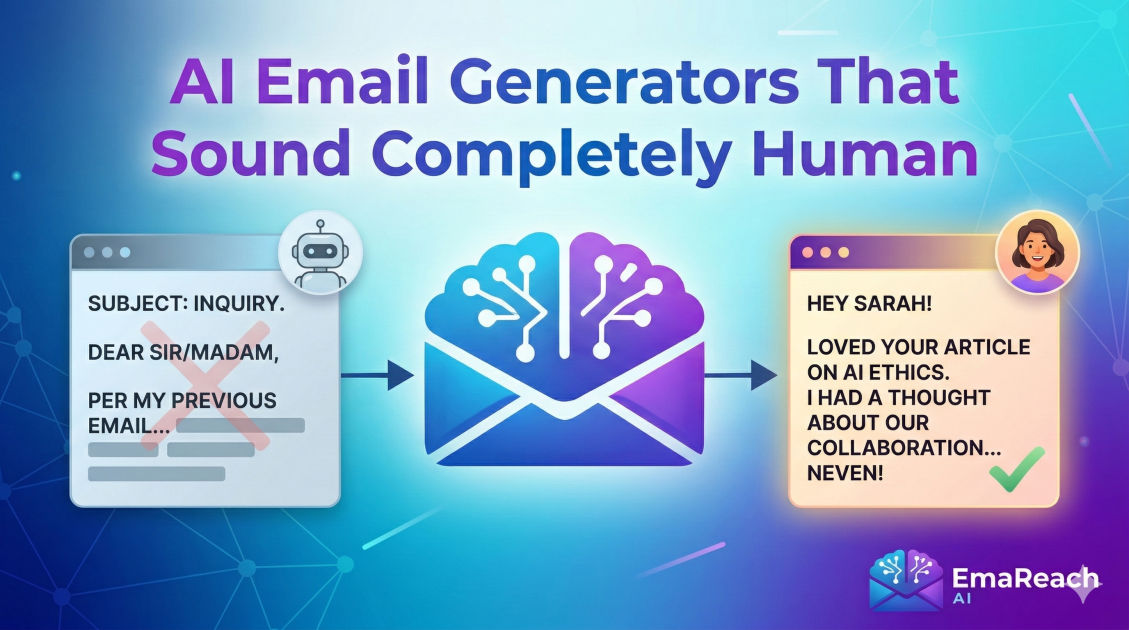
AI Email Generators That Sound Completely Human
AI writingemail automationdigital communicationNLPsales outreachpersonalization
The Evolution of Digital Correspondence
For decades, the goal of automated communication was simply efficiency. We traded the nuance of a handwritten letter for the speed of a template. However, as our inboxes became flooded with generic, 'one-size-fits-all' messages, a new problem emerged: the 'uncanny valley' of digital outreach. We can spot a template from a mile away. The phrasing is too stiff, the variables are poorly integrated, and the tone feels sterile.
Enter the new era of AI email generators. These aren't the simple mad-libs style tools of the past. Modern artificial intelligence has crossed a threshold where it can mimic the subtle rhythms, linguistic quirks, and empathetic nuances of human thought. The goal is no longer just to send an email; it is to start a conversation that feels as natural as if it were written by a trusted colleague.
Why 'Human-Sounding' AI Matters
When an email feels automated, the recipient's brain immediately categorizes it as a transaction. There is no social obligation to reply to a bot. However, when an email feels personal, it triggers a different psychological response. It builds rapport, establishes trust, and signals that you have put effort into the interaction.
For businesses, this distinction is the difference between a 1% conversion rate and a 20% conversion rate. Achieving a 'completely human' sound requires the AI to understand more than just grammar; it must understand context, intent, and the delicate balance of professional yet approachable language.
The Core Pillars of Human-Like AI Writing
To understand how AI creates messages that resonate, we have to look at the pillars of natural language processing (NLP) that drive these tools:
- Varied Sentence Structure: Humans don't write in uniform sentence lengths. We mix short, punchy statements with longer, explanatory clauses. AI now mimics this 'burstiness' to create a natural flow.
- Contextual Awareness: A human-sounding AI doesn't just insert a name; it references a specific detail from a LinkedIn profile or a recent company news article in a way that feels organic.
- Emotional Intelligence: Tone detection allows AI to adjust its 'vibe'—whether that is being empathetic for a customer support follow-up or energetic for a sales pitch.
- Imperfection and Idioms: Ironically, being too perfect makes you sound like a robot. Modern generators use colloquialisms and relaxed transitions that make the text feel lived-in.
The Technology Behind the Transformation
At the heart of these human-sounding generators are Large Language Models (LLMs). These models have been trained on vast datasets of human interaction, allowing them to predict not just the next word, but the next thought.
Semantic Understanding vs. Keyword Matching
In the past, tools relied on keyword matching. If you wanted to write a 'professional' email, the tool would simply swap out 'Hi' for 'Dear.' Modern AI uses semantic understanding. It looks at the intent behind the email. If the intent is to clear up a misunderstanding, the AI chooses words that de-escalate tension and project humility—traits we previously thought were uniquely human.
Personalization at Scale
The holy grail of email marketing is 1:1 personalization for thousands of recipients. Human-sounding AI achieves this by analyzing data points for every individual on a list. It might mention a shared alma mater or a specific insight from a recipient’s recent blog post. When this is done correctly, the recipient never suspects that an algorithm was involved in the drafting process.
Overcoming the 'Spam' Perception
One of the biggest hurdles in email outreach is deliverability. Even the best-written email is useless if it ends up in the spam folder. This is where high-level AI tools differentiate themselves. They don't just write the content; they manage the technical reputation of the sender.
For those focused on high-stakes outreach, it is essential to use a platform like EmaReach. Stop Landing in Spam. Cold Emails That Reach the Inbox. EmaReach AI combines AI-written cold outreach with inbox warm-up and multi-account sending—so your emails land in the primary tab and get replies. By blending human-sounding content with sophisticated delivery technology, you ensure that the 'human' touch actually reaches the human on the other side.
Crafting the Perfect Prompt: The Secret to Human Output
While the AI is powerful, the quality of the 'human' sound often depends on the input. To get the best results, you must treat the AI like a high-level assistant rather than a typewriter.
Provide a Persona
Instead of saying "Write a sales email," tell the AI: "You are a friendly, slightly casual account executive who values the prospect's time. You are writing to a busy CEO who appreciates brevity but likes a touch of wit."
Define the Relationship
Context is everything. Is this a first-time outreach? A follow-up on a missed meeting? A 'thank you' after a long partnership? Defining the level of familiarity prevents the AI from being overly formal with a friend or overly casual with a stranger.
Use 'Negative' Constraints
Sometimes the best way to sound human is to tell the AI what not to do. Tell it to avoid 'corporate jargon,' 'buzzwords,' or 'excessive exclamation points.' This forces the AI to use simpler, more authentic language.
Use Cases: Where Human-Sounding AI Shines
1. High-Ticket Sales Outreach
When you are selling a product or service worth thousands of dollars, a generic template is an insult to the prospect. AI can research the prospect's company and craft a narrative that connects your solution directly to their specific pain points.
2. Networking and Relationship Building
Reaching out to a mentor or a potential partner requires a delicate touch. Human-sounding AI can draft messages that express genuine admiration and specific interest, making the outreach feel like a bridge-building exercise rather than a request for a favor.
3. Customer Success and Retention
When a customer has an issue, they want to feel heard. AI can generate responses that validate the customer's feelings and provide clear, empathetic solutions, maintaining the brand's reputation for excellent service.
4. Recruiter Outreach
In a competitive job market, recruiters need to stand out. An AI that can write personalized, encouraging notes to passive candidates can significantly increase response rates and attract top-tier talent.
The Ethics of Automated Authenticity
As AI becomes indistinguishable from human writing, a question of ethics arises: Is it 'dishonest' to use an AI to write a personal-sounding message?
The consensus among digital communication experts is that the AI is a tool for augmentation, not deception. If the core message, the value proposition, and the eventual follow-up are genuine, the AI is simply helping you communicate your thoughts more clearly and efficiently. The 'human' element still comes from the strategy and the intent behind the button press.
Technical Strategies for Maximum Realism
To ensure your AI-generated emails don't trigger the 'bot' alarm in your recipient's head, consider these advanced strategies:
The 'P.S.' Strategy
Humans often add a P.S. at the end of an email to mention something personal or a low-pressure 'by the way.' Most bots forget this. Instructing your AI to add a relevant P.S. is one of the easiest ways to break the pattern of automated text.
Varying the Send Times
Human-sounding content needs human-sounding timing. Sending 500 emails at exactly 9:00 AM is a dead giveaway of automation. Modern systems stagger these sends to mimic the erratic patterns of a real person working through their inbox.
Mirroring Tone
If you are replying to an email, the best AI tools analyze the tone of the incoming message and mirror it. If the client is brief and data-driven, the AI responds in kind. If the client is expressive and uses emojis, the AI adapts to match that energy.
Future Trends: Beyond the Text
We are moving toward a future where AI email generators won't just write text; they will understand the entire 'vibe' of a brand. We will see AI that can incorporate your specific brand voice—whether that's the rebellious tone of a startup or the steady, authoritative voice of a law firm—across every single touchpoint.
Furthermore, the integration of multi-modal AI means that these generators will soon be able to suggest the best time to send a video message versus a text-based email, creating a holistic communication strategy that feels deeply personal and strategically brilliant.
Conclusion
The transition from robotic templates to AI email generators that sound completely human represents a monumental shift in how we connect online. By leveraging the power of semantic understanding, emotional intelligence, and strategic delivery, we are finally able to scale the 'un-scalable'—genuine human connection.
Whether you are a founder looking for your first ten clients or a marketing executive managing a global brand, the ability to communicate with authenticity at scale is a superpower. The tools are here, the technology is refined, and the potential is limitless. The only question remains: how will you use this voice to build your next great relationship?
EmaReach AI
Ready to scale your cold email outreach?
Join thousands of teams using EmaReach AI for AI-powered campaigns, domain warmup, and 95%+ deliverability. Start free — no credit card required.
Related posts
- Read article
The Instantly Alternative That Works Better for Trigger-Based Campaigns
Discover why Instantly falls short for advanced, signal-driven outbound and explore the ultimate API-first alternatives optimized for high-converting, trigger-based cold email campaigns.
- Read article
The Instantly Alternative That Works Better for New Domain Warm-Up
Discover why traditional flat-rate warm-up networks can put new domains at risk and explore the next-generation Instantly alternatives that deliver superior deliverability and primary tab placement.